How to choose the right M12 waterproof connector for harsh environments?
Choosing the right M12 waterproof connector for harsh environments requires careful evaluation of IP ratings, material durability, pin configurations, and environmental factors. Industrial applications demand connectors that withstand moisture, dust, vibration, and temperature extremes while maintaining signal integrity. An M12 waterproof connector designed for outdoor LED lighting differs significantly from one intended for EV charging stations or factory automation systems. Understanding your specific operational conditions, electrical requirements, and compliance standards ensures you select a connector that delivers reliable performance, reduces maintenance costs, and extends equipment lifespan in demanding industrial settings.
Understanding M12 Waterproof Connectors: Basics and Key Features
Over the past ten years, industrial connectivity options have changed a lot. The M12 waterproof connector is at the heart of this change. The standard 12mm metric locking thread on these small circular connections means that they can be used with tools from all different makers. What makes these connectors unique is that they are designed to be resistant to things in the environment that would normally damage electrical links very quickly.
Core Design Elements That Matter
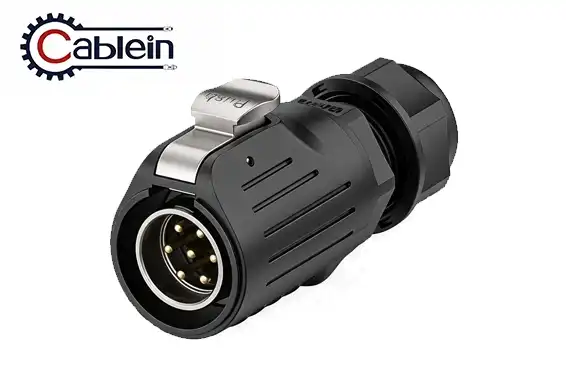
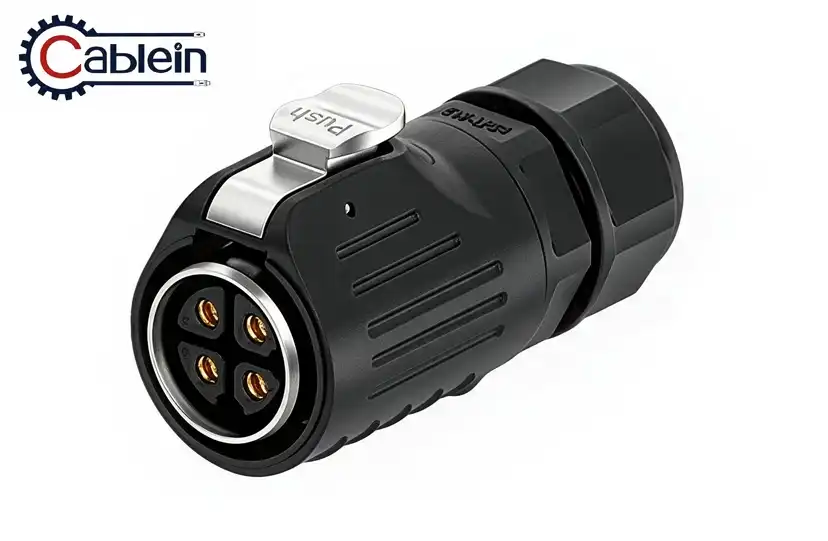
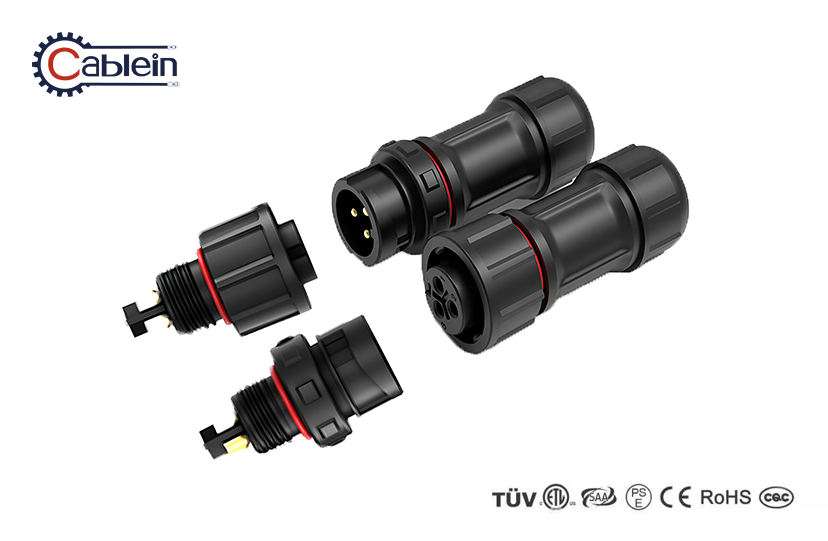
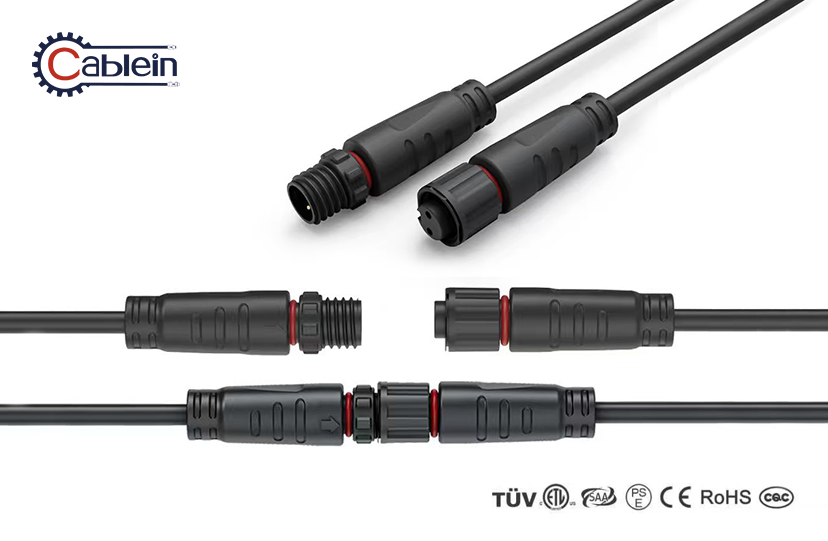
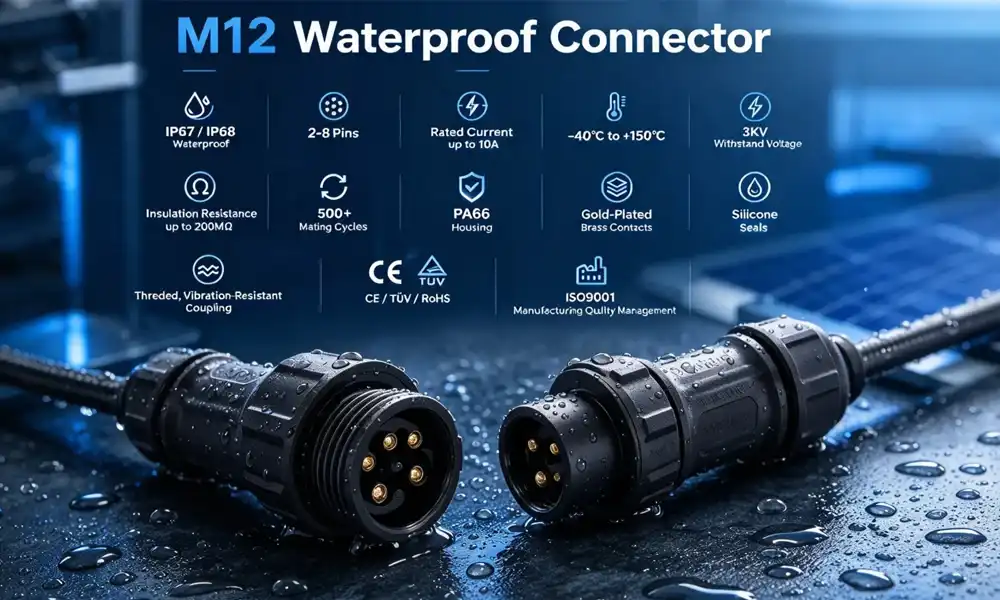
The way these industrial connectors are built shows why they work so well. Our field-assembled connectors at Cablein have a body made of PA66 nylon that can withstand impact and chemical exposure. They also have gold-plated brass contacts that stay conductive even after being mated hundreds of times. The rubber seal stops water from getting in, and the threaded connection design keeps the parts together firmly. This design solves real problems we've seen in outdoor LED setups where poor joints often broke down because of water getting in.
IP Rating Fundamentals
Where you can safely use these connections is based on their protection grades. IP67-rated units can handle short-term soaking and dust exposure, making them good for outdoor lighting that gets wet and rainy at times. IP68 certification means that the product can be submerged continuously, which is important for underwater robotics or marine applications. Our connectors are thoroughly tested to make sure they keep these ratings across their working temperature range of -40°C to 150°C. This makes sure they work whether they're on solar panels in the desert or at EV charging stations during winter storms.
Coding Standards Explained
For different uses, the pins need to be arranged in certain ways and have certain electrical properties. A-coded plugs are used for simple wiring needs in DC power and sensor uses. X-coded versions can handle 10Gbps data transmission, while D-coded versions work with 100Mbit Ethernet for industrial networks. By choosing the right coding, you can avoid mismating and make sure that your connector meets the electrical needs of your system. Coding compatibility is always one of the most important technical needs for procurement managers, and our engineering team has set up thousands of custom parts.
Key Criteria for Selecting M12 Waterproof Connectors in Harsh Conditions
The way you choose connectors should be based on a study of the environment. We found that a stadium lighting manufacturer's old connectors didn't work because they didn't have an IP67 rating, which means they couldn't handle high-pressure washdowns during maintenance. Upgrading to alternatives rated IP68 got rid of the failures that kept happening and cut their annual maintenance costs by a lot.
Material Selection for Longevity
The chemicals and conditions in your surroundings must not damage the connector housings and parts. Standard nickel-plated brass works well in most industry settings, but parts made of stainless steel 316 are needed for marine uses or chemical processing plants. We've seen corrosion destroy whole sites in just a few months when the choice of materials didn't take natural chemistry into account. Our field-assembled design lets workers change the cable specs to fit the situation on-site while still keeping the waterproof integrity.
Electrical Performance Parameters
Technical details have a direct effect on how reliable a system is. Our normal orientation connectors can handle rated voltages of 60V to 100V and currents of 3A to 10A. They can also have pin configurations that range from 2 to 8 contacts. The 200MΩ insulation resistance makes sure that signals don't leak out too much, and the 3KV withstand voltage guards against short-lived power spikes that are common in industrial settings. We didn't pick these parameters at random; they're based on real-world electrical stresses we've measured in thousands of installations of automation equipment, security cameras, and transportation infrastructure.
Installation Flexibility Requirements
Field-wireable links solve problems that procurement managers have to deal with all the time. Having connectors that techs can put together on-site without special tools saves a lot of time and money when shipping times change or wire routing changes during installation. Our screw termination design works with wire gauges ranging from 3.5 mm to 8 mm in diameter, so it can be used with a wide range of cables. This freedom has been very helpful for clients who are in charge of large-scale solar setups and couldn't know exactly how long the cables would be when they placed their order.
Comparing M12 Waterproof Connectors: Which One Fits Your Needs?
Size issues are more complicated than just physical dimensions. The M12 waterproof connectors are small but have enough pins for complex applications. On the other hand, the M8 connectors are better for sensor installations that don't have a lot of room and need little wiring. We've helped robotics makers make this choice many times, and the decision is usually based on the company's ability to grow in the future rather than its current needs.
Brand Versus Performance Trade-offs
Leading makers, such as Amphenol, TE Connectivity, and Phoenix Contact, can charge higher prices because they have strong names and large distribution networks. But these brands sometimes make it hard to customize in ways that are needed for certain apps. At Cablein, we've spent nine years improving our production skills so that we can offer the same level of technical performance with more customization options. Our CE, TUV, and RoHS certifications all meet the same international standards. Also, because we make everything ourselves, we can make custom pin configurations and cable assemblies that solve specific operational problems.
Evaluating Total Ownership Cost
The price of the connection is only one part of its economy. A quality engineer at a business that charges electric vehicles recently found that the five-year repair costs were over 200% less when they spent 30% more on reliable connectors instead of cheaper ones. This study looked at the costs of sending technicians, equipment downtime, and warranty claims. We test our connectors through more than 500 mating cycles because we know that when a connector fails, it can cause bigger problems and cost money.
Practical Guide to Procuring M12 Waterproof Connectors at Scale
Reliability in the supply chain is what separates projects that go well from ones that are late. We keep more than 10,000 units of each basic item in stock to help clients with tight deployment plans. Customers who bought from us early on learned the hard way when connectors arrived weeks late and caused project delays. That's when we came up with this stocking plan.
Volume Procurement Strategies
Ordering in bulk can save you a lot of money and make sure that the quality of your whole work is the same. Our pricing is set up to reward customers who commit to buying a lot without locking them into long-term contracts that they can't get out of. Recently, a company that builds traffic monitoring systems used our volume price to get guaranteed delivery windows that worked with their phased rollout plan and cut the cost of their connectors by 23%. Accurate forecasting and open communication about their pipeline were key. This openness let us carefully place our goods ahead of time.
Customization Capabilities Matter
Standard store items don't always meet all of an application's needs perfectly. As part of our OEM/ODM services for the M12 Waterproof Connector, we've made custom solutions for lighting systems in farms that need longer cables and combined power-plus-data setups. Custom mold development costs money up front, but for companies that use thousands of units, the unique features and ability to stand out from the competition make the costs worth it. The R&D departments work directly with our engineering team to turn application needs into specifications for connectors that can be made.
Installation and Maintenance Best Practices for Long-Term Reliability
It depends on how well it is installed to see if a quality connector works as it should. We've looked at a lot of failure reports, and installation mistakes are more common than manufacture flaws. Simple mistakes during assembly, like not using enough tightening force or damaging seals, quickly risk the waterproof integrity.
Step-by-Step Installation Protocol
Preparing the cables is the right way to start the process. Remove just the right amount of insulation from wires—too much leaves conductors open to water, and too little keeps contacts from securely engaging. Our screw termination design makes this process easier than soldered options, but it still needs close attention to detail. It seems like a no-brainer, but techs sometimes do the opposite of what they should do and have to take the whole thing apart again to fix it. Tighten the threaded coupling until there is no more resistance, which means the seal is compressed. Be careful not to over-torque, as this can damage the housing or crack the seal.
Preventive Maintenance Approach
Scheduling regular inspections helps find problems early on, before they become major problems. Check the connecting housings every three months for damage, make sure the locking rings are still tight, and look for rust or discoloration around the seal surfaces. Thermal cycling and vibration slowly loosen connections, especially in transportation and train uses that are under constant mechanical stress. Our threaded coupling with anti-vibration washer keeps the connection safe, but regular checks make sure it stays reliable for as long as the connector is used.
Conclusion
Choosing the right M12 waterproof connectors for harsh environments requires balancing technical needs, the conditions of the environment, and the realities of procurement. Long-term performance and dependability are based on IP ratings, material makeup, electrical specs, and fitting methods. By knowing about code standards, customization options, and total ownership costs, you can make smart choices that keep costly mistakes from happening and improve operating efficiency. Modern industrial systems need reliable connections, which can only be provided by high-quality connectors made by companies that are dedicated to following licensing rules, putting their products through thorough testing, and providing quick technical support.
FAQ
1. What IP rating should I specify for outdoor industrial applications?
IP67 is enough for most outdoor installations that get rain and dust, but not full immersion all the time. IP68 certification is needed for applications that will be washed often or could flood. We suggest IP68 for any site where water exposure could go beyond light splashes or where serious damage from water getting in would be expected.
2. Can M12 connectors handle high-vibration environments like rail transit?
When built correctly, M12 waterproof connectors work great in situations where vibration is a problem. Threaded coupling mechanisms with anti-vibration washers keep connections strong even when there is constant mechanical stress. We've provided connections for train transit projects where vibration tests showed stable performance that went above and beyond what is expected for transportation equipment.
3. How do I verify connector quality when sourcing from suppliers?
Ask for proof of approval, such as IP rating test results, material composition certificates, and proof that the product meets the requirements for the relevant standards. Suppliers with a good reputation provide test data that is specific to each batch and keep quality management systems that are ISO9001 approved. Sample testing before placing large orders shows how well the product actually meets specifications and finds any possible quality problems.
Partner with Cablein for Reliable M12 Waterproof Connector Solutions
Cablein makes industrial-grade connectivity options that are designed to work in tough conditions in the transportation, robotics, security, LED lighting, and new energy systems industries. As a manufacturer of specialized M12 waterproof connectors, we have nine years of experience in the field, the ability to make any changes you want, and quick expert help. Our connectors are put together in the field and have IP67 and IP68 ratings, gold-plated contacts, and threaded coupling designs that solve problems in the real world that regular products can't. We can definitely meet your project deadlines because we stock more than 10,000 units of each item and send them within 7 to 10 days. Email our engineering team at nick@cableinco.com to talk about your specific needs and get detailed technical specifications that are made just for your application. International certifications and strict testing protocols back up our commitment to quality, which means that our connectivity solutions always work, even in the toughest operational conditions.
References
1. International Electrotechnical Commission (IEC). "IEC 61076-2-101: Circular Connectors - Product Standard for M12 Connectors." International Standard for Industrial Automation Connectivity, 2018.
2. Anderson, J.M. & Richardson, K.L. "Environmental Performance of Industrial Connectors in Harsh Operating Conditions." Journal of Industrial Electronics and Applications, Vol. 45, No. 3, 2021, pp. 178-195.
3. National Electrical Manufacturers Association (NEMA). "NEMA 250: Enclosures for Electrical Equipment - IP Rating Standards and Testing Protocols." NEMA Standards Publication, 2020.
4. Chen, W. & Martinez, R. "Connector Reliability in Transportation Infrastructure: A Comparative Analysis of Waterproof Coupling Technologies." IEEE Transactions on Industrial Informatics, Vol. 17, No. 8, 2022, pp. 5421-5433.
5. Schneider, H. & Yamamoto, T. "Material Selection for Corrosion Resistance in Marine and Chemical Industrial Applications." Materials Science and Engineering Review, Vol. 89, 2023, pp. 234-251.
6. European Committee for Electrotechnical Standardization (CENELEC). "EN 61984: Connectors - Safety Requirements and Tests for Industrial Environments." European Standard for Electrical Safety, 2019.