M20 Feed-Through Wire-to-Wire Waterproof Connector: Features, Benefits, and Applications
When your outdoor lighting project faces torrential rain or your marine equipment battles saltwater corrosion, the integrity of every electrical connection determines success or failure. The M20 feed-through wire-to-wire waterproof connector delivers enterprise-grade reliability in these demanding scenarios, offering IP68-rated protection combined with tool-free installation that saves valuable labor hours on-site. This article explores how these industrial interconnect solutions solve critical challenges in architectural lighting, smart infrastructure, and renewable energy installations while meeting the stringent requirements of project managers who need certified durability, rapid deployment, and long-term performance under extreme environmental conditions.
Understanding M20 Feed-Through Wire-to-Wire Waterproof Connectors
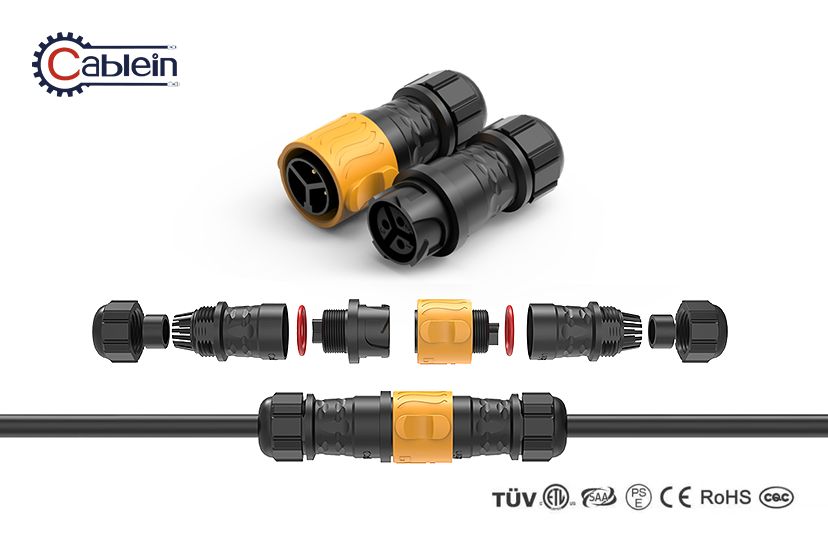
A metric M20 thread (20 mm in diameter) is used to make an M20 feed-through connection, which is a high-precision electrical bridge. Traditional wire-to-panel connections finish at set enclosures. The feed-through design, on the other hand, makes a hermetically sealed junction between two cable ends. This lets power or data pass through bulkheads without any problems while protecting the environment. This modular approach gets rid of the risks of hardwiring and greatly cuts down on the time needed for maintenance work like replacing broken cable sections in the field.
Core Design Principles
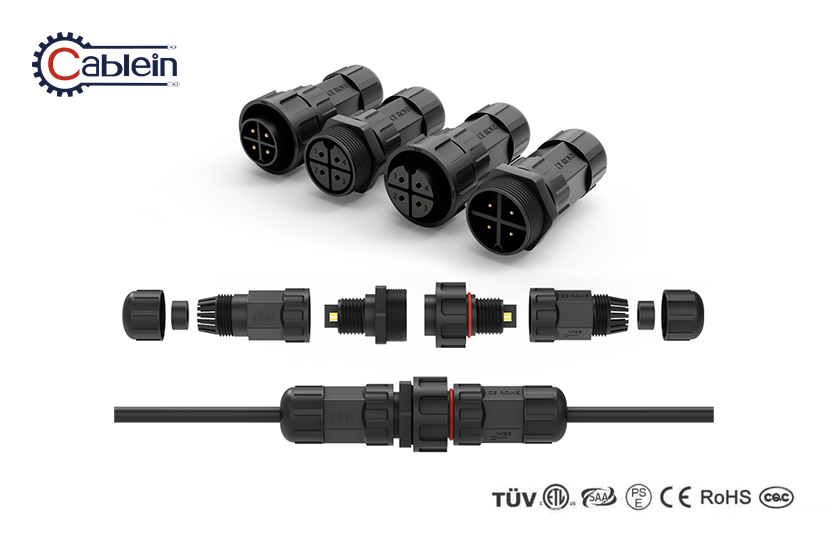
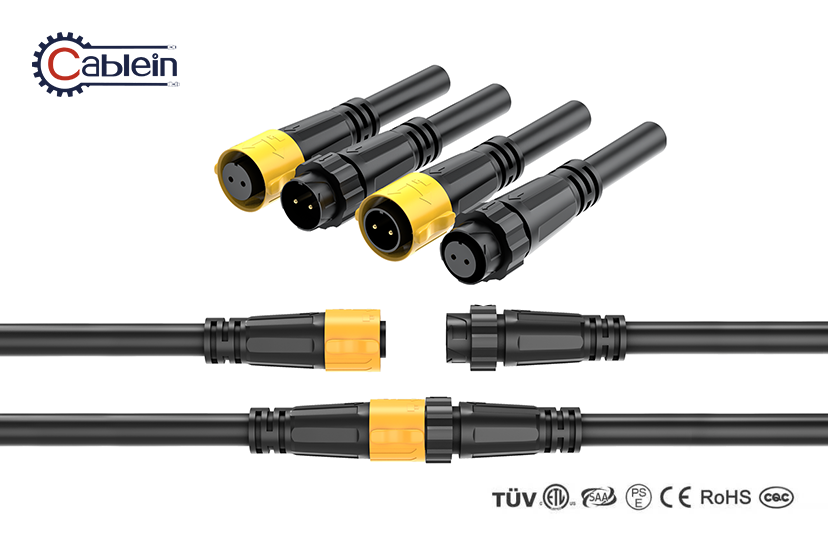
These connectors are different from right-angle or panel-mount ones because they have a straight-through architecture. Cable goes in one end and out the other, adding only a small amount of length to your total wire run. This makes them perfect for daisy-chaining LED floodlight groups or connecting solar panel strings. This arrangement keeps the installer's options open during changes, and it makes junction points easy to check without taking whole lighting systems apart.
Addressing Critical Pain Points
Moisture gets into the system through capillary wicking, which is when water moves along individual wire strands under insulation layers. This is a problem that professional installers keep having. When heat cycling is applied, manual field splicing with heat-shrink tubing often fails, causing periodic problems that are hard to figure out and cost a lot of money to fix. The M20 connector's factory-sealed chamber completely stops these failure modes, so the signal stays intact even when it's submerged in water. Recessed contact housings keep live repair workers from accidentally short-circuiting systems. This keeps techs safe when they work on powered systems at nite when they can't break lighting plans.
Technical Specifications That Matter
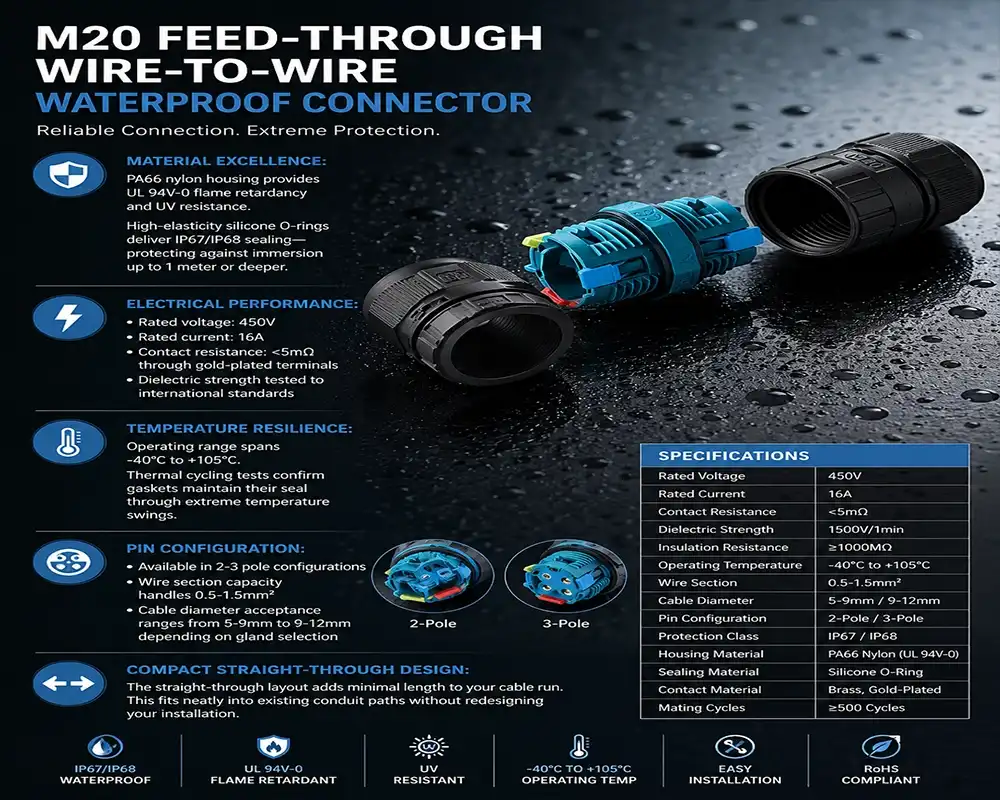
Cablein Technology's M20 feed-through connectors have a high-strength PA66 nylon housing that meets UL 94V-0 flame retardancy standards and doesn't break down in the sun after decades of use. Gold-plated brass contacts keep the resistance of the contacts below 5 milliohms. This keeps voltage drop from building up over long wire runs that happen in devices that are connected in series. The electricity rate of 450V at 16A works with both 120V systems in North America and 230V systems in other countries without any problems. The operating temperature range, from -40°C to +105°C, includes places like the arctic and the desert, where the surface of dark-colored housings can get 30 degrees hotter in the summer than the air temperature outside.
The waterproof ratings of IP67 and IP68 for M20 Feed-Through Wire-to-Wire Waterproof Connector are based on actual testing, not on marketing claims. It is approved by IP67, which means it can withstand water up to one meter deep for thirty minutes. This makes it suitable for installations at ground level in areas that are likely to flood. IP68 testing makes sure that the device can work continuously underwater at the manufacturer's stated depths. This is important for sensors that track aquaculture and light fountains because the connections must stay submerged at all times. High-elasticity silicone O-rings stretch smoothly around cable jackets with an outer diameter of 5 mm to 12 mm. This makes them compatible with both normal lighting cables and heavier-gauge power distribution lines, so you don't have to use different connector models for each wire size.
Benefits and Features of M20 Wire-to-Wire Waterproof Connectors
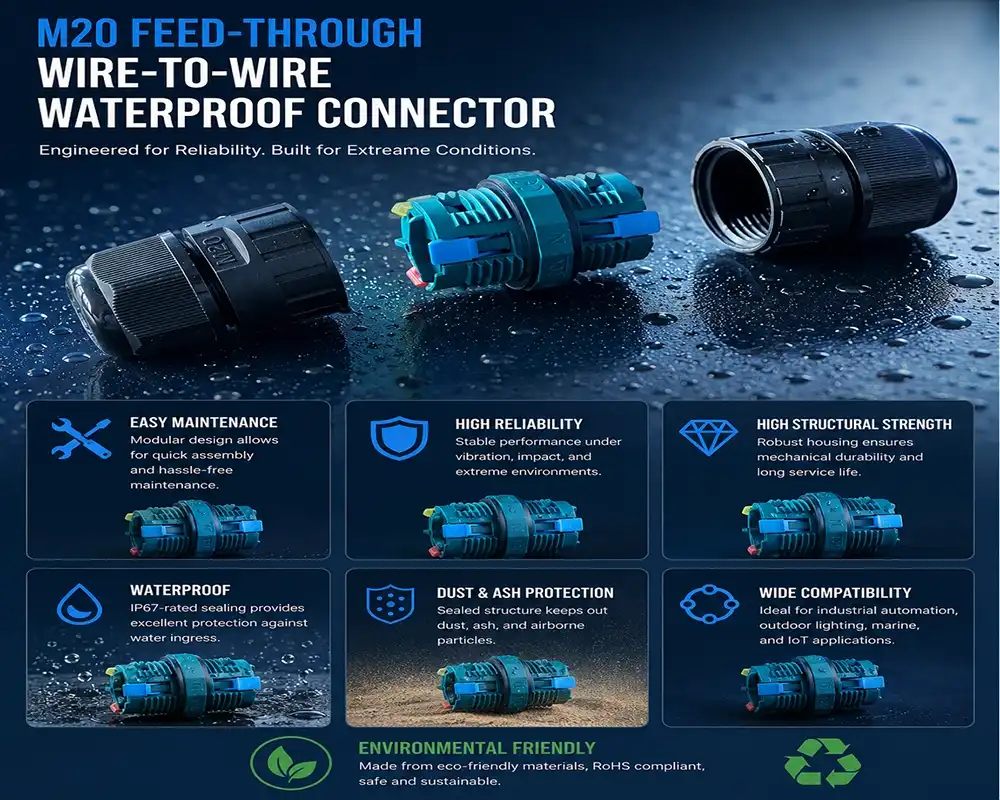
Real-world performance differences are caused by the choice of materials. These differences become clear months after installation, when weaker goods start breaking down. When temperatures rise and fall, PA66 nylon keeps its shape very well. This keeps the housing from warping, which happens when cheaper thermoplastics expand and contract. Adding UV protectors to the polymer matrix stops the surface from chalking and breaking down. This keeps the mechanical strength even after years of direct sunlight exposure, which would break raw materials in just two seasons.
The tool-free screw terminal method saves a lot of money on labor costs during large-scale operations. Installers only need the built-in slot on the connector body to tighten captive screws; they don't need any other screwdrivers or crimping tools. When the conductors clamp down on the brass contact plates, gas-tight junctions are made that don't oxidize without soldering. It's easier to train new installation staff when connection procedures are based on simple mechanical steps instead of complex skills like choosing the right crimp die or inspecting solder joints.
Quantifiable Installation Efficiency
Our companies working on building lighting projects in Southeast Asia say that our connection times are 40% faster than the heat-shrink splice methods they used before. Termination and waterproof seal verification can be done by a skilled technician in less than 90 seconds per connection point. This helps project teams meet tight commissioning deadlines. The straight-through design keeps junction boxes small, which lowers the cost of the enclosure and makes it easier to manage cables in crowded mounting areas where repair staff can't get to them easily.
Long-Term Economic Value
When a project has dozens of link points, it makes economic sense to buy things in bulk. When you order more than 500 pieces, unit costs go down by a lot, and the work will be worth it for a long time because there will be fewer warranty calls and emergency fixes. Marine infrastructure managers in Florida's coastal areas report 85% fewer connection failures over five years after moving from standard industrial plugs to IP68-rated feed-through designs that can handle daily exposure to salt spray and hurricane surge.
Its versatility across industries means that it can be used for more than just outdoor lighting. For example, it can be used in plant automation where chemical protection is needed for wash-down processes. While working in food processing plants and auto factories, the PA66 housing can handle being exposed to common oils, alkaline cleaning products, and fuels. Because the materials are compatible, system integrators can use a single connector platform for a wide range of applications, instead of keeping separate stock for each type of equipment.
Comparing M20 Feed-Through Connectors with Alternative Solutions
Installing wire-to-wire configurations is more flexible than installing wire-to-panel setups. For panel-mount connectors to work, the casings need to be precisely drilled and pre-assembled. This makes the connection points rigid and unable to adjust to changes in how cables are routed in the field. You can put feed-through connectors anywhere along a cable run. This lets you make changes during commissioning if the final positions of equipment don't match up with what you planned. This flexibility is useful for renovation projects where existing conduit paths dictate connection points that are different from where new equipment will be mounted.
Size Selection Criteria
The choice between M16, M20, and M25 thread sizes is based on the cable diameter and the amount of energy that needs to be carried by your power distribution design. Lighter-gauge wires with an outer width of up to 9 mm can fit into M16 connectors, making them ideal for branch circuits that feed individual fixture groups in architectural installations. M20 Feed-Through Wire-to-Wire Waterproof Connector is the best mix for main distribution lines where 12mm wires carry the weight of several lighting strings at once. When electrical rules call for bigger wires for long-distance voltage drop compensation or high-current industrial motor lines, M25 sizes are needed.
M20 waterproof connectors from well-known brands like TE Connectivity, Amphenol, and Phoenix Contact come with a range of features. TE's collection for harsh environments focuses on mechanical locking devices that keep connections from coming loose by mistake when the environment is shaking. Amphenol's industrial line has options for hybrid power-plus-data setups that work with smart lighting controls. Phoenix Contact specializes in modular systems that can be changed in the field by using different inserts that change the pin count and contact configurations.
Quality Verification Standards
Certification validity tells the difference between real industrial-grade parts and cheaper ones that make compliance promises that aren't very strong. Instead of self-declaring conformity, TUV certification includes testing production samples in front of a third party. This gives procurement managers proof of IP rating verification and temperature changing endurance. The CE mark shows that the product meets European standards for low voltage and electromagnetic compatibility (EMC). This is needed for products that are exported to EU markets, where customs officials check technical paperwork all the time. The ISO9001:2015 quality management certification shows that the production processes use statistical process control and corrective action steps to keep the consistency of batches across big orders.
Failure mode economics must be looked at in order to balance the initial purchase cost against the performance over the lifecycle. A 30% cheaper connection that needs to be replaced every eighteen months costs a lot more over the life of a building than a high-quality part that doesn't need any care for the whole ten years. Unplanned service calls have hidden costs, such as the cost of renting lift equipment, closing lanes to get to streetlights, and the damage to the company's reputation when major events happen and visible installations go down.
How to Procure M20 Feed-Through Wire-to-Wire Waterproof Connectors?
To do effective buying, you must first qualify suppliers in ways that go beyond what is listed in a catalog. Instead of taking certificates from vendors without further proof, procurement teams should have third-party audits of manufacturing facilities to make sure they are really ISO certified. Ask for sample packages that come with test records that show results from IP68 pressure testing, salt spray exposure tests that meet ASTM B117 standards, and mechanical pull-out force tests that prove the cable gland's ability to hold its shape. These data sheets show that the quality of the production matches the published standards.
Evaluating Manufacturer Capabilities
Cablein Technology keeps over 10,000 pieces of steady inventory in standard configurations. This way, they can meet the needs of urgent projects right away, without having to wait the four- to eight-week lead times that normally slow down building plans. The 6,000 square meters of modern production space at our Shenzhen facility are dedicated testing laboratories where each production batch goes through five important quality control steps before it is approved for shipping. For ingress protection verification, finished assemblies are submerged under controlled pressure to make sure the seals are intact. In thermal cycling chambers, connectors are quickly heated and cooled between -40°C and +105°C. This tests the performance of the gasket in conditions that cause products that don't use the right materials to fail early.
Customization choices for OEMs meet application-specific needs that normal catalog items can't. Different circuit configurations can use pin counts ranging from two to five poles, and custom cable lengths get rid of the need for field joining by sending pre-assembled wire leads that are cut to exact measurements gathered from site surveys. Customizing the color of the housing makes it easier for installers to quickly tell the difference between circuit types during maintenance. This lowers the risk of connecting voltage systems that don't work together. These changes usually add two weeks to normal shipping times, but they get rid of mistakes that cost a lot of money in the field when there are hundreds of connection places for different types of equipment in large projects.
Logistics and Delivery Planning
International shipping relationships with UPS, DHL, and FedEx make sure that air freight gets where it needs to go on time when project deadlines can't wait for delays in water transport. Professional freight forwarders know how to deal with customs paperwork and make sure that commercial invoices have the right HS codes and country-of-origin statements so that shipments don't get held up at the ports of destination. When shipping large items by air becomes too expensive, consolidated ocean shipping is a cheaper option. It usually takes three to five weeks for goods to get from Shenzhen to major ports in North America and Europe.
Negotiating payment terms and guarantee coverage for M20 Feed-Through Wire-to-Wire Waterproof Connector saves budgets for purchases and makes it clear who is responsible for how well the product works. Standard net-30 payment terms can be negotiated with regular customers who place large orders. Letters of credit are used to protect first-time deals with new foreign providers. Warranty policies should spell out how to fix broken units that are found during installation, including who pays for the return shipping and how long it takes to get new inventory so that the project can't be put into action before the due date.
Applications of M20 Feed-Through Wire-to-Wire Waterproof Connectors in Industry
Outdoor architectural lighting is the most common use case for these connectors, which solve long-standing reliability problems. When LED floodlights are used to light up the outside of buildings, they work in groups, and each connection point can cause dozens of other pieces to fail. The daily changes in temperature put stress on links that need to keep their perfect seals for years of heating and cooling. The UV-stabilized housing and temperature-rated gaskets in M20 connectors can handle these conditions without the seal degradation that leads to early failures in standard industrial plugs that were never meant to be left outside all the time.
Marine and Aquaculture Installations
For underwater sensor networks to keep an eye on water quality factors in fish farms, the links need to be constantly submerged and be able to withstand both hydrostatic pressure and biological fouling. Saltwater speeds up galvanic corrosion on metals that are not the same, so gold-plated contacts are needed to keep the resistance low over long periods of time. Seals with an IP68 rating keep water out, which would short-circuit sensitive electronics. The PA66 housing also keeps marine organisms from growing on areas that aren't covered. Aquaculture owners in Norway and Chile report that properly specified M20 connections in sea cage tracking systems last five years, which means they don't have to be replaced every year like they did with alternatives that weren't sealed properly.
Smart City Infrastructure
Intelligent traffic signal controllers and 5G small cell base stations have M20 feed-through connectors built in to make cabinet entry safer. These are used where cables go from outdoor conduit runs to equipment compartments inside the cabinet. Heavy cars constantly vibrating puts stress on connection points, so mechanical systems need to keep them from coming loose under long-term cyclic loading. The threaded coupling nut is torqued to the manufacturer's specifications so that the gaskets are compressed enough without being over-tightened and damaging the threads or the insulation on the cable. The recessed contact design in control cabinet setups keeps tools from touching live components during maintenance. This keeps techs safe when they're troubleshooting network problems on live systems where turning off the power would break important communications infrastructure.
For decades, the equipment used in renewable energy uses is exposed to harsh environmental circumstances. String connections in solar arrays have to deal with a lot of UV radiation when they are installed at high altitudes where the atmosphere is thin and doesn't block many harmful wavelengths. In the arctic winter, wind turbine nacelle wire leads are exposed to temperatures as low as -40°C. In the summer, they are used in places where temperatures rise above 80°C. M20 connectors made for these conditions have UV stabilizers that stop polymers from breaking down and gasket compounds that keep their elasticity across the full temperature range. This makes sure that power transmission is reliable, which increases energy production uptime and decreases the need for costly tower climb maintenance.
Conclusion
In industrial electrical installations where the environment can affect the reliability of connections, the M20 Feed-Through Wire-to-Wire Waterproof Connector solves basic problems. Because these parts are tool-free and have an IP68 rating for sealing, they save money on labor costs and last a long time, which lowers the total cost of ownership over the life of a project. Choosing materials like PA66 nylon and gold-plated contacts gives them chemical resistance and low contact resistance, which are important for demanding uses like underwater sensor networks and lighting projects along the coast. When procurement teams know about design criteria, quality testing standards, and the right way to match products with applications, they can choose solutions that meet both short-term project needs and long-term operating performance goals.
FAQ
What cable sizes work with M20 waterproof connectors?
Depending on the gland insert chosen, M20 threaded connectors can fit wire outer sizes from 5 mm to 12 mm. The terminal blocks can hold wires with cross-sectional areas between 0.5mm² and 1.5mm². This is enough for most lighting and control circuit needs. M25 connections may be needed instead of TNC connectors for thicker power lines that need bigger conductors.
How do I verify genuine IP68 ratings?
Ask for independent test reports from TUV, UL, or other recognized labs that show the results of submersion tests. A real IP68 certification has proof of the test's depth and length, not just a grade claim on the box. Manufacturers with a good reputation send these badges with orders or make them available on their websites for technical paperwork.
Can these connectors handle high-vibration environments?
When properly torqued during installation, the threaded coupling design doesn't come loose when the system shakes. Cable strain relief built into the gland design stops bending at the point where the conductor enters the gland, which is where wear fails usually happen. For uses with heavy vibrations that happen all the time, adding more cable tie-down points next to the connector may help reduce the transmission of mechanical stress.
Partner with Cablein for Reliable Waterproof Connectivity Solutions
Cablein Technology offers M20 Feed-Through Wire-to-Wire Waterproof Connectors that are made to work in the harshest conditions for your projects. Our goods are TUV and CE approved and come with tool-free installation and IP68 sealing. They are backed by ISO9001:2015 quality management and have more than 10,000 pieces in stock ready to ship right away. Our expert team can help you choose the best connectors for your projects, whether you're looking for parts for coastal architectural lighting, smart city infrastructure, or green energy installations. Email our experts at nick@cableinco.com to talk about the needs of your project, get full technical documentation, or get bulk prices for your next purchase. Visit connectorswaterproof.com to see our full line of waterproof interconnect solutions that are made to keep your important systems running smoothly no matter what the weather is like. We are a well-known company that sells M20 Feed-Through Wire-to-Wire Waterproof Connectors, and we can help you succeed with fast service and products that have been shown to work.
References
1. International Electrotechnical Commission. "IEC 60529: Degrees of Protection Provided by Enclosures (IP Code)." Geneva: IEC Publications, 2020.
2. National Electrical Manufacturers Association. "NEMA Standards Publication 250: Enclosures for Electrical Equipment (1000 Volts Maximum)." Rosslyn: NEMA, 2019.
3. Society of Automotive Engineers. "SAE J1654: Environmental Specifications for Electronic Components in Automotive Applications." Warrendale: SAE International, 2018.
4. Underwriters Laboratories. "UL 94: Standard for Safety of Flammability of Plastic Materials for Parts in Devices and Appliances." Northbrook: UL LLC, 2021.
5. European Committee for Standardization. "EN 61984: Connectors - Safety Requirements and Tests." Brussels: CEN-CENELEC, 2017.
6. American Society for Testing and Materials. "ASTM B117: Standard Practice for Operating Salt Spray (Fog) Apparatus." West Conshohocken: ASTM International, 2019.