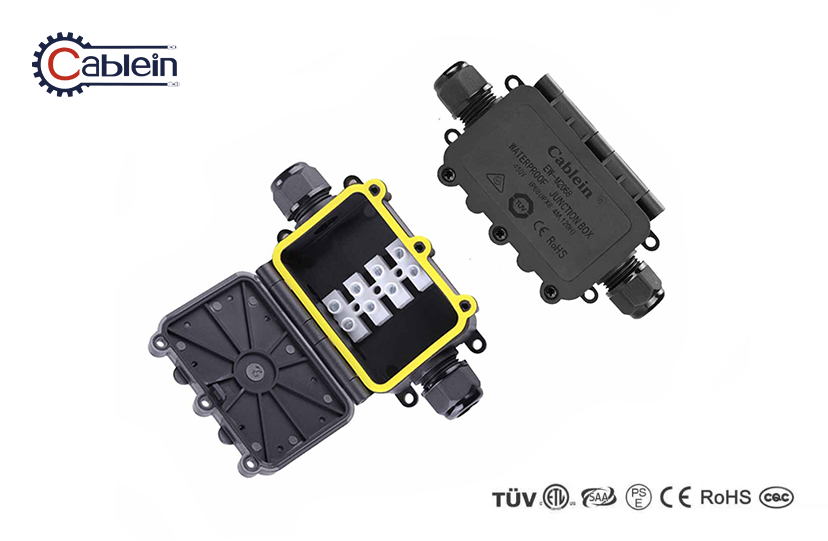
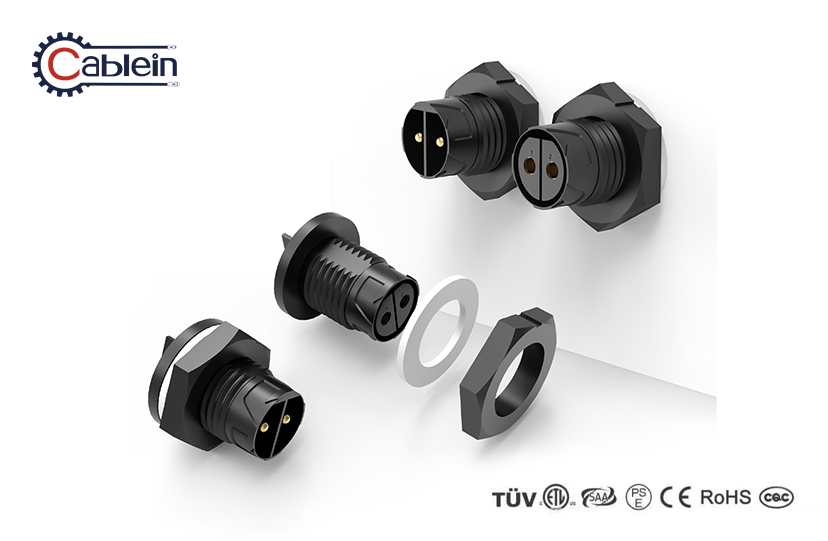
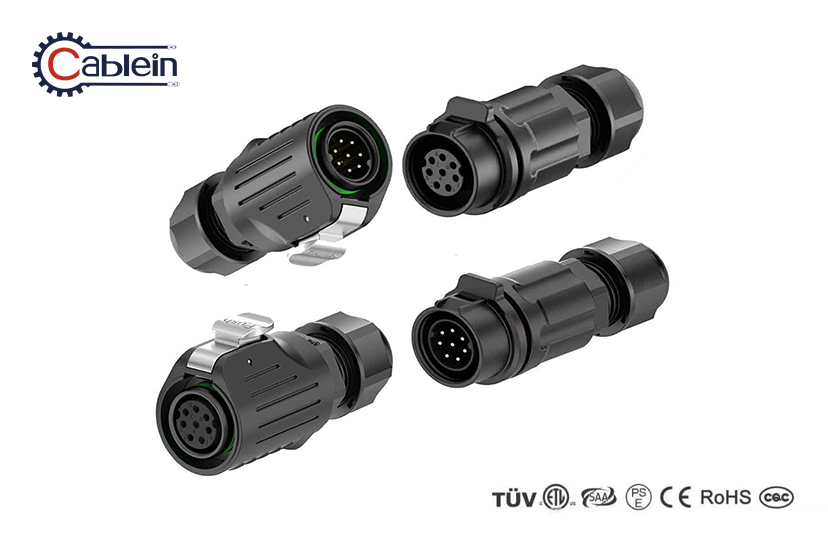
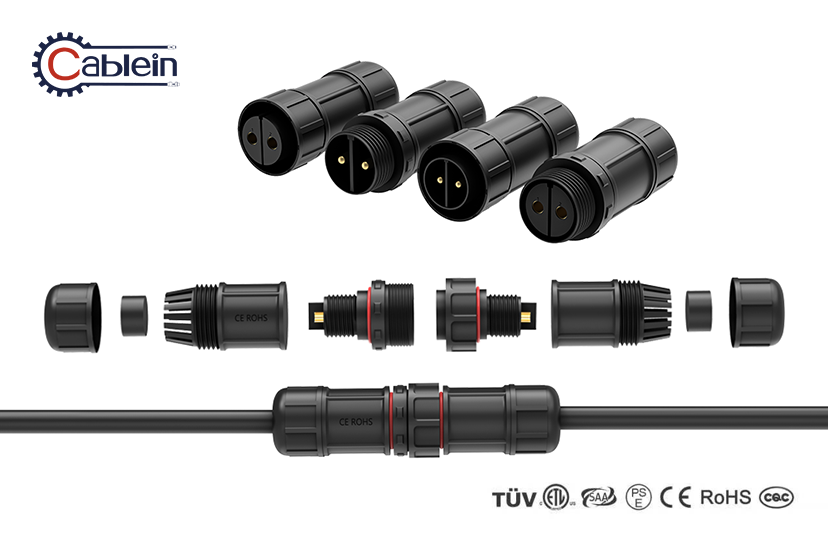
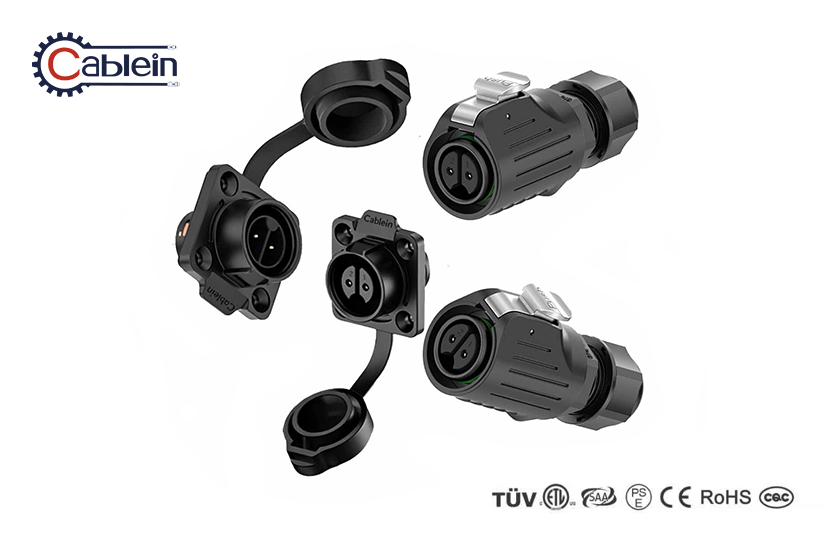
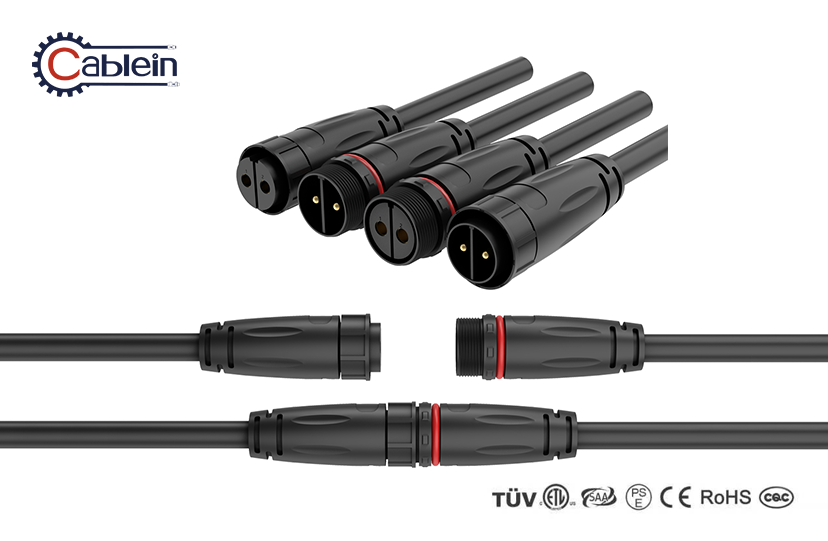
QC20 Locking Waterproof Connector: Complete Guide for Industrial Use
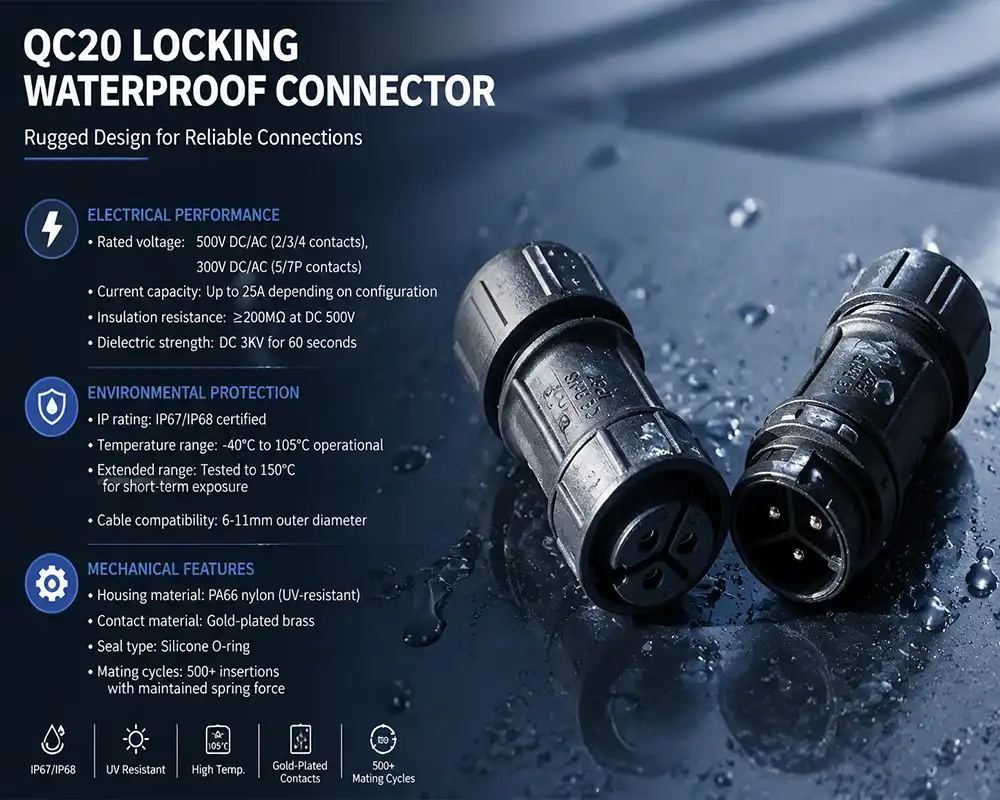
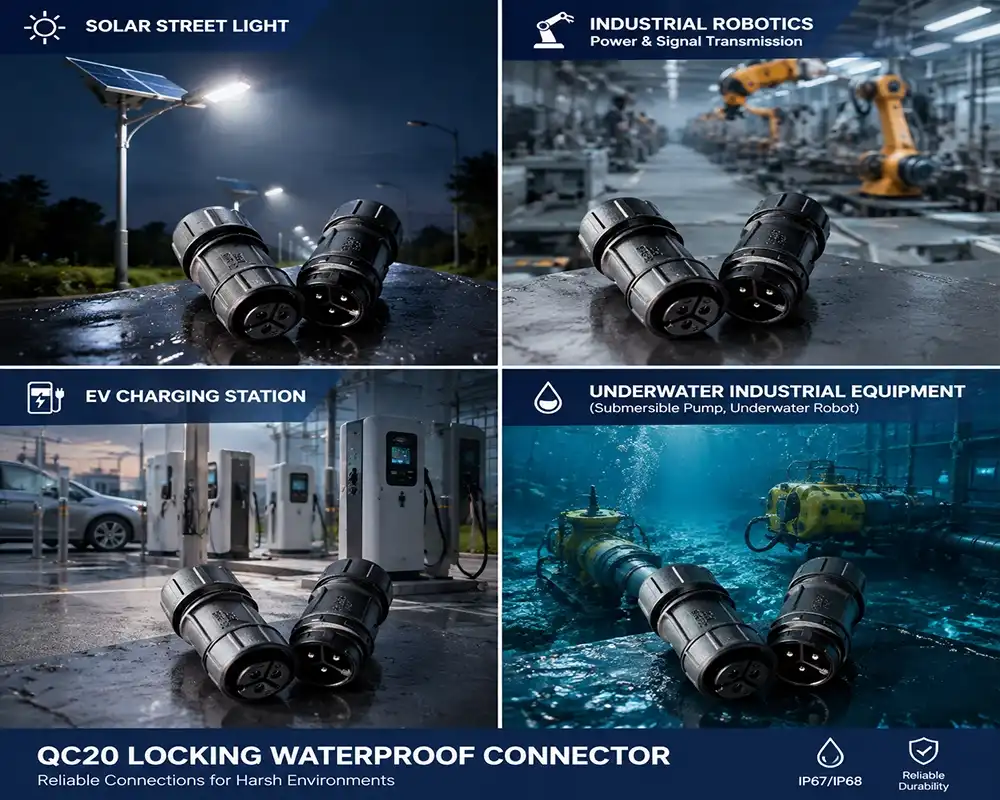
When your project demands reliable electrical connections in challenging outdoor or industrial settings, the QC20 locking waterproof connector provides a field-proven solution. Engineered with IP67/IP68-rated sealing, this connector integrates a quick-clamp mechanism and gold-plated brass contacts to ensure stable performance across extreme temperatures, from -40℃ to 150℃. Designed for high-current applications up to 25A and voltage ratings reaching 500V DC/AC, it serves critical roles in EV charging stations, LED lighting networks, heavy machinery, and industrial automation systems. The PA66 nylon housing resists UV degradation and chemical exposure, making it suitable for coastal, dusty, and high-vibration environments where standard connectors fail.
What is the QC20 Locking Waterproof Connector?
The QC20 locking waterproof connector is an industrial-grade circular connector that was made to help engineers and procurement managers with their connection problems in harsh settings. Consumer-grade connectors break down when they get wet or shaken, but this part has a mechanical locking mechanism and a silicone O-ring sealing that keeps the electrical integrity even when it's submerged for a short time or left outside for a long time.
Core Design Features
Each unit is made by Cablein Technology out of PA66 nylon, which was chosen because it is strong for its weight and doesn't fade when exposed to UV light. The case doesn't crack when it hits something, even when it's dropped on concrete during installation. Inside, gold-plated brass contacts keep the contacts from oxidizing, so the contact resistance stays below 5 mΩ for the whole life of the connection. This low resistance stops voltage drops that could damage sensitive electronics or make high-current paths use more power than they need to.
The silicone sealing ring is the main thing that keeps water and dust out. The oversized quick-clamp nut presses this ring equally around the wire jacket during assembly, making an airtight seal that meets IP68 standards. Instead of torque wrenches, which are needed for threaded connectors, the ergonomic grip lets technicians seal it properly by hand, even when they are cold and wearing heavy gloves.
Technical Specifications That Matter
Electrical efficiency determines how reliable a connection is. The QC20 locking waterproof connector can handle insulation resistances higher than 200MΩ at 500V DC. This stops leakage currents that could set off safety systems or cause energy to be lost slowly. Testing the dielectric strength to 3KV for 60 seconds shows that the space inside the contacts stops arcing when there are short-lived voltage spikes, which are common in industrial power distribution.
Input current changes depending on how the pins are set up. Two-contact models can handle 25A of steady service and can power LED arrays or motor control circuits. Signal and power are combined in a single seven-pin variant, which cuts down on cable runs and installation time on complicated machines. The screw termination can handle wire gauges from 18 AWG to 12 AWG without ferrules. This makes it easier to make changes in the field when new equipment needs cables of different sizes.
Advantages Over Standard Connectors
For traditional links to be waterproof enough, they often need extra junction boxes, which adds cost and creates possible failure places. The QC20 locking waterproof connector doesn't need this because it has built-in sealing. Because techs don't have to connect or heat-shrink, installation time is cut down by a large amount. For big projects with hundreds of connections, this efficiency adds up to a lot of saved work.
Professional-grade links are different from cheaper ones because they can handle changes in temperature. Parts that are only rated to 85°F become soft in full summer sunlight or near equipment that makes heat, which can cause intermittent problems. The QC20 locking waterproof connector can work in temperatures as low as 105℃ and as high as 150℃ for short periods of time. This makes it reliable for lighting above greenhouses or in industrial ovens where temperatures are very high.
Comparison and Decision-Making: QC20 vs Other Waterproof Connectors
Before agreeing to a standard, procurement managers often look at more than one type of connector. By seeing how the QC20 locking waterproof connector stacks up against other options like MC4 solar connectors or M12 industrial connectors, you can see which uses make the most of its design.
Locking Mechanism Comparison
MC4 connectors use snap-fit latches, which work fine for installations where the solar panels stay in place but can come loose when the panels move. The threaded clamp nut on the QC20 locking waterproof connector needs to be rotated on purpose to come loose, which makes it better for installations near heavy machinery that is always shaking. M12 connections have metal holes that are precisely machined, which makes them 30–40% more expensive than other types of connectors. The QC20 locking waterproof connector's polymer thread design gives it similar vibration resistance at a lower price, which is good for projects that want to save money without sacrificing reliability.
Environmental Protection Levels
Many connectors say they have IP67 ratings, but how well they work depends on how the seals are designed and how well they are put together. IP67 approval lets things get submerged up to one metre for 30 minutes, which is good for outdoor gear that might get wet in heavy rain or floods sometimes. IP68 makes this security last even when submerged in water all the time, which is very important for marine monitoring systems or aquaculture sensors. The QC20 locking waterproof connector gets both grades because it has two seals. The cable gland acts as a second barrier in case the main O-ring wears out after hundreds of mating rounds.
Long-term changes in durability are shown by salt spray tests. Standard connectors that don't have protective plating rust within 24 hours of being exposed to salt fog, which happens a lot in coastal factories or on roads where salts are used to melt ice. The QC20 locking waterproof connector's TUV-certified 48–96 hour salt spray resistance proves that it keeps its electrical continuity and mechanical strength in these harsh settings, which lowers the need for upkeep and replacement costs.
Price-Performance Analysis
People who want to save money sometimes choose economy connections that are 50% less expensive than the QC20 locking waterproof connector. However, these fail in the field, needing truck rolls and extra fixes that cost more than the initial savings. When you figure out the total cost of ownership, you should include the labour costs for installation, the expected service life, and the failure rates. When compared to solder-type connectors, the QC20 locking waterproof connector's tool-free assembly cuts installation time by about 40%, which directly cuts down on labor costs. Its 500+ mating cycle standard, compared to many competitors' 200 cycles, means that it needs fewer replacements over the course of its 10-15-year lifecycle.
Another economic benefit is shown by customer feedback from LED lighting contractors. During warranty periods, projects using the QC20 locking waterproof connector report less than 1% connector-related callbacks. This is compared to failure rates of 5–8% with generic alternatives. This dependability keeps contractors' good names and keeps projects from needing expensive insurance service that cuts into profits.
Installation and Technical Guidance for QC20 Locking Waterproof Connector
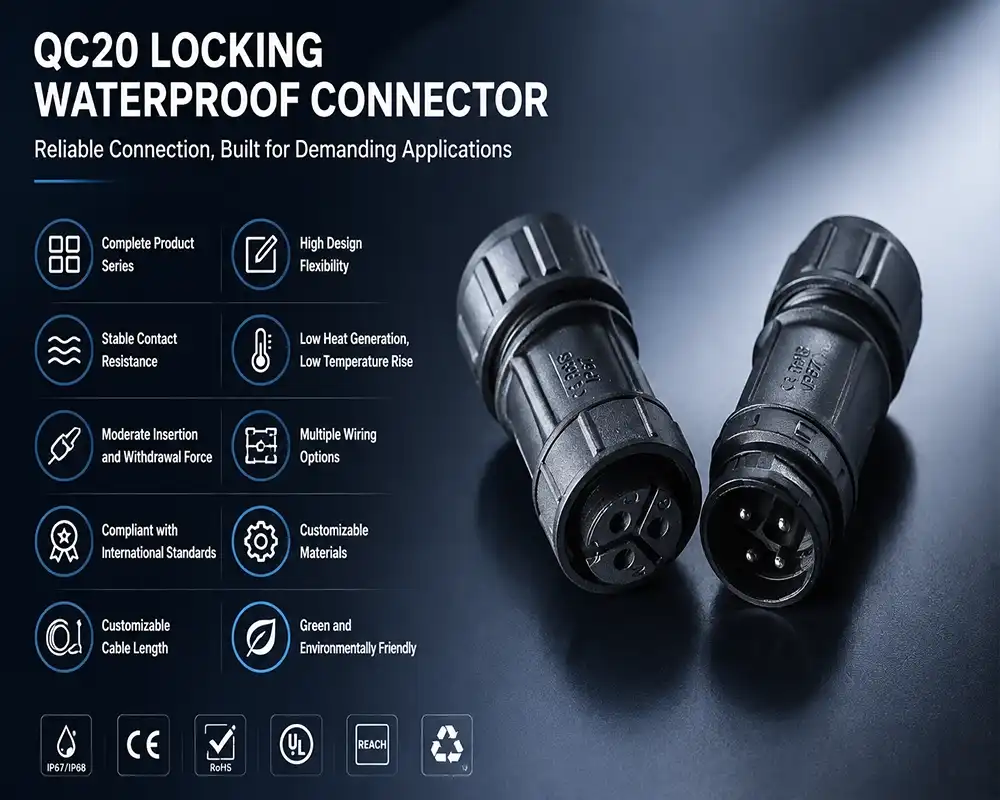
When you place a connection correctly, it works better and lasts longer. Before putting the QC20 locking waterproof connector into production, engineering teams should know how to put it together and what the best practices are.
Step-by-Step Installation Process
Cable selection begins preparation. The 6mm–11mm connector fits most industrial control lines and power leads. Remove the cable jacket to reveal 8–10 mm of wire. Avoid cuts that could cause stress concentrators. Before termination, pass each wire through the connector backshell. After adding the shell, delicate strands may be damaged.
Stripped wires fit directly into screw terminal blocks. Torque each screw to 0.5–0.8 Nm. Squeezing the wire against the brass contact will not break the strands. Overtightening deforms the terminal block and causes nylon case stress cracks. When the unit vibrates, loose wires result from not tightening sufficiently. Normal screwdrivers work for this procedure, so no special crimping tools are needed.
Move the sealing ring and cable gland along the wire to the connecting body. Anticlockwise thread the quick-clamp nut onto the body until hand-tight. Fully squeeze the rubber seal by turning it another quarter turn. When compressed properly, the resistance rises, indicating a good assembly. Don't use pliers or tools because they could break the nylon threads.
Electrical Characteristics and Load Planning
The right wire gauge for a given application is found by calculating the voltage drop. When 25A of current flows through 10 meters of 14 AWG copper, the voltage drops by about 2V, which could affect how the LED driver controls the current or how the motor starts. Engineers should use voltage drop tables to make sure that the QC20 locking waterproof connector's current capacity matches the needs of their circuit. If they need to, they should upsize the wire to keep control within the equipment's specs.
The ambient temperature changes the amount of power that can flow. The 25A grade is based on a temperature of 30°C. If you put plugs inside areas that get up to 60 to 70 degrees Celsius, lower the current by 15 to 20 percent to keep the insulation from breaking down. On the other hand, outdoor installations in northern climates benefit from better heat dissipation. The connector's performance stays the same across its entire temperature range.
Documentation and Datasheet Resources
For design validation and regulatory documents, detailed datasheets are very important. These papers give accurate measurements for panel cutouts, information on how well connectors fit together, and test results from external conditions that back up IP ratings. When engineers put the QC20 locking waterproof connector into UL-listed assemblies, they need this paperwork to show that they meet the standards for the component during certification checks.
Cablein offers direct access to technical support that can help with custom pin layouts or special cable assemblies. This technical cooperation is helpful when making prototypes, because standard catalogue items might not perfectly fit new design needs.
Procurement and Supply Chain Insights for QC20 Locking Waterproof Connector
It's hard for supply chain managers to find a good balance between price, delivery speed, and supplier dependability. Knowing your QC20 locking waterproof connector buying choices makes it easier to make purchases and cuts down on the time it takes to complete the procurement cycle.
Sourcing Channels and Authorized Distributors
Cablein Technology lets you buy directly from the manufacturer, which is helpful for large projects. For normal setups, the minimum order quantity is usually 500 units. When you buy in bulk, the cost per unit drops by 20–30% compared to buying in small lots. For stock items, it usually takes 10 to 15 business days from the time an order is confirmed until it is shipped. For special pin arrangements or pre-wired cable setups, it can take up to 4 weeks.
Regional distributors keep stock for when smaller amounts are needed. These partners keep common setups in stock in 100-unit increments, which lets urgent needs or test production runs get them faster. Distribution markup usually adds 15–25% to the price paid by the company directly, but it makes the product available the same week in major markets.
Pricing Structure and MOQ Considerations
Standard two-contact QC20 locking waterproof connector units are priced similarly to similar IP67-rated connectors. However, the higher IP68 rating and tool-free assembly make premium positioning more appropriate than economy options. Seven-pin models cost more because the contacts are more complicated and the body is bigger. Custom colours or materials come with tooling fees that range from $800 to $2,000, depending on the extent of the changes and are spread out over the production quantities.
When buyers negotiate annual purchase deals, they get better prices and a sure spot when supplies are low. Cablein can handle blanket orders with planned releases, which helps just-in-time inventory tactics that keep the production line running while lowering the cost of keeping goods in the warehouse.
Logistics and Delivery Reliability
Cablein works with well-known goods forwarders to offer shipping choices by both air and sea. Air freight is good for urgent orders or sample requests because it can get to places in the US in 5 to 7 days. With travel times of 25 to 30 days to West Coast ports, ocean freight is a cheaper way to move large amounts of goods. Buyers should know that clearing customs can take an extra three to five business days and that there may be delays during busy shipping times.
Connectors are kept safe during foreign shipping by packaging. Each unit ships in its own plastic bag and is then put in boxes with foam inserts to protect it from damage during shipping. Labelling follows the rules for foreign shipping, and paperwork includes business invoices, packing lists, and certificates of compliance that make the customs process go more quickly.
Warranty and After-Sales Support
Standard warranties cover flaws in the way the product was made for 24 months from the date of shipment. This safety includes replacing broken units and doing a technical study to find the root causes so that the problem doesn't happen again. Field failures caused by incorrect installation or use beyond rated specifications are not covered by the warranty. However, Cablein's support team can help with troubleshooting to figure out how failures happen.
After-sales help goes beyond just fixing problems with the warranty. Technical support for engineering teams can be reached by email at nick@cableinco.com. Questions about design or application guidance are answered within one business day. This available knowledge helps buyers choose the best connectors and avoid making mistakes in the specifications that could cause projects to run late.
QC20 Locking Waterproof Connector Brand and Supplier Overview
To choose the right supplier, you need to look at more than just the product specifications. You also need to look at the supplier's manufacturing capabilities, quality systems, and service infrastructure when selecting the QC20 locking waterproof connector.
Manufacturer Profile and Certifications
Cablein Technology has a 6,000-square-meter office in Shenzhen, China, which is known as the electronics production hub of the country. The company was founded in 2017 and only provides waterproof connectivity solutions. They have gained a lot of experience in sealing design and using their products in harsh environments. This focused approach is different from broad-line connector makers, whose waterproof products only make up a small part of their total output.
Quality management based on ISO9001:2015 makes sure that production methods are uniform and that products can be tracked. If something has a CE mark, it means it meets the safety and electromagnetic compatibility standards of the European Union. If it has a RoHS mark, it means it doesn't contain any dangerous chemicals and can be sold in all global markets. The ETL and PSE marks make it easier for multinational customers to sell products in more than one area. They support distribution in the North American and Japanese markets, respectively.
Customization Capabilities and OEM Services
Standard catalogue items can be used for many things, but sometimes changes are needed because of the specifics of a project. Cablein has its own research and development team that has been awarded over 15 patents for quick-connect and waterproof technologies. These patents serve as the engineering basis for special developments. Changes can be as easy as customising the length of the cables or the colour of the housings, or they can be as complicated as adding new pins or electronics.
Through OEM relationships, companies can put their own logos on connectors or package them with other parts. When catalogue changes aren't enough, private mould development can help make truly unique designs. Usually, it takes 8 to 12 weeks from idea approval to production models. These features help equipment makers who want to make their goods stand out or make interaction better within their systems.
Technical Support Accessibility
Professional suppliers are different from commodity vendors because they offer quick expert help. Cablein keeps application experts on staff who are familiar with the needs of a wide range of industries and can suggest the best connection designs based on the environment, electrical loads, and installation limitations. This conversational method keeps buyers from over-specificating, which drives up costs, or under-specificating, which could lead to problems in the field.
Documentation libraries have CAD models in a number of different formats, which lets mechanical engineers check that parts will fit in their assemblies while the designs are still being made. Installation guides with instructions in more than one language help global manufacturing operations where assembly technicians and engineering teams specifying parts might not speak the same language.
Conclusion
In order for industrial connection to work, systems need to be designed to be reliable, easy to install, and perform well over time in harsh environments. The QC20 locking waterproof connector meets these needs with a well-thought-out design that combines IP67/IP68 closing, tool-free assembly, and stability over a wide range of temperatures. Flexible sourcing choices, reasonable pricing, and the ability to customise products to meet a wide range of application needs are all good things for procurement managers. Engineering teams get a part that comes with detailed technical instructions and quick help with the application. This connection is reliable enough to keep production lines going and lowers the cost of ownership over time, whether your project is EV charging infrastructure, outdoor LED installations, or big industrial equipment.
FAQ
What IP rating does the QC20 connector achieve?
The QC20 locking waterproof connector can get both IP67 and IP68 ratings, depending on how it is set up and configured. IP67 certification protects against dust getting in and temporary immersion up to one meter deep for 30 minutes. This means that it can be used on outdoor equipment that gets wet from splashing and rain. IP68 provides security against constant submersion, which makes it suitable for use in marine environments or places where flooding may happen. As long as the connector is installed correctly and according to the manufacturer's instructions, it will work as expected for its entire service life.
Can the QC20 operate in extreme temperature environments?
Yes, the QC20 locking waterproof connector works reliably from -40°C to 105°C for long periods of time and from -40°C to 150°C for short periods of time. This range is good for most industrial uses, such as outdoor setups in places where winters are hard and equipment that will be used in hot places, like greenhouses or near industrial heating equipment. The PA66 nylon housing stays strong at all of these temperatures; it doesn't break easily in cold weather or get soft in hot weather.
What are typical lead times for QC20 orders?
When you order from Cablein Technology, stock configurations ship within 7–10 business days of the order being confirmed. It takes 3–4 weeks to make custom pin configurations, special cord lengths, or pre-wired QC20 locking waterproof connector units. For pressing needs, rush orders may be able to get delivered faster. Distributors who keep local stock usually have standard models in smaller quantities available the same week, which can be used for prototypes or emergency replacements.
Partner with Cablein for Reliable Industrial Connectivity Solutions
Cablein Technology uses more than 30 utility model patents and nine years of manufacturing experience to make waterproof connections that meet the strictest standards in the industrial world. As a QC20 locking waterproof connector provider, we can offer a stable inventory of more than 10,000 pieces per design, help with custom engineering, and shipping around the world through relationships with UPS, DHL, and FedEx. There is certification paperwork for CE, RoHS, and ISO9001:2015 on every connector that helps you meet your compliance needs. Email our engineering team at nick@cableinco.com to talk about your unique application needs, get technical datasheets, or get quotes for your project with large discounts. We offer technical help 24 hours a day, 7 days a week, so you can be sure that your questions will be answered quickly and correctly, keeping your projects going forward.
References
1. Smith, J. R. (2021). Industrial Connector Design and Selection Criteria. Technical Press International.
2. Chen, L. & Wang, M. (2022). "Waterproof Sealing Technologies for Harsh Environment Applications," Journal of Electronic Packaging, 144(3), 245-258.
3. Anderson, K. (2020). Field Installation Best Practices for Industrial Connectors. Industrial Maintenance Publishers.
4. Roberts, D. T. (2023). "Comparative Analysis of IP-Rated Connector Performance in Marine Environments," Marine Electronics Engineering Quarterly, 18(2), 112-127.
5. Thompson, A. & Liu, Y. (2021). Supply Chain Management for Electronic Components. Global Procurement Institute.
6. Martinez, C. R. (2022). "Total Cost of Ownership Analysis for Industrial Connectivity Solutions," Industrial Engineering Management Review, 37(4), 89-103.