Waterproof Cable Clamp for M12 M16 M20 Connectors
A waterproof clamp for M12, M16, and M20 connectors holds a cable in place and seals the entry point against water, dust, and dirt. The right choice depends on the actual cable outer diameter, the metric thread, the sealing material, and the IP rating your equipment needs. M12 suits small sensor and control cables, M16 handles mid-size machine wiring, and M20 fits larger power cables. Nylon works well for most outdoor jobs, while stainless steel handles harsh, corrosive sites. In this guide, I explain how each size works, how to install it, and how to buy it without tying up cash.
Understanding the Waterproof Cable Clamp and Its Alternatives
What a Waterproof Cable Clamp Does
A waterproof clamp keeps wires in place and around the outside of the enclosure. It protects the wire end that goes into a junction box, connector, or container. The body has a metric thread going through it. On the inside, the cable jacket is sealed by a compression insert and an O-ring. The body is attached to the panel by a locknut. These parts work together to keep dust and water out and to keep the wire from coming loose from its terminals. When someone buys something, I always tell them that a clamp doesn't seal as well as the whole thing. Even if the clamp on the cable jacket is good, water can still get in.
How the Seal and Grip Work
It's possible for the part to move inward when the dome nut is used. That pressure closes the gap around the cable jacket, making a cover. The wire is held in place by the same force that keeps it from moving. Pulling on it won't get to the pins or connections inside. This pressure relief is important in places where wires move around a lot or are repaired a lot. Materials used to make the seal also count. Even though the weather changes a lot, silicone and EPDM don't break down when they're outside. Our QC12 quick clamp connector has two silicone O-rings or EPDM gaskets that don't wear out. Read the datasheet and pay attention to the torque. A leak path can be made if there is too little torque or too much torque.
Waterproof Cable Clamp vs. Cable Gland
There are two words for the same part, but they mean different things. A cable gland holds a cable in place, mounts it, and seals it. It usually keeps a cable from getting into an enclosure. A waterproof clamp may be used to hold something in place, release pressure, or seal one connector contact. Clamps are good for small systems, lines that are already terminated, and quick changes. Glands can be used on control boxes, armored cables, and regular enclosure doors. A simple cable clip only holds the wire against a surface; it doesn't close. Find out what standard a company uses for the wire ports they make for electrical systems. These are covered by IEC 62444. Before you buy, look at how the cables will be fitted, how the seals are made, and the cable length.
M12, M16, and M20 Waterproof Cable Clamp Size Guide
M12 for Compact Cables
M12 clamps can hold small sensor leads, LED wiring, and light control cables. Many listings say that the cable range for this size is between 3 and 6.5 mm, but the exact amounts vary from one maker to the next. That hole needs to be about 12.5 mm wide and have an M12x1.5 thread size. That thread isn't the same as the M12x1 thread on round sensor connectors. To see the thread pitch, look at the drawing. Parts with a lot of people are easy to read because the body is small. If the wire is even half a millimeter too long, the cable jacket won't close. Use calipers to measure the wire.
M16 for Mid-Size Wiring
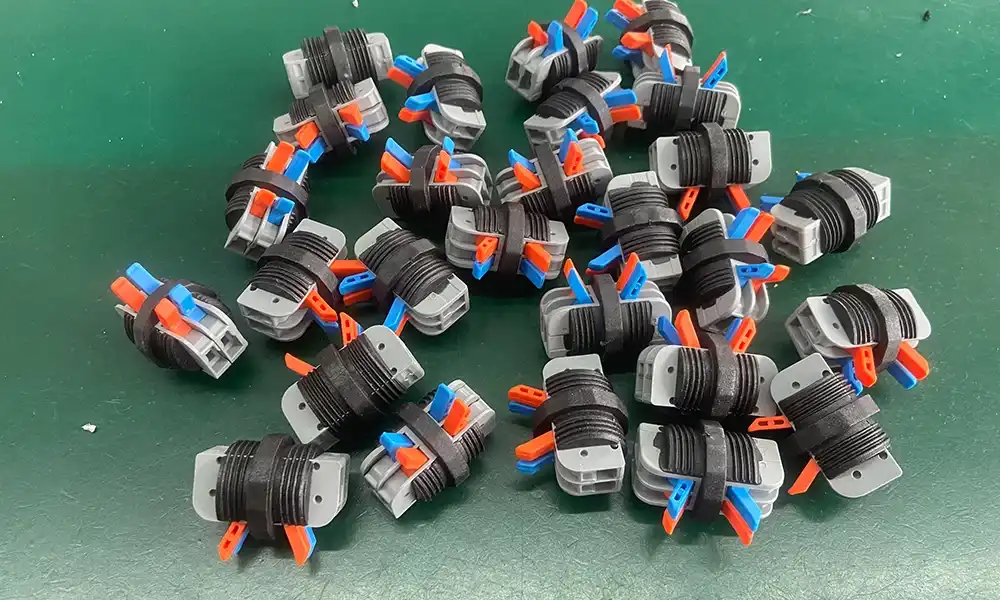
The M16 is the middle size between the three. A lot of catalogs show cables that are 4 to 8 mm thick for M16x1.5 items, which have a hole that is about 16.5 mm wide. Sensors, machine wires, and car harnesses are all examples of places where M12 is too small, and M20 is too large. Our QC16 quick clamp waterproof clamp connector can be used in a wide range of mid-range circuits because it can handle solid or loose wires from 0.5 mm² to 2.5 mm² (20–14 AWG). To keep their part lists short, people who buy M16 often buy M12 and M20 at the same time.
M20 for Larger Cables and Heavier Loads
M20 can handle bigger cables and more force being pulled on them. A lot of catalogs show M20x1.5 items with a hole that is about 20.5 mm wide and 6 to 12 mm thick. You can find it in control stations, marine gear, solar combiner boxes, and factory tools. Before you buy, make sure you know the thread pitch, panel thickness, locknut clearance, and shape of the connector. Things that are thin might need a washer, and things that are thick might need a thread that is longer. I believe you should get a drawing or model of something before you make a lot of it. A small amount doesn't cost as much as a large quantity that doesn't work.
Protection Level, Material, and Application Fit
IP65 vs. IP68
IEC 60529 decides what the IP code is. The first number in IP65 means that it doesn't let dust in, and the second number means that water jets won't hurt it. IP68 means that it doesn't let dust in and can be submerged in water for a long time, as long as both the buyer and the seller agree to those terms. The IP67 test of 1 m for 30 minutes must not be as harsh as these conditions. There are two kinds of ratings: one for the part itself and one for the whole cable and connector set. Make sure you get the test report, cable range, and tightening torque. Sometimes, people in the US may see NEMA 250 enclosure types instead of IP codes. Ask your expert to make sure because the two systems don't quite match.
Nylon vs. Stainless Steel
Nylon doesn't rust, is light, and keeps heat in. Some of the things it can be used for are robotics, solar systems, and wiring outside. Find PA66 that has been set by UV light. It's used in the housing for our QC12. It doesn't catch fire easily (UL94-V0) and can be used in temperatures ranging from -40°C to +105°C. Stainless steel is stronger and less likely to break. There are many places where grade 304 is used. Grade 316 can handle chloride from salt water better because it has molybdenum in it. With this in mind, it is often picked for use in chemicals and the ocean. Nylon is cheaper and lighter than steel, but steel is better for tough jobs.
Matching the Clamp to the Application
When you work with electricity outside, you need to make sure that it can handle rain and UV light. For solar systems, the wires need to be the right size and be able to handle changes in the temperature of the roof. Car wiring has to deal with shaking, oil, and not having a lot of room. Some marine gear needs to be able to withstand corrosion and have seals that can stay in water for a long time. Industrial tools see things like oil, dust, cleaning products, and heat. It is important to get that IP69K rating in writing because food plants often have rules about high-pressure washdowns. First, write down what the spot looks like. This will help you pick the material and seal a lot more.
Installation, Selection, and Mistakes to Avoid
How to Install an M12, M16, or M20 Clamp
Before you do anything else, make sure you have the right IP target, metric thread, cable diameter, and sealing material. Don't cut the cable jacket when you take it off. It's important to put the dome nut, insert, and seal on the wire in the right order. The O-ring should not be twisted or pinched. Keep it clean and flat. They can't cross-thread because you have to thread the body into the hole by hand first. Then, tighten the locknut and dome nut by following the torque numbers on the paper. In the US, sites must also follow state rules as well as the National Electrical Code (NFPA 70). Last, test the seal by pulling it and check the compression.
How to Choose the Right Clamp for Your Project
First, say whether the site is inside or outside and list any chemicals, vibrations, temperatures, water, dust, or UV light that may be present. Finally, make sure the material, thread, size, and IP grade match those of the real wire. Things are important to different people. Price, MOQ, lead time, and how stable the supply is are the things that buying teams look at. An engineer needs test results and drawings. Distributors need a lot of different goods and ways to pack them. OEMs may want markings that are specific to their needs and a steady supply. You should look at the total cost, not just the price per unit. A cheap waterproof clamp that leaks will cost you a lot more in time and money to fix.
Common Selection and Installation Mistakes
Most people choose a clamp based only on its thread size, which is wrong because two M20 clamps can fit cables of different sizes. People also make the mistake of thinking that all IP68 claims are the same, putting low-grade metal in salt water, and using nylon in places where heat or heavy loads are too much. Not all buyers care about chemicals or UV rays either. It's bad for threads, seals, and jackets to be too tight, and it lets water in when the clamp is too open. Also, pay attention to how far the wire can bend. You can find most of these problems before a batch ships by testing a small part of the whole assembly.
Quality, Customization, and Procurement With Cablein
Documents to Request Before You Approve
It is important to get information from each provider about seals, cable range, metric threads, IP test results, temperature data, torque directions, and files with drawings and datasheets. Ever since 2017, Cablein has been making waterproof connectors for factories in Longgang, Shenzhen. More than 200 people work in our 6,000 ㎡ facility. We follow ISO9001:2015, and we test every unit to make sure it is waterproof. Some of the certifications you can get are CE, RoHS, REACH, TUV, ETL, PSE, SAA, and CQC. Tell us which one your client wants.
OEM and Custom Options
For some projects, a catalog part isn't enough. Cablein has more than 30 utility model patents and can make products to order for both OEM and ODM customers. They can also use private molds. Send us what you need in terms of size, color, writing, packaging, private labeling, connector interface, or sealing material. They'll explain what they can do and how long it will take. Each order is made just for you based on what you need. A clear picture and a goal amount are the best ways to speed up this process.
Stock, Shipping, and Combined Orders
A lot of small things are bought at once. These are the things that matter the most to people regarding a waterproof clamp order.
- Stock: We always have more than 10,000 of each item in stock, and it usually takes 7 to 10 days for standard delivery. Please tell our team what type and how many clamps you need. This way, they'll know what to ship first and what needs to be set up as a special order.
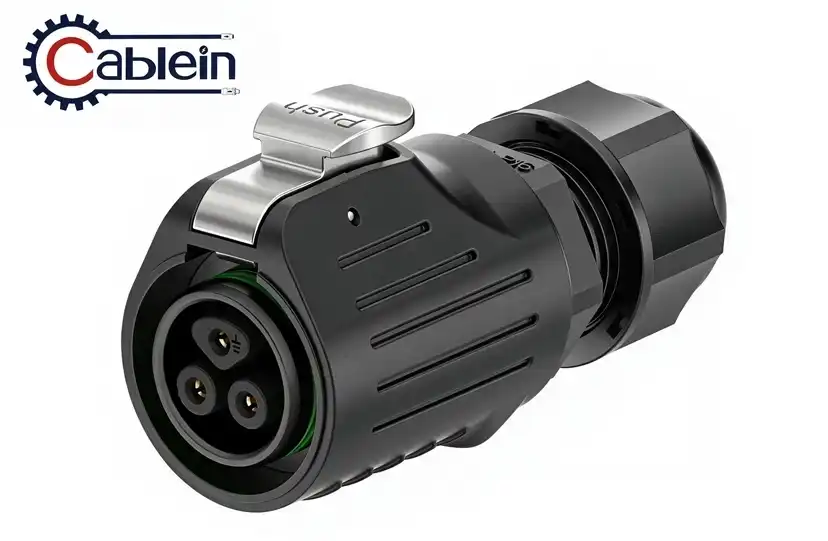
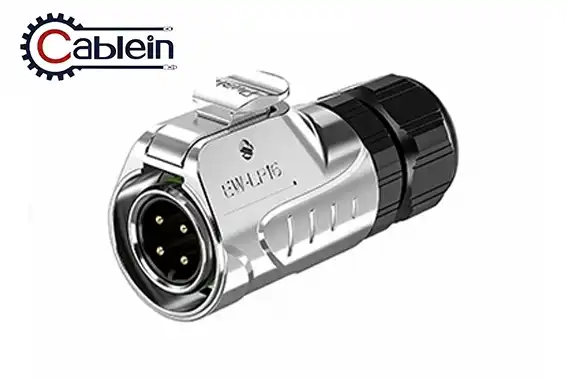
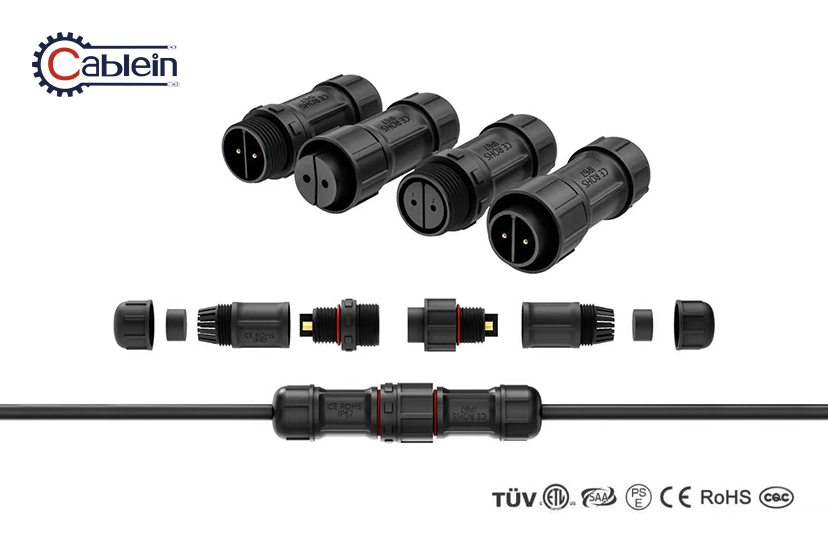
- Combined orders: You can send your clamps with waterproof connectors from us, like the QC12 and QC16 quick clamp line. The people who buy things for you will have fewer freight bills and papers to keep track of. We'll let you know which items can be shipped together after you send us the whole list.
- Shipping and support: We ship and serve customers through UPS, DHL, FedEx, and other reputable freight forwarders. They help us bring goods to the US by air and sea. Our expert team is also available 24 hours a day, seven days a week, so if you forget something, it won't take long for your quote to be made.
Conclusion
If the thread, the wire thickness, and the seal don't match, the M12, M16, or M20 waterproof clamp won't work. While different manufacturers list different sizes, M12 is good for small cables, M16 is good for medium-sized wiring, and M20 is good for large cables. IP68 is based on agreed-upon soaking conditions and can be found in a test report. IP65 protects against dust and water jets. Nylon is cheap and easy to carry, so it's a good choice for most outdoor tasks. Stainless steel, especially grade 316, is strong against chemicals and salt water. Clamps and glands work together, but they get in at different places. Most leaks can be stopped with a proper installation, the right amount of torque, and a test of the whole assembly. Buyers who are careful also look over drawings, samples, and other paperwork before they place a large order.
FAQ
1. Does thread size confirm cable fit?
No, an M20 thread only tells you how big the hole is. To find out what ranges of wire thickness each clamp will accept, look at the datasheet and measure the jacket.
2. Is IP68 always better than IP65?
Not all the time. IP65 can handle dust and water jets. IP68 protects against soaking, but only in the ways that the maker says are okay. Get the test report if you want to know.
3. Which material suits outdoor use?
In the sun, UV-stabilized nylon can be used for most jobs. Pick a type of stainless steel like 316 if you are going to use saltwater or strong impact.
4. Can I add connectors to a clamp order?
Yes. You can get a price on both our waterproof connectors and clamps at the same time. Send your list to nick@cableinco.com.
5. Can you customize clamps?
We can do OEM or ODM for you. We'll let you know what's possible after you send us your drawing.
6. What does a quote request need?
Please send the material, quantity, destination, target date, and size of the cable, as well as the model of the connector or enclosure, the IP rating, and the temperature range.
Request a Waterproof Cable Clamp Quote from Cablein
Cablein makes waterproof connectors and sells waterproof clamps. You can get technical help 24 hours a day, seven days a week, and they always have stock. Send an email to nick@cableinco.com with your size, cable diameter, and number of items. We'll get back to you with a quote or a sample plan. You can add QC12 or QC16 quick clamp connectors to the same order.
References
1. IEC 60529: Degrees of Protection Provided by Enclosures (IP Code), 2013
2. IEC 62444: Cable Glands for Electrical Installations, 2010
3. UL 94: Standard for Tests for Flammability of Plastic Materials for Parts in Devices and Appliances, 2013
4. NEMA 250: Enclosures for Electrical Equipment (1000 Volts Maximum), 2020
5. NFPA 70: National Electrical Code, 2023
6. ISO 9001: Quality Management Systems – Requirements, 2015