What Is an M16 T-Type Waterproof Connector and How Does It Work?
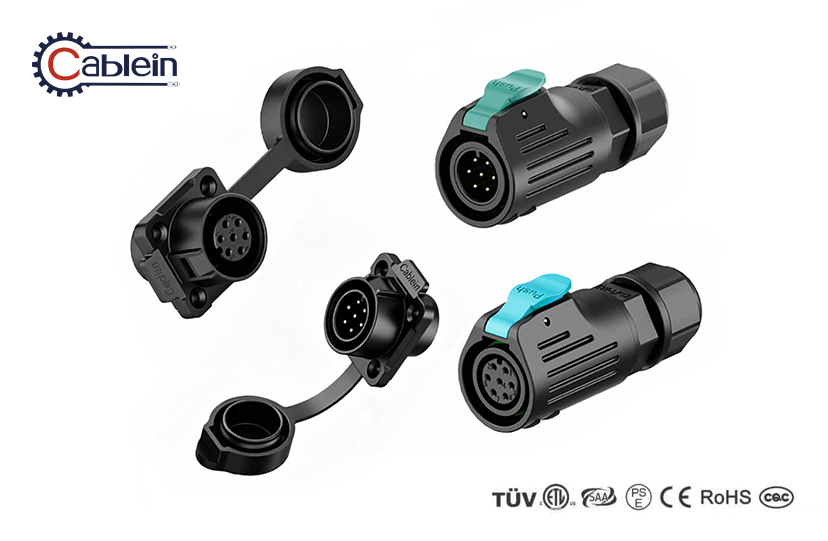
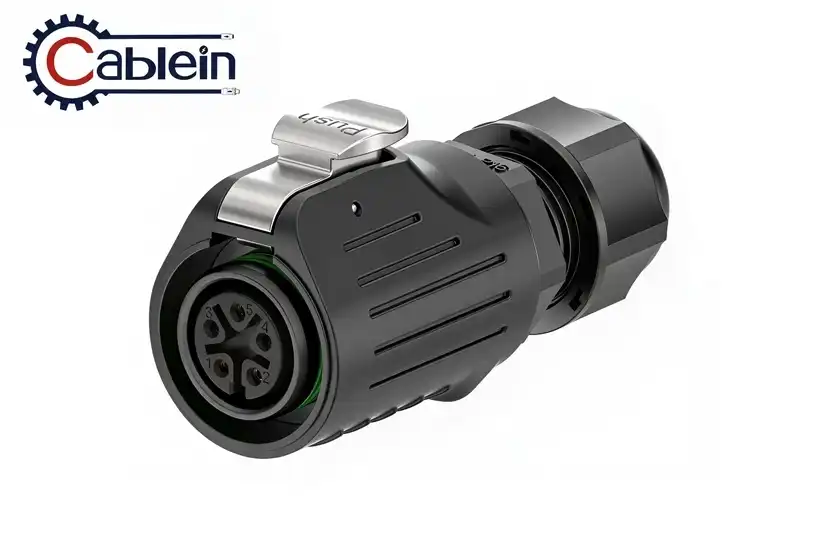
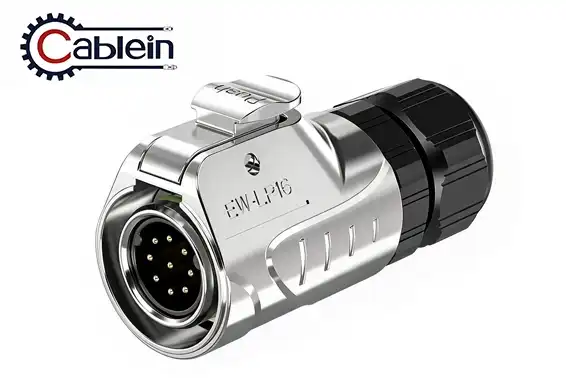
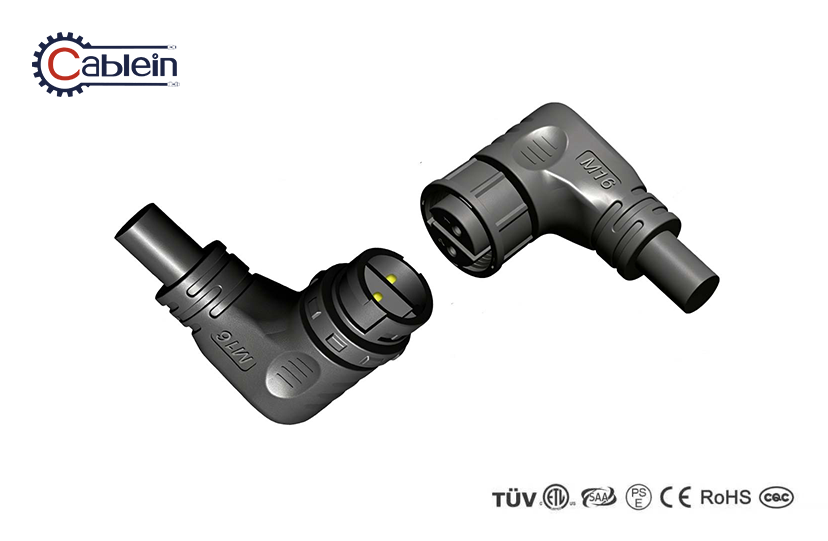
An M16 T-type waterproof connector is a sealed, three-port junction device built around a 16mm metric thread body. It splits one incoming power or signal line into two independent output paths inside a single housing—no external junction box needed. The shell is molded from PA66 nylon rated UL94-V0, the contacts are gold-plated copper alloy, and silicone O-rings create a dual-barrier seal that meets IP67 and IP68 standards. Rated at 400V / 17.5A across a working range of -40℃ to +105℃, it is the go-to branch-circuit solution for outdoor lighting, industrial automation, marine electronics, and renewable energy systems.


Understanding the M16 T-Type Waterproof Connector
Before you choose a branch connection, you should know what's inside the box and why the choice of material is important for long-term performance in the field.
Shell Material and Flame Retardancy
The outside is made of PA66 nylon that is strengthened to meet F1-grade standards for UV protection and UL94-V0 flame retardancy. PA66 doesn't soak up much water, stays the same size from -40°C to +105°C, and doesn't react with most industrial chemicals. Unlike regular ABS housings, it won't break after years of being in the sun, which is a big plus for street lighting projects in places with a lot of UV light.
Sealing Architecture
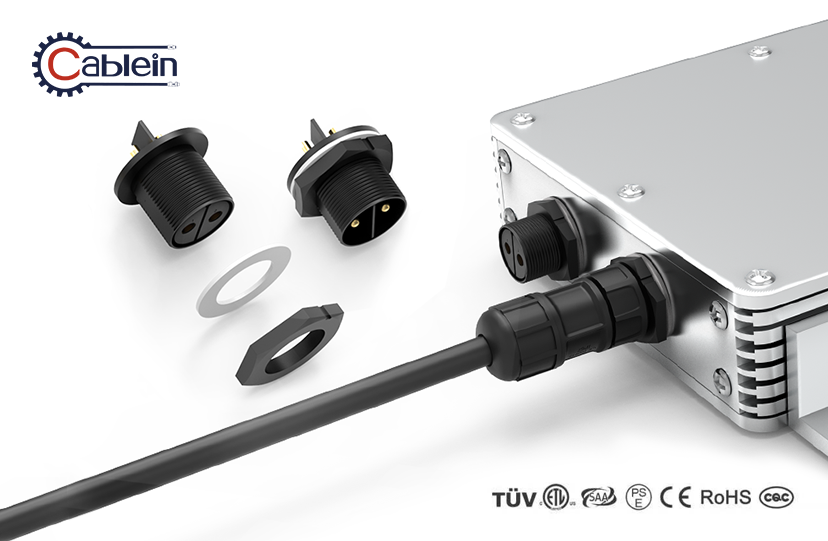
A silicone O-ring is fitted into a precisely machined groove in each of the three ports. When the cable gland is torqued to the right level, the O-ring evenly contracts, making a barrier that doesn't let fluid through. This two-seal path—one at the cable entry and one at the mating face—is what gives it the IP68 grade, which was proven by immersion testing for 72 hours straight, not a quick test in the lab.
Contact Design and Electrical Performance
Gold-plated copper alloy pins keep contact resistance below 5 mΩ for more than 1,000 cycles of joining. Gold plating stops the oxide film that forms on bare copper in damp or salty places, which is a common reason why coastal installations sometimes stop working. The 2- and 3-pole types are used for both low-voltage sensor signals and power transfer (up to 17.5A) in the same product family.
Wiring Compatibility
Cable outer diameters can be between 3.5 mm and 10 mm, and wire cross-sections can be between 0.5 mm³ and 1.5 mm³. That range includes the 1.0 mm² and 1.5 mm² conductors that are common in outdoor LED light harnesses and PLC I/O tails, so you don't need to use adapter sleeves or ferrules.
Advantages and Practical Applications of M16 T-Type Waterproof Connectors
The M16 T-type design fills a need that M12 and regular M16 t-type waterproof connectors can't: it makes a sealed branch point at the light or sensor node instead of sending wires back to a central box.
Here are some of the best things about this device:
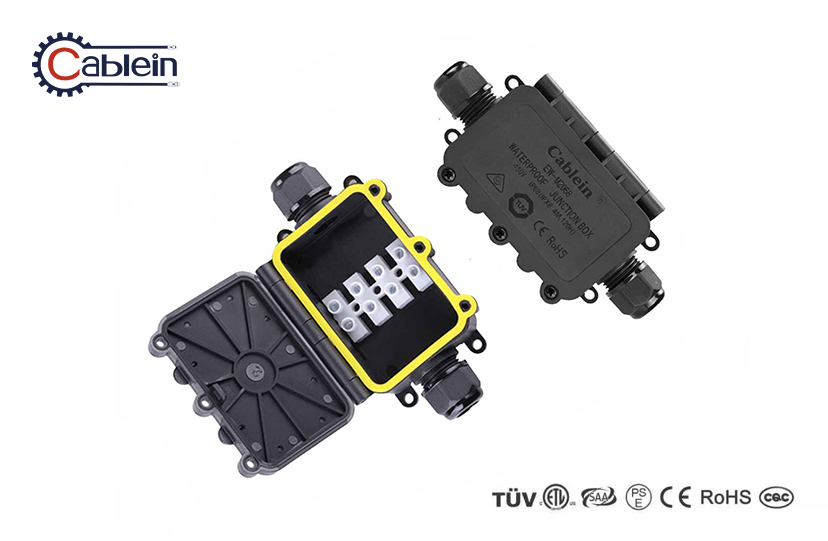
- Integrated three-way branching. One incoming line divides into two outputs inside the sealed body. This removes the need for an external IP-rated junction box, cutting per-fixture material cost and reducing the number of potential water-ingress points from three or more down to one sealed unit.
- Tool-free screw terminals. The captive screw clamps accept stripped conductors directly. An installer presses the conductor in and turns the clamp—no crimping tool, no soldering iron, no heat-shrink tube. Field reports from lighting contractors indicate installation time per branch point drops by 30 to 50 percent compared with traditional solder-and-gland assemblies.
- Rated for harsh-environment duty. With a continuous operating temperature of -40℃ to +105℃ and an IP68 seal, the connector survives desert heat cycling, Nordic freeze-thaw cycles, and coastal salt exposure that would degrade standard plastic connectors within one season.
These benefits directly lead to lower project costs and fewer warranty calls. For an outdoor LED manufacturer sending lights to northern Europe, getting rid of one junction box per pole lowers both the cost of materials and the chance of a warranty claim in the first rainy season because of water damage.
Applications in Sectors
Networks for outdoor LED street lighting and landscape lighting use the T-junction to split power at the luminaire arm, which keeps the wiring on the pole neat. In industrial PLC panels, the 3-pole version is used to send sensor bus signals to more than one actuator station on a single cable. Marine and aquaculture workers put the connector on underwater sensor harnesses, which is a place where saltwater and hydrostatic pressure would damage any terminal that wasn't protected. Connectors separate monitoring sensor loops from the main inverter harness. This is done in solar combiner boxes and wind turbine nacelle wiring.
Choosing the Right M16 T-Type Waterproof Connector for Your Needs
Picking the wrong branch connection is not only a technical mistake, but it can also void your guarantee, require extra work during installation, and put you at risk of not following the rules set by regulators. Before you place an order, think about these things.
IP Rating and Test Method
IP67 and IP68 are not the same thing. It is waterproof up to 1 meter for 30 minutes with IP67 and waterproof up to a depth decided upon by both the buyer and the seller with IP68. Ask the seller for the test record, which should include the water temperature, depth, and length of time that the item was submerged. If a M16 t-type waterproof connector is sold as "IP68" but doesn't come with a test report, it could be dangerous to use it outside or underwater.
Certifications for Your Target Market
For sale in the European Union, goods must have the CE mark. RoHS compliance is needed for most markets around the world. If a company has ISO9001:2015 approval, it means that the whole process of making the product has been checked. If you are selling your products in North America, make sure you know if UL or ETL listing is also needed. In the US, CE listing alone is not enough to meet NEC-based inspection requirements.
Supplier Qualification and Sample Policy
A good provider should send out two to five models within three to seven days, give you 2D and 3D drawings under an NDA, and keep at least 10,000 pieces of each SKU in stock so that you can quickly place another order. A low MOQ for the first samples (200 to 500 pieces) shows that the source is sure that their batch will be consistent. Before you commit to a production run, ask for a salt-spray test report after 96 hours to make sure the gold plating worked.
Customization Scope
Standard catalog versions come in both 2-pole and 3-pole layouts and have housings that are black or gray. Custom options should include different branch cable lengths, different conductor colors for coding polarity, and different panel-mount flange options for integrating the enclosure. Check the supplier's tooling wait times and see if they will keep your custom mold from being sold to rivals.
Installation Best Practices and Troubleshooting Tips
Even if the connector is correctly specified, it will still fail in the field if it is put together badly. That's right, these steps protect both the seal and the wire connection.
Pre-Installation Checks
Before you strip any wire, make sure the outer diameter of the cable fits the size of the gland. Most of the time, workers skip this step, which means they have to take the whole thing apart on-site. Slide the gland nut and O-ring onto the wire before entering the conductor. Check the O-ring for cuts or flat spots on the surface. If it's broken, replace it instead of using it again.
Terminal Torque and Conductor Prep
Cut the insulation to the length shown on the body of the connector, which is usually 6 to 8 mm. Fully insert the conductor until it hits the clamp plate at the bottom. Tighten the screw until you feel a strong resistance. If you over-tighten, you cut the screw thread, and when you under-tighten, the threads only touch sometimes when the screw is moving. A flat-head screwdriver with a torque range of 0.5 Nm to 0.8 Nm is the right tool for 1.5 mm² conductors.
Seal Integrity Test
After putting the light or panel together, do an easy 24-hour submersion test in a water tray before turning it on. Any bubble trace at a port means that the O-ring isn't lined up right or that the gland torque isn't high enough. This can be found in seconds at the bench, but it takes a service call to find it after installation.
Conclusion
A real technical problem is solved by the M16 t-type waterproof connector. It makes it possible to add a code-compliant, sealed branch point to outdoor, marine, and industrial circuits without making them bulkier or harder to install. The gold-plated contacts, tool-free connections, silicone O-ring dual seal, and PA66 nylon shell are all in one part. This part replaces a junction box and greatly reduces the amount of work that needs to be done in the field. With IP68 testing, CE, RoHS, and ISO9001:2015 certification, this is a well-known option for any procurement team looking for branch-circuit parts for harsh environments. If you look at a supplier's test results, sample speed, and level of customization, not just their list price, you can tell if the connection will work as expected for its entire life.
FAQ
1. What is the difference between IP67 and IP68?
An IP67 rating means that something is safe from water immersion up to 1 meter for 30 minutes. IP68 covers continuous immersion at a depth set by the manufacturer, which for industrial-grade units is usually 1.5 meters for 72 hours. IP68 is the right specification for permanent installations outside or underwater.
2. Can I use different wire gauges in the same connector?
When the cable gland meets the outside thickness of the cable jacket, it forms a seal. Electrically, different wire gauges can be used in different ports, but the outer diameter of the cable used in each port must be within the gland's rated range (3.5 to 10 mm) to keep the waterproof seal.
3. Why do gold-plated contacts matter for sensor wiring?
Signals with low voltage, usually less than 24VDC, can't burn through oxide layers as mains voltage can. Gold plating keeps the resistance of the contacts below 5 mΩ, even when they are exposed to humidity. This keeps the signal accuracy on sensor lines for years of use.
4. How do I confirm the connector meets European requirements?
Ask for the CE Declaration of Conformity, the RoHS test report, and the UL94-V0 flame-retardancy certificate. For jobs in North America that are UL-listed, make sure to ask for ETL or UL paperwork before choosing a supplier.
Get a Quote from Cablein – Your Trusted M16 T-Type Waterproof Connector Supplier
Cablein has been making waterproof connectors with an IP rating since 2017. They have over 30 utility model patents and a 6,000 yuan factory in Shenzhen. We have ISO9001:2015, CE, RoHS, ETL, TUV, and more than 10,000 pieces of each SKU in stock, so we can ship them in 7–10 days. You can email our engineering team at nick@cableinco.com to get samples and datasheets right away, whether you need a stock M16 t-type waterproof connector or a fully designed branch assembly.
References
1. International Electrotechnical Commission. IEC 60529: Degrees of Protection Provided by Enclosures (IP Code). IEC, 2013.
2. Underwriters Laboratories. UL 94: Standard for Tests for Flammability of Plastic Materials for Parts in Devices and Appliances. UL, 2013.
3. International Organization for Standardization. ISO 9001:2015 Quality Management Systems — Requirements. ISO, 2015.
4. European Parliament. RoHS Directive 2011/65/EU: Restriction of the Use of Certain Hazardous Substances in Electrical and Electronic Equipment. Official Journal of the European Union, 2011.
5. International Electrotechnical Commission. IEC 61984: Connectors — Safety Requirements and Tests. IEC, 2008.
6. ASTM International. ASTM B117: Standard Practice for Operating Salt Spray (Fog) Apparatus. ASTM, 2019.