How to Attach Cable Connectors?
Attaching cable connectors correctly ensures stable electrical transmission and long-term reliability in industrial environments. Whether you're working with outdoor LED systems or automation equipment, understanding proper connector installation is essential. The LP12 cable to cable connector from Cablein offers a straightforward attachment process thanks to its snap-lock bayonet coupling and solder-type termination. This guide walks you through the essential steps, from cable preparation to final assembly, helping you achieve waterproof, secure connections that withstand harsh conditions and minimize downtime across demanding applications.
Understanding LP12 Cable-to-Cable Connectors
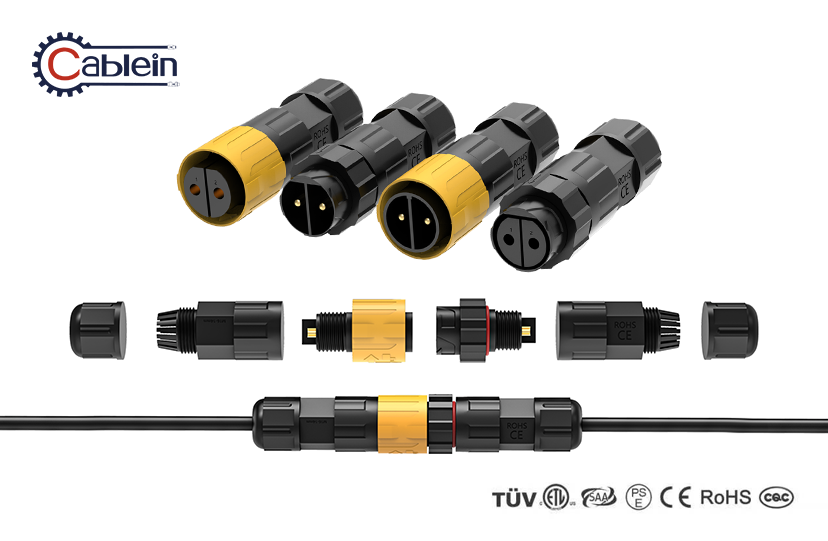
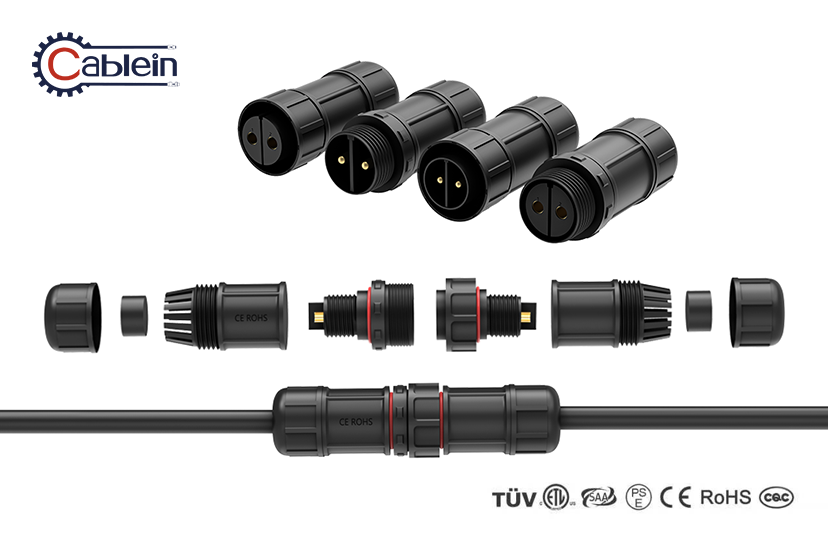
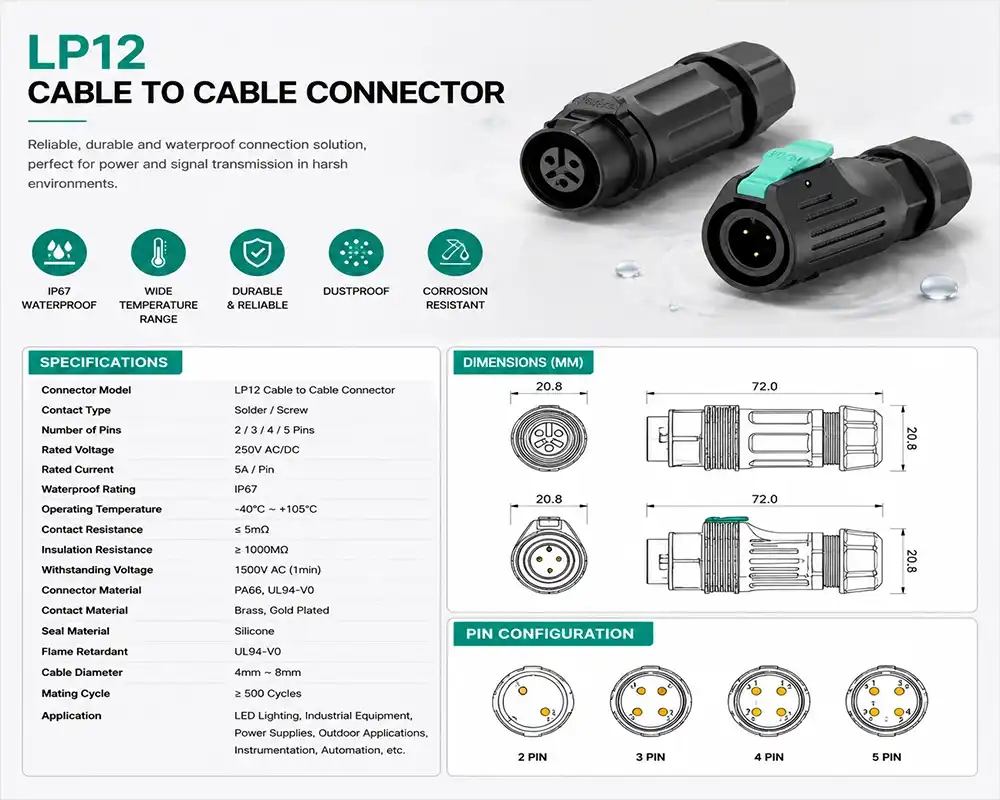
LP12 connection: The LP12 is an enterprise-grade, circular inline connection for high-density, space-restricted applications. The LP12 also allows direct wire-to-wire connections without set mounting locations like typical panel-mount connectors. It is thus well suited for modular setups where field serviceability and fast deployment are critical.
What Makes LP12 Connectors Unique?
The LP12 connections include a 12 mm compact mounting diameter and a PA66 nylon enclosure with gold-plated copper alloy contacts. Gold plating offers contact resistance <10 mΩ for reliable signal integrity and power supply. IP67 and IP68 water ingress with silicone sealing rings against moisture incursion and dust contamination. Its rugged snap-lock bayonet mechanism can be used with one hand and has been qualified for more than 2000 mating cycles, which makes it a good alternative for equipment that is reconnected often.
Material Composition and Technical Advantages
The housing is comprised of flame retardant UL94-V0, oil, solvent, and UV resistant material. This durability supports indoor and outdoor deployments. Gold-plated connections also aid to prevent oxidation over time, which is important in systems that are used inside corrosive or salty environments. The LP12, in 2, 8 pin variants, takes wire sections of 0.34 to 0.5mm2 and cable diameters of Φ3 to Φ6mm. The operating temperature range is -40℃ to +105℃, certain varieties can function at up to 180℃, meeting the requirements of hard climatic and high-temperature industrial situations.
How LP12 Compares to Standard Connectors
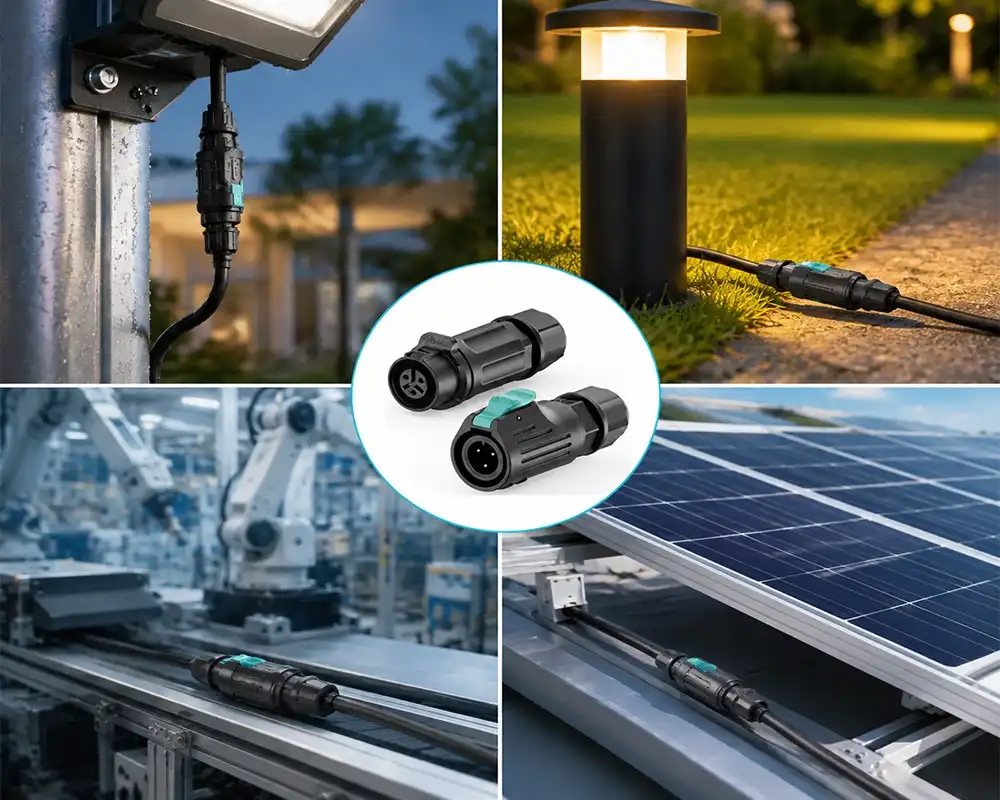
The LP12 connection is superior to the XLR and RCA connectors, which are often used in audio applications, in their resilience to water and vibration. XLR connections are ideal for balanced audio transmission but do not provide the IP certifications essential for outdoor or wet applications. RCA connections are small but offer very little sealing; hence, they are not ideal for industrial automation or maritime electronics. The LP12 has the answers. Strong environmental protection and a compact footprint make it the popular option for LED lighting, robotics, and renewable energy systems.
Step-by-Step Guide: How to Attach LP12 Cable to Cable Connectors
The correct installation of the LP12 connection calls for meticulous preparation, accurate wiring, and rigorous testing. An organized strategy will reduce mistakes and provide longer performance.
Required Tools and Preparation
Before you begin, assemble all the tools and materials you will need so the installation operation goes smoothly. A variable gauge wire stripper will keep you from damaging your conductors. A 60W-80W soldering iron will make for secure terminations. Rosin core solder will make for reliable joints. Heat shrink tubing or electrical tape will provide insulation. A multimeter will let you check continuity and resistance. Before assembly, check the LP12 connection components for damage to the housing, contacts, and sealing rings and for contamination.
Cable Stripping and Conductor Preparation
Measure and label the cable jacket to the depth required by the LP12 cable to cable connector, usually 5mm to 8mm of exposed wire. Using the wire stripper, remove the outer jacket, being sure not to cut the inner insulation. Strip around 3mm of insulation from each individual conductor. Twist the stranded wires securely together so they don’t fray and tin each conductor tip with a light coat of solder. Tinning enhances conductivity and makes it simpler to fit into the connection pins, therefore decreasing the likelihood of cold solder joins or poor electrical contact.
Pinout Alignment and Soldering Technique
Match the wire colours or functions to the relevant contact locations as shown in the LP12 connector pinout illustration. 4. Insert each tinned conductor into the appropriate pin terminal and make sure the wire is properly seated. Contact the soldering iron tip to the terminal and conductor at the same time for 2 to 3 seconds and then add solder to the joint. The solder should run smoothly around the joint, producing a glossy, concave fillet. Too much heat exposure might harm the PA66 housing or impair the silicone seal. Let each joint cool down on its own, without any movement, to avoid cracking.
Assembling the Connector and Ensuring Seal Integrity
When all conductors have been soldered, place the silicone sealing ring over the cable jacket and position it at the entrance point of the connection housing. Insert the wired contact assembly into the housing, positioning the keying features for proper orientation. Push down firmly until you hear or feel the snap lock click into place. Tighten the cable gland or strain relief device to squeeze the sealing ring against the cable jacket. This compression is important to achieve the IP67 or IP68 waterproof level. Perform a light pull test to make sure that the cable is well held and will not slide under typical operating load.
Quality Control and Testing Procedures
After construction, check all pin connections for continuity using a multimeter. Measure resistance between mated pins; it should be less than 10 mΩ. Check insulating resistance between non-adjacent pins. Value over 100MΩ to indicate no shorts or leakage routes. Visually check the solder junctions. They should have a smooth, glossy surface with no solder balls or flux residue. To test the watertight seal, the constructed connection is placed in water for 30 minutes and checked for moisture within. This validation phase assures that the connection will function successfully in damp or dusty situations.
Choosing the Right LP12 Cable to Cable Connector for Your Needs
The right LP12 will be determined by your application's electrical, mechanical, and environmental requirements. knowledge of critical specification indicators may support procurement teams and engineers in their decision-making.
Electrical Resistance and Durability Metrics
The contact resistance directly affects the quality of the signal and power efficiency. The LP12 units include gold-plated contacts keeping resistance below 10mΩ, making them appropriate for low voltage signal transmission and power supply up to 5A and 125V. Durability is measured by rating mating cycles, and the LP12 has been tested for more than 2000 insertions and removals. This makes it suitable for equipment that requires periodic repair or reconfiguration. Insulation Resistance >100MΩ To avoid signal crosstalk and operate safely in high-voltage systems
Comparing LP12 with XLR and RCA Connectors
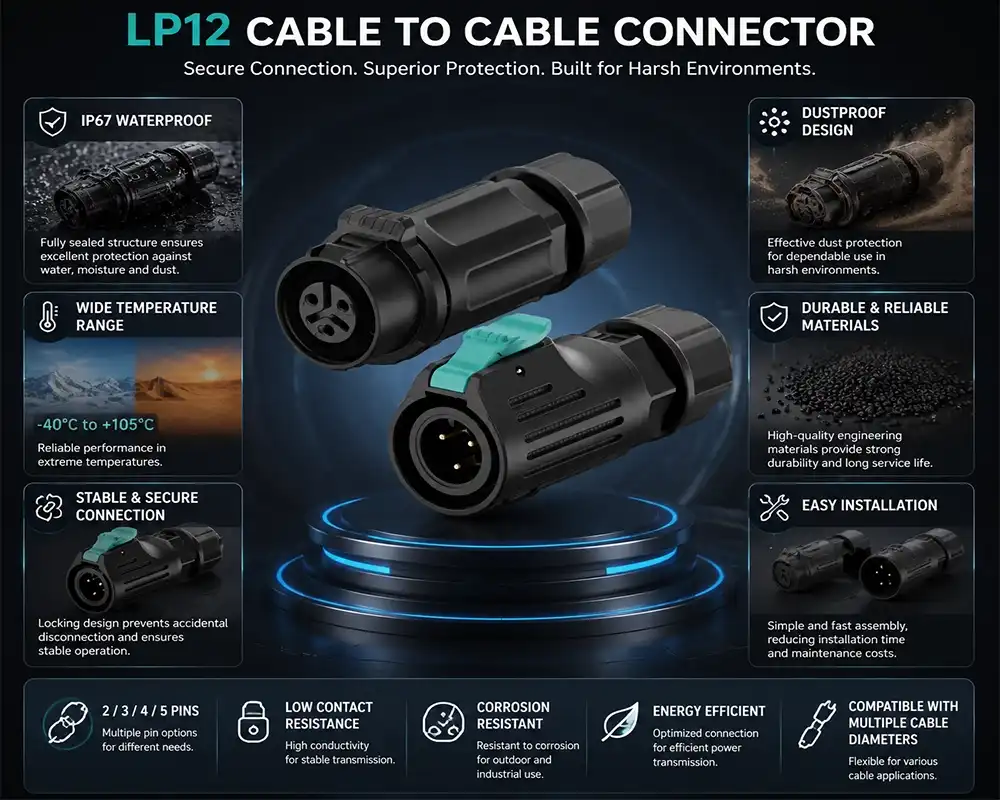
LP12 connections are used in industrial and outdoor applications where protection from the environment is important. XLR connections are used in professional audio because of their balanced signal, although they are not waterproof and are larger. And they have a strong mechanical lock. RCA connections are cheap, simple, and not weatherproof; therefore, they are limited to indoor applications. Compact in size, with IP68 sealing and snap-lock ease, the LP12 is the ideal solution for LED lighting, automation sensors and maritime electronics when space and dependability are at a premium.
Top-Rated LP12 Connectors for 2024
The LP12 versions with TUV and CE certification are leading the market. The LP12 variations are produced under ISO9001 quality management systems. Choose from 2 to 8 pins, durable plastic or metal housing, and custom cable lengths for your application. In 2024, field testing results show that the LP12 can withstand exposure to salt spray, passing corrosion tests for 48 hours with no deterioration. This allows large-volume purchase programs for OEM customers looking for uniform quality and quick delivery in 7 to 10 days.
Procurement Insights for LP12 Cable to Cable Connectors
To choose the correct LP12 connectors, you need to evaluate the credentials, lead times and customization capabilities of the suppliers so that they match your project timeframes and budgets.
Trusted and Certified Suppliers
Give priority to vendors that have international certifications such as CE, RoHS, REACH, ETL and PSE. These qualifications certify adherence to safety and environmental standards required for export markets. Founded in 2017, Cablein Technology is based in Shenzhen and has passed ISO9001:2015 quality management system certification and has been granted more than 30 utility model patents. Boasting a 6,000㎡ facility and over 200 qualified workers, they guaranty consistent production capacity and efficient delivery. We work with reputable worldwide partners such as UPS, DHL or FedEx to reduce procurement risks and ensure the successful execution of projects on schedule.
Lead Times, Shipping, and Customization Options
Stock levels for standard LP12 cable to cable connector LP12 connections are consistent at over 10,000 pieces per item, with delivery in 7 to 10 days. For custom orders using proprietary moulds, pin configurations or cable lengths, engineering communication and schedule flexibility are required, depending on the complexity. The information assists buying managers to allocate funds and to set manufacturing schedules. Collaborate with skilled OEM and ODM suppliers to develop customised solutions that fit your specialised project requirements without sacrificing on quality or delivery promises.
Bulk Order Benefits and Pricing Benchmarks
Buying in volume decreases unit prices and ensures better conditions, such longer payment terms and priority manufacturing slots. Pricing is dependent on the number of pins, and the housing material and certifications required, although volume discounts of 10% to 20% are normal. By negotiating warranty terms and return policies up front, you can defend against defects and supply chain interruptions, which can preserve project budgets and ensure operational continuity in demanding applications.
Best Practices and Long-Term Care for LP12 Cable to Cable Connectors
Following proper installation techniques and routine maintenance recommendations is the key to maximising connection performance and service life.
Installation Best Practices for Maximum Performance
Proper cable routeing to minimise abrupt bends and mechanical stress is the start of secure connections. Also, use cable ties or clamps to provide strain relief, so the stress doesn’t pull on the solder connections. Do not apply excessive torque or side loads to the connection as this might damage the snap-lock mechanism. Life expectancy is also influenced by environmental variables such as moisture, vibration and temperature variation. To protect the seal integrity and prolong the service life, place the connectors away from direct water spray or submersion beyond the IP68 certification.
Maintenance Protocols and Preventive Measures
Perform periodic inspections at six month or equipment service intervals. Inspect the contacts for corrosion, inspect the housing for fractures and the sealing rings for degradation. Wipe contacts with isopropyl alcohol and a lint-free cloth to remove oxidation or impurities. Replace connections with high contact resistance, physical damage or moisture infiltration. By using recorded performance trends to proactively guide replacement plans, you may minimise unexpected failures and expensive downtime, and so maintain reliable operations for essential infrastructure.
Conclusion
Attaching cable connectors properly ensures your systems operate reliably in challenging environments. The LP12 cable to cable connector simplifies installation through its snap-lock design and solder-type termination, while delivering IP67 and IP68 waterproof protection. Understanding material properties, pinout alignment, and quality control steps empowers engineers and procurement teams to make informed decisions. Selecting certified suppliers with proven delivery capabilities and customization flexibility further enhances project success. Regular maintenance and adherence to best practices extend connector lifespan, reducing total cost of ownership and supporting long-term partnerships.
FAQ
1.Can I use LP12 connectors with non-LP12 cables?
LP12 connectors are designed to accommodate standard cables within the Φ3 to Φ6mm diameter range. Compatibility depends on the wire section and insulation thickness. Using cables outside this specification may compromise the waterproof seal and strain relief effectiveness, leading to moisture ingress or mechanical failure. Consulting the connector's datasheet and testing a sample installation confirms suitability for your specific cable type.
2.What tools do I need for proper installation?
Essential tools include a wire stripper with adjustable gauge settings, a soldering iron rated between 60W and 80W, rosin-core solder, heat shrink tubing or electrical tape, and a multimeter for continuity and resistance testing. Having these tools prepared before starting ensures a smooth assembly process and reduces the risk of installation errors.
3.How long does typical installation take?
An experienced technician can attach an LP12 connector in approximately 10 to 15 minutes per connection, including cable preparation, soldering, assembly, and testing. Less experienced users may require 20 to 30 minutes initially. Planning resources accordingly helps project managers schedule installations efficiently and meet project timelines.
Partner with Cablein for Reliable LP12 Cable to Cable Connector Solutions
At Cablein Technology, we specialize in manufacturing high-performance waterproof connectors designed for demanding industrial applications. Our LP12 cable to cable connector features TUV and CE certifications, gold-plated copper alloy contacts, and IP68 sealing, ensuring your projects achieve maximum reliability and longevity. With stable inventory, fast delivery within 7 to 10 days, and comprehensive OEM/ODM support, we serve LED lighting, automation, renewable energy, and transportation industries worldwide. Our experienced engineering team provides 24-hour technical support to guide your installation and customization needs. contact us today at nick@cableinco.com to request a quote or discuss custom solutions tailored to your procurement requirements.
References
1. Smith, J. (2023). Industrial Connector Design: Materials and Performance Standards. New York: Engineering Press.
2. Johnson, L. & Wang, H. (2022). Waterproof Sealing Technologies for Outdoor Electronics. Boston: Technical Publishing Group.
3.. International Electrotechnical Commission. (2021). IEC 60529: Degrees of Protection Provided by Enclosures (IP Code). Geneva: IEC Publications.
4. Brown, M. (2024). Cable Assembly Best Practices for LED and Automation Systems. Chicago: Industrial Connectivity Journal.
5. Green, P. (2023). Soldering Techniques and Quality Control in Wire-to-Wire Connections. London: Manufacturing Standards Institute.
6. Zhao, Y. & Martinez, R. (2022). Environmental Testing of Industrial Connectors: Salt Spray, Vibration, and Temperature Cycling. San Francisco: Reliability Engineering Quarterly.