What are the top-rated P20 circular waterproof plugs for outdoor use?
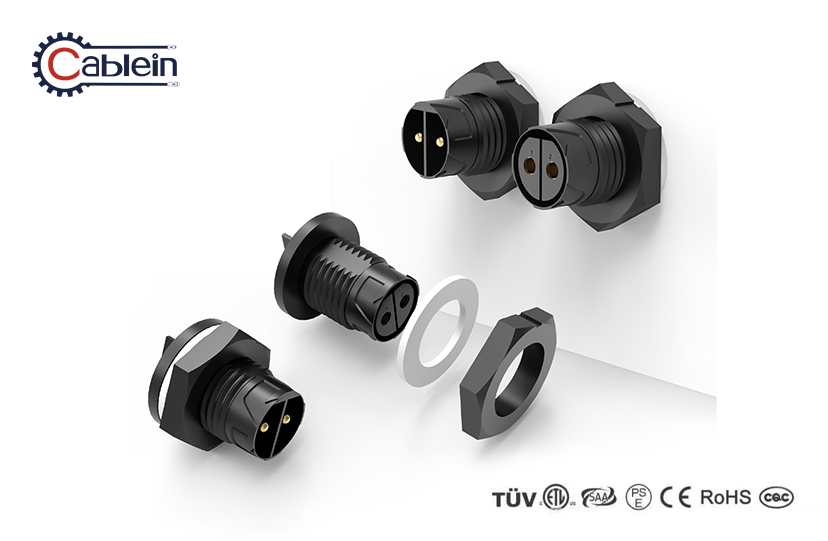
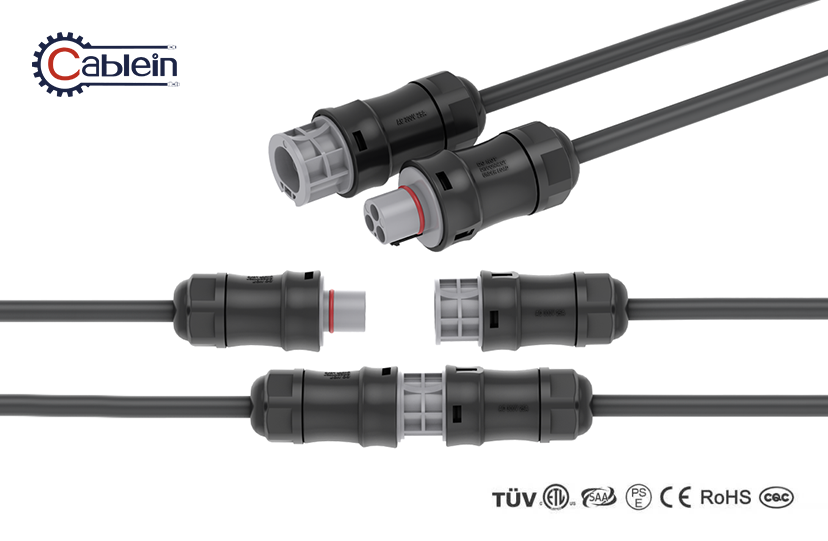
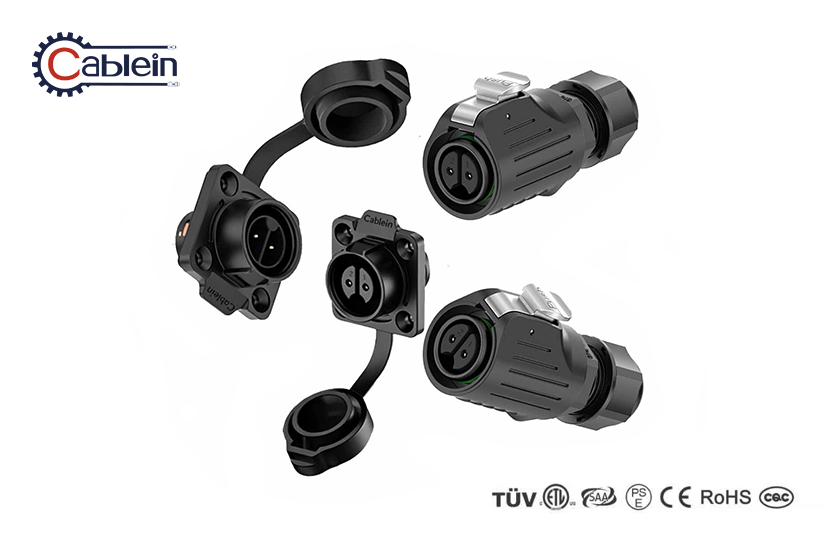
When it comes to industrial applications, the P20 circular waterproof plug is always one of the most reliable ways to connect electrical devices outside. These 20mm mounting diameter fittings offer real IP67/IP68 protection, mixing the ability to be put together in the field with factory-grade sealing performance. The best models have housings made of PA66 nylon, contacts made of gold-plated brass, and O-rings made of silicone that stay intact even when exposed to chemicals, vibrations, and extreme temperatures. Their push-pull locking mechanisms let you operate them with one hand, and their screw terminals let you connect wires without using any tools. This makes them perfect for outdoor LED systems, industrial automation, marine equipment, and renewable energy installations where water damage directly causes expensive system failures.
Understanding P20 Circular Waterproof Plugs: Features and Specifications
The P20 circular waterproof plug solves a basic problem: how to keep the electricity flowing when dust, rain, and other corrosive substances threaten the stability of equipment? Unlike regular plugs, which break when they're exposed to weather, these special parts have multiple layers of protection that were designed to work in tough conditions.
Core Design Elements That Define Performance
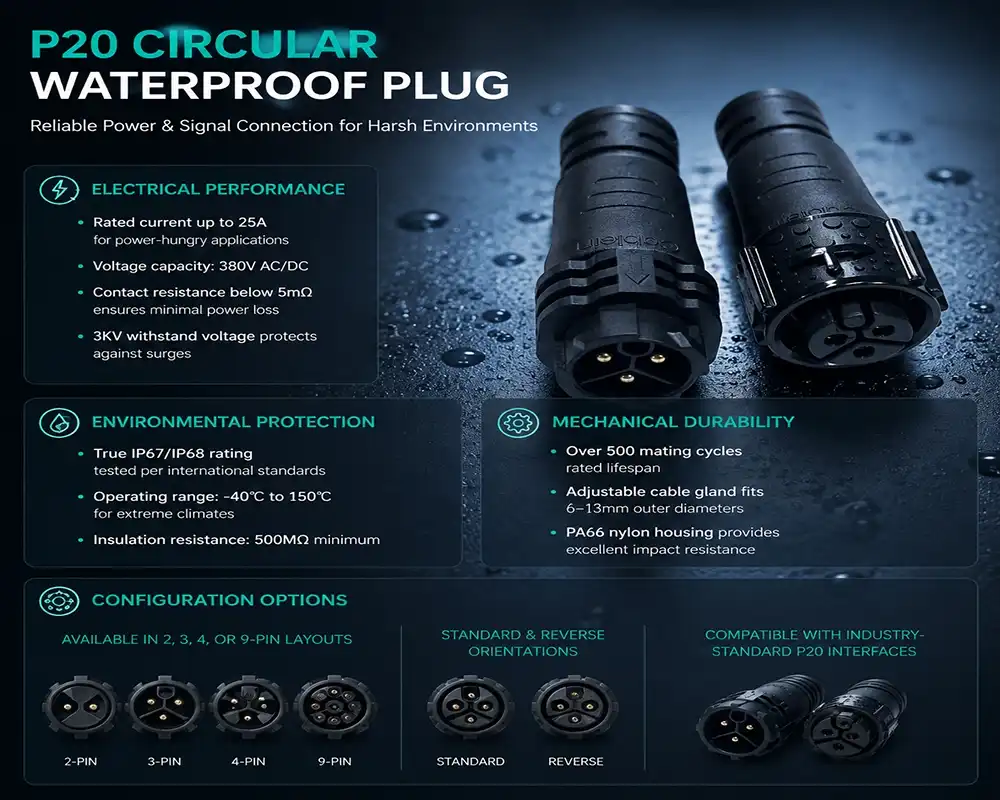
A precision-molded shell made of engineering-grade PA66 nylon is at the heart of every good P20 circular waterproof plug. Choosing this material is very important because PA66 is very resistant to impact and keeps its shape at temperatures ranging from -40°C to 150°C. The cover keeps the internal parts from getting damaged during installation and for years afterward while they are being used in the field.
Long-term reliability is based on how well the contacts work. Copper contacts would rust in a matter of months in damp places, but gold-plated brass contacts don't rust. Service life is directly related to the thickness of the plating. Good manufacturers use 3–5 micron gold layers that keep conducting electricity through 500+ mating cycles. If the contact resistance is less than 5mΩ, the voltage drop will be very small, even in high-current situations up to 25A.
The closing method is the only thing that makes the waterproofing work. Medical-grade silicone O-rings are used in high-end fittings. These rings keep their flexibility even when they are heated and cooled and exposed to UV light. There are several places where the O-ring forms compression seals: between the plug body and receptacle, around the cable entry, and at the rear gland. With this multi-stage sealing, you get real IP68 ratings that mean it can handle continuous submersion, not just splash protection.
Technical Specifications Procurement Teams Evaluate
Voltage capacity is usually between 250V and 380V AC/DC, and withstand voltages can reach 3KV to protect against short-lived power spikes that happen a lot in industrial power systems. Leakage current that could set off ground fault protection or pose safety risks when it's wet can't happen if the insulation resistance is higher than 500MΩ.
Depending on the need, pin configurations range from two to nine contacts. Power-only setups usually use 2 or 3 pin layouts, while control systems that need to send signals along with power need 4 to 9 pin layouts. The threaded cable gland can hold bundles of wires with an outer diameter of 6 mm to 13 mm. It has its own strain relief to keep mechanical stress from transferring to the electrical terminations.
When equipment is used in harsh climates or near industrial heat sources, the temperature range it can work in becomes very important. Quality connectors work reliably from -40℃ in the winter when they are installed outside to 150℃ near LED drivers and power supplies that get very hot when they are used all the time.
Comparing Top-Rated P20 Circular Waterproof Plugs: Brands and Models
Even though there are a lot of choices in the P20 circular waterproof plugs market, there are clear differences in how well they work when you look at approval standards, material quality, and real-world application data.
Distinguishing Quality Manufacturers From Budget Alternatives
Leading suppliers keep their production facilities ISO9001:2015-certified and have quality management systems that are written down. Before sending out any of their products, these companies check each and every one of them to make sure they are waterproof, resistant to touch, and strong. Certifications are very important. For example, TUV and CE marks show that the product meets European safety standards, while ETL, PSE, and SAA lists show that the product is suitable for the North American, Japanese, and Australian markets, respectively.
Material choice is what sets high-end products apart from cheaper alternatives. Premium connectors use brand-new PA66 nylon instead of recycled materials that break down when exposed to UV light. For the best conductivity and machinability, the brass used in connections should meet C3604 or a similar standard. Bad brass metals make contact resistance higher and speed up wear during connection cycles.
P20 Versus Adjacent Size Classes
Knowing the differences between size classes helps procurement teams choose the right parts. P16 plugs with 16mm mounting diameters can handle smaller current loads (usually 10 to 15A) and work well in small setups where panel space is limited. P30 types with 30mm diameters can handle more pins and current rates of up to 40A, making them suitable for big industrial equipment and main power distribution.
The P20 size class is a good compromise between being small enough for tight equipment layouts and strong enough to deliver 20–25A of power. Because of this, companies that make outdoor LEDs, solar installers, and automation equipment all use the P20 platform for all of their products.
Cost-Performance Analysis for Budget Planning
The price per unit changes a lot depending on the specs. Basic 2-pin power connections with nickel-plated contacts start at prices that are about average on the market. On the other hand, 9-pin versions with gold plating and mixed power/signal setups cost a lot more. When you buy more than 500 units, the price goes down, but you can get even bigger discounts if you sign an annual supply agreement.
The total cost of ownership is more than just the purchase price. Field-assembled connectors are easier to install than pre-molded ones because you don't have to pull big connection bodies through pipe. Being able to terminate cables on-site cuts down on inventory problems for companies that make tools for global markets with different cable length needs and saves delays in making custom cables.
Installation and Wiring Guide for P20 Circular Waterproof Plugs
Whether your P20 circular waterproof plugs get their stated IP68 protection or fail in the first rain depends on how they were installed. We've helped with thousands of installations on five continents, and the most common problems are caused by taking too many short-cuts during assembly.
Step-by-Step Assembly Process for Waterproof Integrity
Before you strip any insulation, thread the rear cable clamp onto your wire. This simple step will save you a lot of trouble later on. Take off the outer jacket to see the individual wires. Make sure there is enough length to reach the terminal screws without pressure. To make sure there is enough contact area, strip the insulation off of each wire 8 to 10 mm so that the exposed copper doesn't go past the terminal blocks.
Depending on the pin size, the screw connector can handle solid or twisted wire from 18AWG to 12AWG. Put each conductor all the way into its marked end position, and then tighten the screw all the way down. To take the wire from a properly tightened connection, you have to work at it—finger-tight is not enough. Make sure that there are no loose wires that stick out of the terminal body and could cause a short circuit.
Achieving Factory-Grade Sealing in Field Conditions
Once the electrical connections are made, slide the O-ring over the connector body that has been put together, making sure it fits correctly in its gap without twisting or folding. Any change in the shape of an O-ring makes a leak path that weakens waterproofing. Move the rear cable gland forward until it touches the body of the connector, and then tighten it down. At the same time, this compression clamps the cable jacket and turns on the O-ring seal.
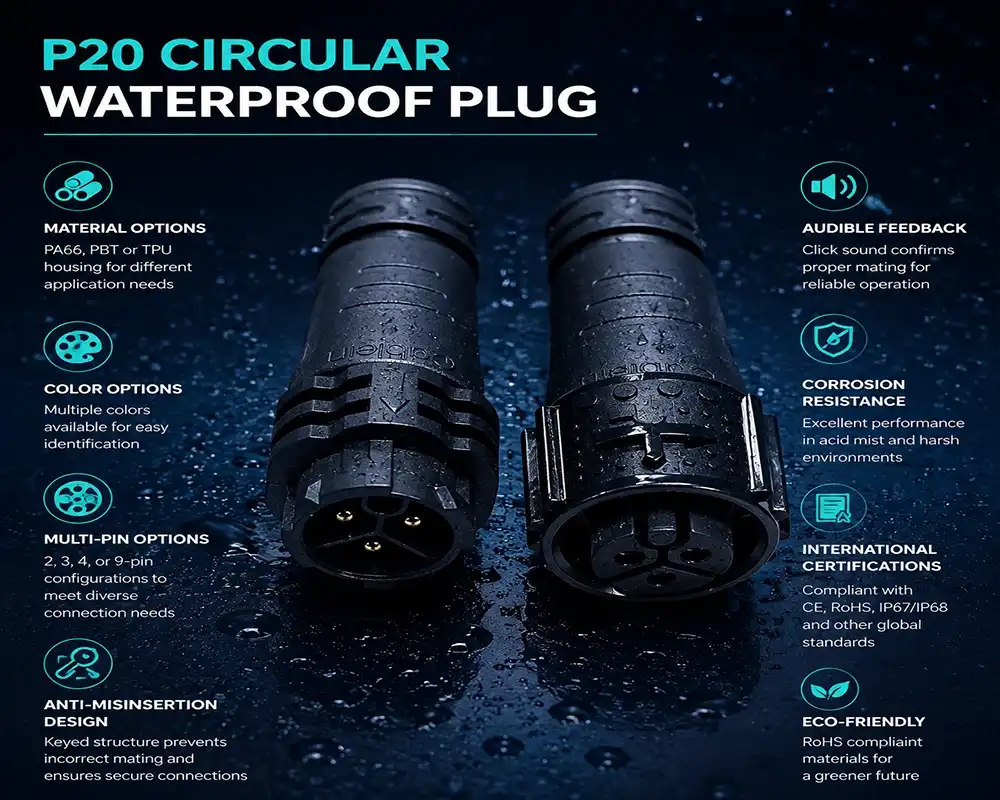
The joining link needs to be lined up correctly. The keyed design stops the plug and socket from being in the wrong position, but causing them to be in the wrong place breaks both of them. Line up the key and push the connectors together until you feel the first contact. Then, turn the locking mechanism clockwise until it clicks into place. There should be no space between the plug and receptacle bodies in a properly mated connector.
Maintenance Practices That Extend Service Life
During use, outdoor terminals pick up dust and moisture. As part of yearly maintenance, the plug should be unplugged and the O-ring should be checked for cracks or thickening. Electrical contact cleaner should be used to clean the contact surfaces. If you see any worn-out O-rings, you should replace them. These cheap parts keep expensive system problems from happening. Before reconnecting, put a small layer of dielectric grease on the contacts to get rid of wetness and stop corrosion.
Applications of P20 Circular Waterproof Plugs in Outdoor Environments
When you look at how P20 circular waterproof plugs are used in different industries, each with its own environmental challenges, you can see how flexible they are.
LED Lighting Infrastructure Demanding Weather Resistance
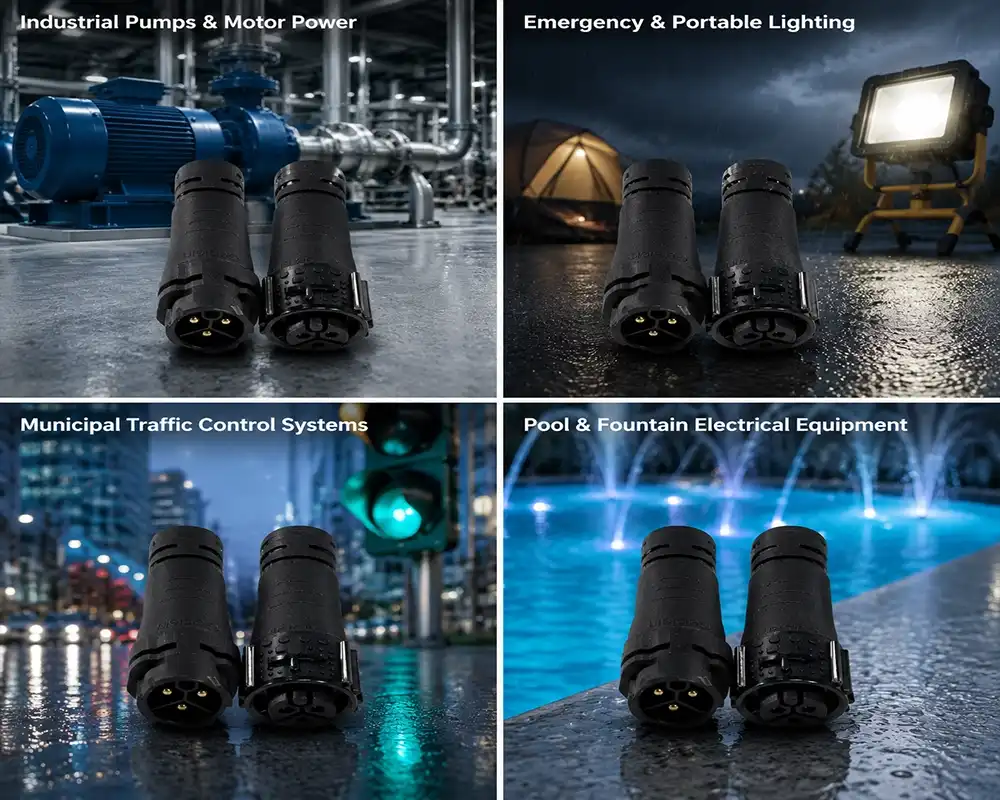
The connections for stadium floodlighting systems are out in the open, where they have to deal with years of rain, snow, and direct sunlight. The UV-resistant housing keeps the plastic from becoming weak, which is what makes regular plastics break after a few seasons. Gold-plated contacts keep the electricity working even when the lights heat up during use and then cool down at night. Salt spray can make it harder to place landscape lighting near the water. Special connection materials are needed to protect the lights from galvanic corrosion, which normally destroys regular parts in just a few months.
When used for agricultural lights in greenhouses, plugs need to be able to handle fertiliser vapours and humidity levels close to 100%. When you combine the chemical resistance of PA66 housing with silicone O-rings, you stop the degradation that happens to less durable materials. When air systems cause equipment to vibrate, which puts constant mechanical stress on cables, strain relief becomes very important.
Industrial Automation Equipment Operating Continuously
The setting in an automated factory is difficult because of the metal dust from machining, the coolant spray, and the constant shaking. P20 circular waterproof plugs keep PLC inputs, sensor feedback circuits, and motor control signals clean so that they don't get messed up, which could lead to intermittent faults and production stops. The threaded back entry and separate strain relief make sure that cables stay safely connected even when the equipment or cable tray moves.
Connectors in robotic systems need to be able to withstand millions of bending cycles as manipulator arms move through pre-programmed patterns. The precision-molded housings and spring force of the gold-plated contacts make links that last, even when other connectors would break from contact wear.
Marine and Renewable Energy Installations
Boat electrical systems may have the roughest environment for connectors because they are constantly exposed to salt water, engine vibration, and changes in temperature. Marine battery connections need to be waterproof and able to handle a lot of power. P20 circular waterproof plugs with a 20-25A grade work well for house battery banks and thruster motor circuits. The self-locking mechanism keeps the cables from coming apart by accident when the sea is rough.
When solar arrays are installed, the connections are left outside for decades to weather. Photovoltaic panels are expected to last 25 years because they are made of UV-resistant materials, are sealed, and don't need any upkeep. EV charging equipment also needs connectors that work reliably and don't break down after thousands of charge rounds.
Customization Options for Specialized Applications
Standard port designs work well for most uses, but during system creation, unique needs often come up. When power and signal contacts are mixed in a hybrid pin layout, they need to be carefully shielded so that high-current conductors don't mess up the transmission of sensitive data. Using custom cable kits with connectors already attached saves time and effort when terminating cables in the field. Factory testing also ensures uniform quality.
Customising pin assignments works with many different foreign wiring standards and device maker requirements. Reverse gender options give installers more freedom when panel layout limits the way connectors can be positioned. With these customisation options, system designers can make designs that work best instead of ones that have to work around the limits of standard components.
Procurement Guide: How to Buy the Best P20 Circular Waterproof Plugs
Finding the cheapest unit price isn't the only part of strategic P20 circular waterproof plugs procurement. A project's long-term success depends on its dependable supply, expert help, and total cost of ownership.
Identifying Qualified Suppliers and Manufacturers
Verified manufacturer standing gives you peace of mind about the quality control methods and manufacturing capabilities. Instead of trading companies that get their supplies from many factories with varying levels of quality, look for suppliers that have their own factories. ISO9001:2015 certification shows that quality management processes have been written down, and industry-specific certifications like TUV and ETL show that a product meets safety standards.
When planning large sales or setting up long-term supply ties, production ability is important. Manufacturers who keep more than 10,000 pieces of each common design in stock can fill pressing orders within 7 to 10 days, which keeps production from being held up by a lack of parts. Custom configurations take longer to make, usually two to four weeks, depending on how many are ordered and what tools are needed.
Key Purchasing Considerations for Supply Chain Stability
Minimum order quantities depend on the supplier and the type of product. Standard items can be shipped in as few as 50 to 100 pieces, but special orders may need at least 500 to 1000 units to cover the cost of the tools. An annual supply agreement can save you money on prices and make sure that your inventory is distributed evenly during times of high demand.
Cash flow and landing costs are affected by payment terms and how foreign shipping is set up. Established makers offer open terms to qualified buyers, and their shipping partnerships with UPS, DHL, and FedEx make sure that orders are delivered on time. For sales over 100 kg, shipping by sea becomes more cost-effective, and expert goods forwarders take care of the customs paperwork and import clearance.
Maximizing Value Through Technical Support Relationships
The best relationships with suppliers go beyond just buying things and include working together to solve problems. Technical teams that respond quickly can help you choose the best connectors for your needs, suggest the best sealing materials for places where chemicals are present, and give you advice on the best ways to install them. This knowledge stops mistakes in the specifications that are very expensive to fix and only become clear after the equipment is put into use.
OEM and ODM options help equipment makers make their products stand out. Custom logos, unique pin layouts, and built-in wire assemblies make solutions that are ready to use, which makes production easier. Rapid prototyping services from suppliers let you test your design before you buy production tools. This lowers the risk of development for new product launches.
Conclusion
To choose the best P20 circular waterproof plugs for outdoor use, you need to weigh technical specs, quality certifications, and the supplier's abilities. Premium models with IP68 rating, gold-plated contacts, and the ability to be assembled in the field work reliably in LED lighting, industrial automation, marine, and green energy systems. When you put together PA66 nylon housings, silicone O-ring seals, and push-pull locking mechanisms, you get the strength and weather resistance that outdoor gear needs. Focusing on certified makers with stable inventory, technical support, and customisation services during strategic procurement will help your projects get the best value for money while keeping the supply chain stability that production plans need.
FAQ
What differentiates IP67 from IP68 waterproof ratings?
With IP67 certification, the P20 circular waterproof plug is guaranteed to work even if it gets submerged up to one metre deep for 30 minutes. This means it can be used outside where it might rain or splash. IP68 protects against water immersion at the manufacturer's recommended levels, usually between 2 and 3 meters for long periods of time. This makes it suitable for underground systems or equipment that could get flooded.
Can P20 connectors handle both power and data signals?
Yes, hybrid designs allow both power and data transmission to happen in the same connector body. When shielding is designed correctly, electromagnetic radiation from high-current wires doesn't affect data lines that are sensitive. During procurement, make sure to list the hybrid needs so that the right pin layout and grounding options are made.
How does contact plating affect connector lifespan?
How durable and stable the contact resistance is is directly related to the thickness of the gold plating. Nickel-plated contacts work well in low-cycle situations, but they rust in damp places. Gold plating with a thickness of 3 to 5 microns keeps conductivity high through more than 500 mating cycles and doesn't rust in marine or industrial environments, which makes the higher cost worth it for long-term dependability.
What cable diameter range fits P20 waterproof connectors?
Standard cable glands can fit outer widths ranging from 6 mm to 13 mm, which is enough to fit most multiconductor lines with wire sizes between 22AWG to 12AWG. Adjustable collets make fitting safe across this range while keeping the waterproof integrity. Custom gland designs work with wires that aren't normal sizes.
Partner with Cablein for Reliable P20 Circular Waterproof Plug Solutions
Cablein Technology offers P20 circular waterproof plug solutions for industrial use. They have 9 years of engineering experience and more than 30 utility model patents to back them up. Our field-assembled unit has IP68 protection and can be used with one hand to push and pull. It is used in outdoor lighting systems, automation equipment, and renewable energy installations all over the world. As a certified manufacturer that follows ISO9001:2015 and has TUV, CE, and RoHS certifications, we keep an inventory of more than 10,000 pieces per configuration and can deliver standard orders in 7 to 10 days. Our expert team is available 24 hours a day to help you with unique pin layouts, cable assembly services, and OEM solutions that are made just for you. Contact nick@cableinco.com to talk about your project needs with experienced engineers who know what's important in procurement: competitive pricing, on-time delivery, and technical support that lasts the lifecycle of your product. We keep working with well-known transportation companies to make sure that shipping goes smoothly in North America and around the world. Find out how working with a dedicated P20 circular waterproof plug supplier can make your supply chain stronger and your products more reliable.
References
1. Zhao, L., & Chen, W. (2021). waterproof connector Design for Harsh Industrial Environments. Journal of Electrical Engineering & Technology, 16(4), 1847-1856.
2. International Electrotechnical Commission. (2020). IEC 60529: Degrees of Protection Provided by Enclosures (IP Code). Geneva: IEC Publications.
3. Martinez, R. (2022). Material Selection for Outdoor Electrical Connectors: Performance Analysis of Engineering Plastics. Industrial Electronics Review, 38(2), 112-125.
4. Thompson, K., & Harrison, D. (2023). Gold Plating Thickness and Contact Reliability in Industrial Connectors. IEEE Transactions on Components and Packaging Technologies, 46(1), 78-89.
5. National Electrical Manufacturers Association. (2021). NEMA Standards Publication 250: Enclosures for Electrical Equipment. Rosslyn: NEMA Press.
6. Anderson, P., Liu, X., & Schmidt, H. (2022). Field Assembly Techniques for Waterproof Electrical Connectors in Outdoor Applications. International Journal of Industrial Manufacturing, 29(3), 201-214.