Selecting an M25 4-Way Waterproof Connector: Key Factors Engineers Should Check
When specifying an M25 4-way waterproof connector for outdoor power distribution, the wrong choice can mean field failures, costly rework, and compliance headaches. This guide breaks down what actually matters—material grades, sealing performance, independent branch control, and test certifications—so you can make a confident sourcing decision. Whether you are designing a modular LED street lighting system, a solar inverter array, or a marine dockside installation, getting the connector specification right at the BOM stage saves time and money across the entire project lifecycle.
Understanding the Basics of M25 4-Way Waterproof Connectors
What the M25 Designation Tells You
Its metric thread size is 25mm, which is what the M25 number means. This makes the point where the cable goes in standard, and it works with cables that have outside diameters of 5mm to 14mm. In other words, wires from various modules can be used in the same housing without the need for separate adapters. It's helpful to have that extra freedom when sending power from one point to lighting, sensors, and communication modules.
How the 4-Way Cross Design Works
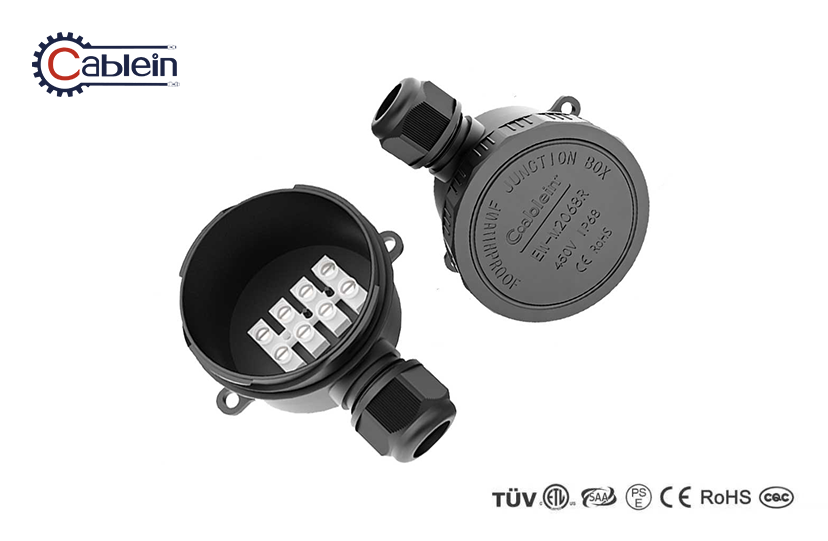
The cross-shaped case has four separate ports, one input and three outputs, set up in a plus shape. This is possible because every port has its own screw terminal block. This lets each branch circuit work on its own. One output can be turned off for maintenance, and the other two live circuits will still work. This plan directly changes three different single-entry connectors. It also shrinks the lines inside a smart pole or control box.
IP67 vs. IP68: Why It Matters Here
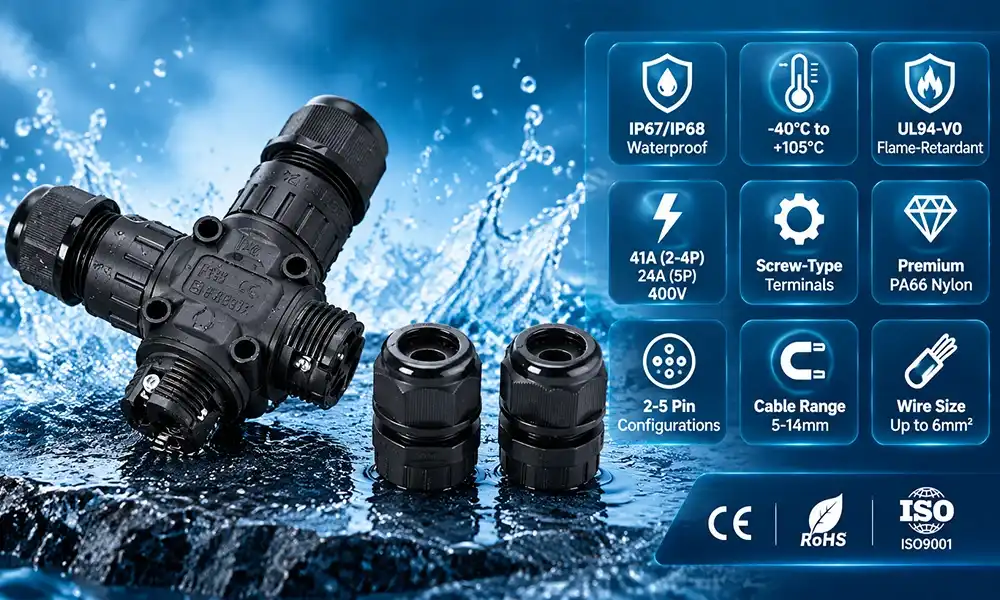
IP67 means that you can be submerged up to one meter deep for up to 30 minutes at a time. The M25 four-port distribution plug from Cablein has an IP68 rating, which means it can be submerged in water up to 10 meters deep and still work. You should at least accept IP68 for pedestals next to docks, switch boxes buried in the ground, and pond filtration systems. The main thing that varies between the two grades is the type of O-ring (silicone or EPDM) and how tightly the gland thread fits.
Essential Features and Benefits of M25 4-Way Waterproof Connectors
The sealing system, housing material, and terminal design of a multi-port M25 4-way waterproof connector determine how long it can last. It could be two years or fifteen years. Take a look at these important parts of your plan before you finish it.
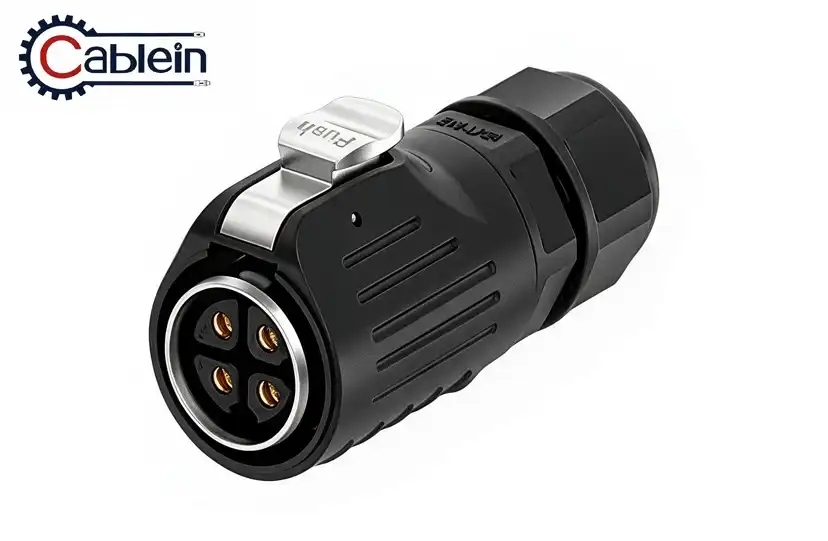
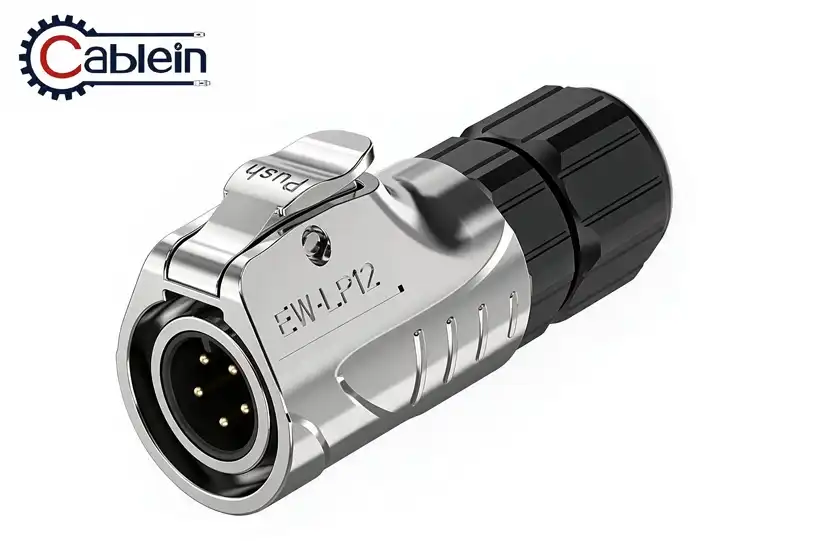
- UV-stabilized PA66 housing with UL94-V0 rating: Impact-resistant polyamide 66 retains structural integrity across a -40℃ to +105℃ operating range. The UV stabilization package extends outdoor service life to 10–15 years, which aligns with the design life of most smart city street lighting projects. The UL94-V0 flame retardancy classification is a requirement for installations in enclosed poles and cabinets.
- Gold-plated contacts with silicone/EPDM O-rings: Gold plating on contact pins prevents oxidation-related resistance creep over time, which is a common failure mode in humid coastal environments. Paired with high-elasticity O-rings, the seal stays compliant through repeated thermal cycling without hardening or cracking.
- Quarter-turn tool-free cover access: The locking lid opens with a 90-degree rotation. Field technicians do not need a screwdriver to inspect terminals during routine checks or fault diagnosis. For elevated installations like street poles, this reduces high-access labor time per maintenance event.
Comparing M25 4-Way Waterproof Connectors With Other Options
M25 vs. M20: Cable Capacity and Current Rating
Cables that are about 10 mm wide are the only ones that M20 sockets can handle. They can also only handle 10A to 16A of current. The M25 four-way distribution hub can handle cables up to 14 mm in diameter and up to 41A (2–4 pin configurations) or 24A (5 pin configurations) at 400V. One load circuit with two light circuits and a 5G micro-base station power feed is too much for the M20 to handle.
4-Way vs. 3-Way Configurations
A 3-way T-connector has one input and two outputs, which are enough for basic branch circuits. When you set up a 4-way cross, you add a third different output line without making the housing bigger. Installers of smart poles who want to power a camera, a light, and a weather sensor from a single node no longer need a second junction box. This is because the extra port does the job.
Waterproof vs. Standard Industrial Connectors
To keep connectors dry, you need to use an outdoor box with an IP rating. When the seal around the enclosure breaks, which usually happens after a few years of thermal cycling, the connector can be seen. No matter what the case is made of, an IP68 connector that seals itself is safe. This is the reason why people who are in charge of NEOM-type smart city projects and naval installations at sea choose connector bodies that are hermetically sealed over ones that are protected in a box.
Installation, Maintenance, and Troubleshooting Guidelines
Pre-Installation Checks
Make sure that the cable's outside diameter is between 5 and 14 mm for the gland seal you chose before you start wiring. Look for nicks or flat spots on the O-ring that happened during shipping. Follow the manufacturer's instructions for how tight to turn the M25 gland nut. Being too tight on it by hand won't cover the whole IP68 area, and giving it too much torque can damage the PA66 thread. Cablein says to use a torque wrench that is set to the number that is written on the product.
Wiring the Screw Terminal Block
For each port, a different screw-type terminal block is used. It's best to cut the insulation off of the conductor to the right length, which is about 6 to 8 mm. Also, make sure the wire is fully in place before you tighten the terminal screw. One of the most common reasons for touch resistance that comes and goes is partial entry. When all four ports are wired, close the quarter-turn cover and make sure it locks firmly. Then, turn on the circuit or put pressure on it.
Diagnosing Water Ingress After Installation
The insulation resistance might be lower than expected when the system is first set up. This is most likely because an O-ring isn't sitting right or the gland nut isn't tight enough. Do not use the M25 4-way waterproof connector until the inside is dry. Next, check the O-ring seat and then put it back in. Silicone O-rings can be replaced, and Cablein always has extra seals on hand. Do not turn on a connection if you can see water inside the housing.
Procurement Insights: How to Choose and Buy the Right M25 4-Way Waterproof Connector
Verify Test Certifications Before Sampling
Need more than just a piece of paper with CE marks on it? Ask for real test reports. The EN 61984 pull-out force test, the ASTM B117 salt spray test after 72 to 96 hours, and the 2500V AC dielectric strength report are all things you need. You can tell from these three papers whether the connector was tested in a lab or just said it was ready. It's risky to buy goods for export from companies that can't give you reports for all three tests that can be tracked.
Confirm Drawing Deliverables Early
For installers of smart poles and modular lights, the connection has to fit into a certain mechanical space inside the pole body. The body won't fit over the inside clamp if it's 2 mm too big. Ask for 2D images and a STEP 3D model before you order a sample. They have a good tech team if they can do both in one business day.
Evaluate Customization Lead Times
OEM integrators often need the case to be a certain color, have logos laser-etched on it, or have wires that are already ended. When you buy custom models, find out how much they cost, how many pieces you need to order at least, and how long it takes to make changes. Too long of a wait time for tools can make it take longer to start making a whole product. Cablein's own tooling facility cuts down on the time it takes to make a custom mold compared to die shops that other companies hire.
Conclusion
There are five clear things that you need to look for in a four-port waterproof distribution M25 4-way waterproof connector: an IP68 seal with separate O-rings for each port; a UV-stable PA66 housing rated UL94-V0; gold-plated contacts on all branches; test reports from a third party covering EN 61984 and ASTM B117; and the ability to send drawings before sampling. These things determine whether a street pole connection lasts ten years or breaks during the second wet season. If you skip any of them in the BOM stage, it will cost a lot to fix problems later on.
FAQ
1. Why is IP68 preferred over IP67 for outdoor distribution connectors?
IP67 guards against being submerged for 30 minutes at a time up to one meter deep. IP68 protects against being submerged in water for a long time at the depths recommended by the manufacturer. For industrial-grade connectors, these depths are generally between 4 and 10 meters. Outdoor connection nodes that are used for lighting roads, running cables underground, and installing things at marinas often have to deal with water that doesn't move for a long time. IP67 isn't good enough for those situations.
2. Can I mix different cable diameters across the four ports?
Yes. Each port can handle a different wire width as long as you use the correct gland insert size for each entry. The M25 gland seal range is 5–14mm. You can put a power feed with a bigger gauge and sensor or signal wires with a smaller gauge in the same housing.
3. What certifications should I request from a supplier?
And yes, here are the reports on the pull-force test for CE, RoHS, ISO9001, and EN 61984; the salt spray test report for ASTM B117; and the AC dielectric test report for 2500V. For projects that will be exported from the EU, make sure that the low-voltage connector assemblies meet EN 61984 standards. This is what is needed to sell them in European markets.
4. How many operating cycles can the quarter-turn cover withstand?
The longevity of a quarter-turn cover is dependent on its locking mechanism, sealing materials and the working circumstances for which it is designed. Buyers should request recorded results of opening-and-closing cycle testing from the manufacturer, including the number of cycles performed and if the connection was still mechanically intact and needed ingress protection thereafter. Where required, testing may be performed to a mechanical endurance protocol described by the manufacturer. Ingress protection should be tested in line with IEC 60529 before and after cycling. Please refer to the test documentation on Cablein to ensure the cycle count before specifying it for your project.
5. Is professional installation required?
Connector design, wiring, and application determine installation requirements. Installers must utilise the manufacturer's conductor size, strip length, and terminal tightening tension for screw-terminal connections, which don't need soldering or crimping. The connection assembly under its test circumstances is IP68, not the screw terminal block. Install cable glands, seals, and locking components per manufacturer's recommendations to maintain ingress protection. Industrial power distribution systems should be installed by competent professionals following electrical safety standards.
Talk to Cablein About Your M25 4-Way Waterproof Connector Requirement
Industrial connectors that are waterproof have been made by Cablein Technology since 2017. It has more than 15 patents and approvals, such as ISO9001:2015, CE, RoHS, ETL, and TUV. Get in touch with our engineering team right away if you need a provider of an M25 4-way waterproof connector that can send you drawings, make unique configurations, and give you test paperwork that has been checked. We have more than 10,000 of each item in stock, and most orders are sent out within 7–10 days. To get samples or a datasheet, email us at nick@cableinco.com.
References
1. International Electrotechnical Commission. IEC 60529: Degrees of Protection Provided by Enclosures (IP Code). IEC, 2013.
2. ASTM International. ASTM B117: Standard Practice for Operating Salt Spray (Fog) Apparatus. ASTM International, 2019.
3. CENELEC. EN 61984: Connectors — Safety Requirements and Tests. European Committee for Electrotechnical Standardization, 2009.
4. Underwriters Laboratories. UL 94: Standard for Tests for Flammability of Plastic Materials for Parts in Devices and Appliances. UL, 2013.
5. International Organization for Standardization. ISO 9001:2015: Quality Management Systems — Requirements. ISO, 2015.
6. Bhatt, R. & Patel, S. "Thermal and Chemical Resistance Properties of Polyamide 66 in Outdoor Electrical Enclosure Applications." Journal of Applied Polymer Science, 2020.

_1792292825484.webp)