What are the key specifications to consider when buying M20 waterproof connectors?
Understanding M20 waterproof connection specs is crucial for dependable performance and long-term durability in industrial or outdoor applications. M20 inline waterproof connectors are standardised metric threading solutions with 20mm cable entrance diameters that offer excellent ingress protection in difficult settings. Key features include IP67 or IP68 waterproof ratings, 300V-500V and 20A-25A voltage and current capabilities, -40℃ to 150℃ working temperature, and PA66 polyamide housings with gold-plated brass connections. These criteria and your application requirements will help you pick secure, moisture-resistant connectors for outdoor LED lighting, EV charging infrastructure, industrial automation, and maritime applications.
Understanding M20 Waterproof Connectors: Core Features and Functions
Many industries use M20 waterproof connectors for dependable electrical connections in severe and wet conditions. The "M20" marking refers to a 20mm-wide metric thread. This size is industry standard since it fits a tiny footprint with cable space. These connections prevent water, dust, and other pollutants from damaging the electrical system. This makes them ideal for outdoor installations, wet processes, and often cleaned equipment.
What Defines an M20 Inline Waterproof Connector
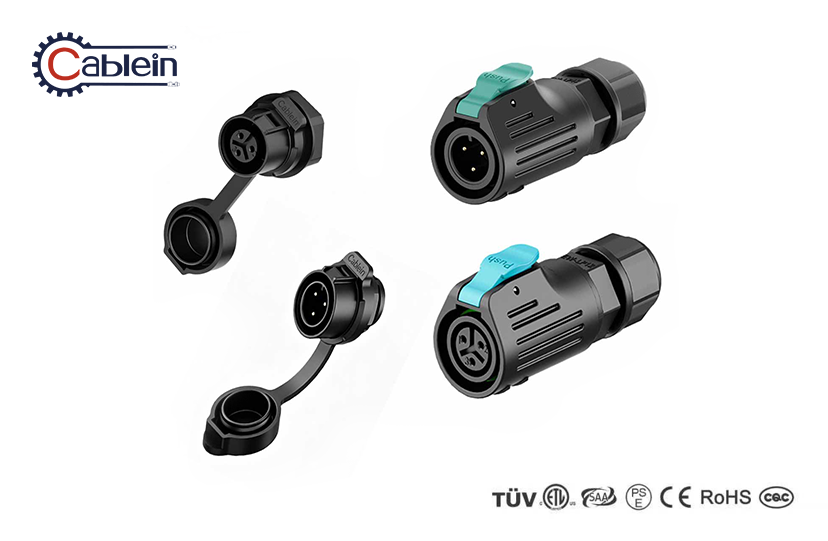
The cable-to-cable coupling design of an M20 inline waterproof connector enables two pre-terminated cables join directly without a mounting point or panel installation. Workers can build watertight connection points anywhere along a wire run with this inline design, making installation and maintenance easier. Precision-molded gaskets, compression rings, and threaded locking mechanisms secure the connection. These layers hermetically seal cable entrance locations and the interior contact chamber.
Primary Applications Across Industries
Because M20 waterproof connectors can be used in many situations, they are widely used in many important areas. These connections are the backbone of outdoor LED lighting systems used for lighting up building facades, sports stadiums, and street lamp networks. They have to work perfectly even when they are exposed to rain, snow, and changes in temperature. M20 plugs are used in solar PV systems to keep the power flowing properly even after long periods of UV exposure and temperature changes. High-current versions are used by EV charging stations to safely deliver power in parking garages and outside charging areas. Industrial automation environments are better because they can handle oil mists, coolant sprays, and the high-pressure cleaning methods that are common in factories.
Working Principles and Design Features
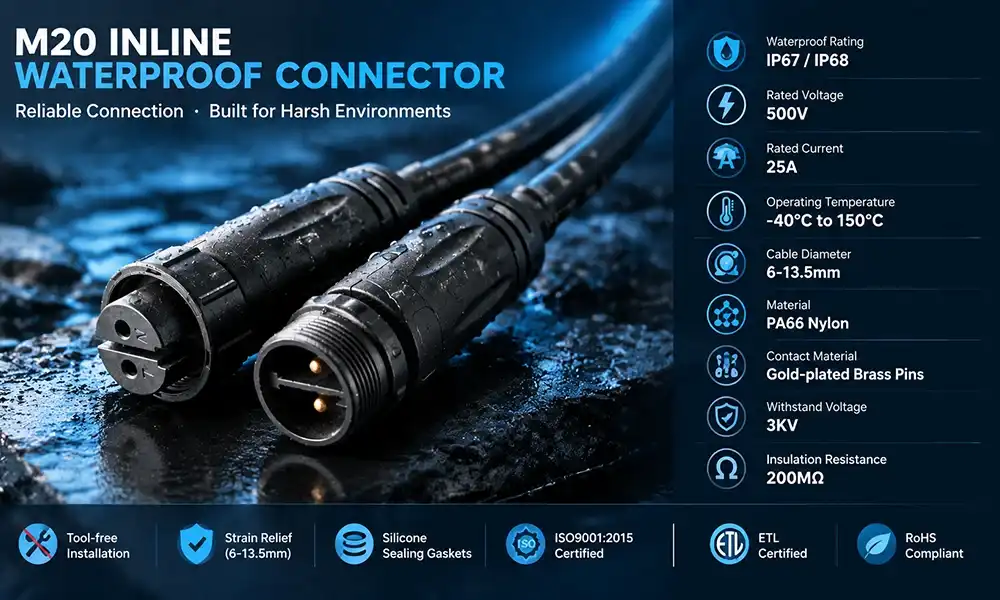
M20 waterproof connectors work well because they have more than one layer of protection. The top housing is usually made of UV-stabilized PA66 nylon, which gives it power and protection against damage from the environment. Inside, metal contact pins that are gold-plated or nickel-plated keep the electrical resistance low and stop oxidation, even when the environment is wet. When the threaded coupling is tightened, a silicone rubber sealing gasket presses against the surface of the mating connector to form the main waterproof barrier. Extra parts of the cable gland grip the outer cable jacket, relieving stress and creating a second seal that stops water from moving along the cable sheath. This multi-layered method provides strong ingress protection with an IP67 rating for short-term immersion up to 1 meter or an IP68 rating for continuous immersion beyond 1 meter, depending on the manufacturer's instructions.
Key Technical Specifications You Must Evaluate
To choose the right M20 inline waterproof connector, you need to carefully consider a number of technical factors that have a direct effect on compatibility, safety, and operating life. Professionals in procurement and engineering should give top priority to specs that meet both the needs of instant installation and the needs of long-term environmental exposure.
IP Rating: Understanding Ingress Protection Levels
The most important thing to know about waterproof connections is their IP (Ingress Protection) grade. IP67-rated M20 plugs can withstand being submerged in water up to 1 meter deep for 30 minutes. This means they can be used in outdoor setups that get wet from heavy rain or puddles. IP68-rated versions offer better safety for uses that are submerged in water all the time, like underwater lighting, marine sensor networks, and equipment used to watch aquaculture. The first number in the IP rating tells you how much dust the device is protected against (6 means it is totally dust-tight), and the second number tells you how much liquid can get in. IP67 certification is enough for most industrial outdoor uses, but IP68 certification is needed for marine and submersible uses.
Electrical Ratings: Voltage and Current Capacity
There are different electrical configurations for M20 connectors to meet different power needs. Standard options usually come with rated voltages between 300V and 500V AC/DC and current capacities between 20A and 25A per contact. Higher-spec versions made for charging electric vehicles and heavy machinery can handle 25A+8A split setups (which combine power and signal lines) or special high-current contacts. The withstand voltage standard, which is usually between 2KV and 3KV, tells you how well the connection can handle voltage spikes without breaking. Insulation resistance values of 200MΩ or higher make sure that there isn't much leakage current, even when it's wet outside. This is especially important for sensitive electronics and apps that need to be safe.
Material Construction and Environmental Resistance
What the M20 waterproof connectors are made of directly affects how long they last and what environments they can be used in. PA66 (Polyamide 66) nylon housing materials are very strong, don't catch fire easily (UL94-V0), and are very resistant to common industry chemicals like oils, solvents, and weak acids. Contact pins made of brass that have been plated with gold allow for the best electrical conductivity while keeping contact resistance below 5mΩ. This lowers the amount of heat that is produced and the voltage drop. When used in temperatures ranging from -40°F to 150°F, silicone rubber sealing gaskets stay flexible, making sure the seal stays intact even when temperatures change quickly. UV stabilization additives in the housing material stop damage from long-term sun exposure, which is a common way for outdoor installations to fail.
Cable Entry and Pin Configuration Options
Through adjustable cable glands or precision overmolding, M20 plugs can fit wire sizes that are usually between 6mm and 13.5mm. Pin configurations range from simple power connections with two pins to complex 7-pin layouts that send both power and signals. Standard power layouts with 2/3/4 pins, 2+2 or 2+3 split configurations that separate high-current and control circuits, and 5-pin or 7-pin setups for equipment that needs more than one power phase or built-in communication lines are some of the most common configurations. Knowing the exact pin-out needs of your equipment helps you avoid making mistakes that cost a lot of money and makes sure that the circuits are properly separated for safety and functionality.
Comparing M20 Waterproof Connectors: Making an Informed Choice
There are a lot of different kinds of M20 connectors on the market. Knowing the differences between them helps you make better purchasing choices that combine performance needs with budget limitations.
Waterproof vs. Standard Connectors: Impact on Reliability
Non-waterproof M20 connectors are cheaper at first, but they put electrical systems at great risk when they are used outside or in wet conditions. When moisture gets into contact surfaces, they slowly rust, which raises electrical resistance and heat production. This can cause connectors to fail or create fire hazards. When water gets between contacts, it makes short circuits that damage the equipment that is linked and put people in danger. The extra money spent on waterproof versions that are properly sealed pays off in fewer maintenance calls, longer equipment life, and no more downtime due to bad weather. The difference in price between waterproof and normal plugs for outdoor LED lighting projects is less than 2% of the total cost of the system, but it stops most field failures.
Material Choices: Plastic vs. Metal Housings
The housings of M20 connections can be made of metal (usually nickel-plated brass or strengthened plastic called PA66 nylon). Plastic housings are great for most outdoor lights, solar systems, and general industry uses because they don't rust, are lighter, and are less expensive. Metal housings are better at withstanding mechanical stress, EMI/RFI interference, and chemicals in harsh industrial settings like petrochemical plants, mines, and marine applications that are exposed to salt spray. The choice you make will depend on the problems you face in your environment and whether electromagnetic shielding is needed to keep the signal strong.
Locking Mechanisms and Assembly Methods
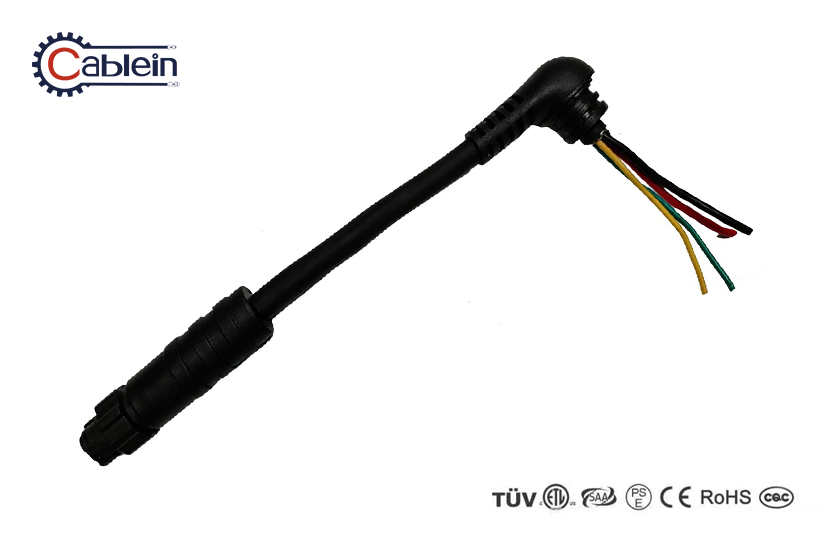
Threaded coupling designs offer the strongest link and most reliable seal compression, which makes them the best choice for uses that will be vibrating or under mechanical stress. Adding anti-vibration washers or lock nuts to heavy machinery, rail transit equipment, and mobile apps stops them from slowly coming free. Factory-assembled overmolded cable assemblies get rid of the need for field termination work and installation mistakes that could damage the waterproofing. These solutions come pre-terminated and are ready to be installed right away. This cuts down on labor costs and makes sure that quality is uniform across big projects. The one-piece overmolded M20 inline waterproof connector design also offers better pressure relief than options that are put together in the field.
Evaluating Supplier Options and Quality Standards
When looking for M20 waterproof connectors, it's just as important to look at the supplier's name and make sure they meet all the approval requirements. Established manufacturers keep an eye on quality all the time and provide the traceable product documentation that is needed for project compliance. Check for important approvals like ETL (North American electrical safety), CE (European conformity), RoHS (restriction of dangerous chemicals), and REACH (chemical safety). The ISO9001:2015 quality management certification shows that production is controlled in a systematic way and can be tracked. Suppliers who offer full technical support, quick samples, and customization services add value that goes beyond the component itself. This is especially true for projects with specific needs or short development timelines.
Procurement Considerations for M20 Waterproof Connectors
In addition to technical details, commercial factors that affect project budgets, timelines, and the reliability of the supply chain must also be taken into account for procurement to go smoothly. Selecting an M20 inline waterproof connector requires understanding both the hardware and the source.
Pricing Structures and Cost Optimization Strategies
The price of an M20 waterproof connector depends a lot on the type of material used, the level of customization, and the certification requirements. The cheapest choice is to use standard catalog items with plastic housings and basic IP67 ratings. These are good for projects that need to stay within a budget and will be exposed to mild weather conditions. Customized solutions with certain cable lengths, wire sizes, overmold colors, or non-standard pin configurations cost more, but they remove the need for extra assembly steps and make sure that the product fits perfectly on specialized equipment. Price breaks usually happen at amounts of 500, 1000, and 5000 units. When you buy in bulk, the unit cost goes down by a lot. Setting up framework agreements with qualified suppliers for expected annual volumes is a good way to get better prices and keep your supply options open.
Delivery Timelines and Inventory Management
Keeping track of lead times is important for planning projects and keeping production going. Reliable sellers keep a steady stock of popular configurations, which means that standard things can be delivered within 7–10 days. Customized products have longer lead times, ranging from two to six weeks depending on how complicated they are. This is because of things like making molds for custom housings, finding cables for specific wire types, and passing certification tests for designs that have been changed. When you buy from suppliers with established stocking programs for your most-used configurations, you avoid the need for urgent purchases and the fees that come with them. Knowing the minimum order numbers (MOQs) for both standard and custom things can help you get the most out of your inventory investment while minimizing the risks of going out of style and the costs of storing it.
Benefits of OEM Partnerships for Custom Solutions
For projects with unique needs, working directly with OEM manufacturers like Cablein to get customized M20 connector solutions has many benefits. Working directly with engineering teams lets you tailor connection specs to the specific needs of an application, which could boost performance while cutting costs that aren't necessary. Custom cable lengths get rid of the need to cut and splice cables in the field, which cuts down on installation work and failure points. Using proprietary color code or branding helps to set a product apart and makes it easier to find in the field. OEM makers who have their own tooling facilities can make private molds for special housing designs that give them a competitive edge or make the most of limited space. Being able to try prototypes early on and make changes over and over again before committing to full production lowers the risk of high-volume operations.
Installation and Maintenance Best Practices
When you install M20 inline waterproof connector systems correctly and keep them in good shape, they will last for a long time and be waterproof. Proper handling ensures the investment stays secure.
Correct Installation Procedures for Maximum Protection
Careful preparation of the cables is the first step to a successful installation. Cable jackets should only be as long as the manufacturer says they should be because too much exposed conductor can cause short circuits and not enough insertion can stop the gasket from properly compressing. Carefully match wire colors to pin placements, because switching the polarity in LED drivers or motor controls will make the equipment not work. When putting together threaded connectors, hand-tighten the coupling nut until you feel resistance. Then, turn it an extra quarter to half turn to properly squeeze the sealing gaskets without over-tightening, which can damage the threads or crack the housings. For connectors with different cable glands, make sure the gland grips the outer jacket instead of the inner wires so that the strain is relieved properly. After connecting, do a light pull test to make sure the mechanical security is good before turning on the circuit.
Routine Maintenance and Inspection Recommendations
Setting up a regular inspection plan for connectors increases their useful life and finds possible problems before they cause system downtime. Visually check connector housings for cracks, discoloration, or mechanical damage that could compromise seals once a year during routine maintenance. Threaded couplings can gradually become less tight over time due to thermal cycling and vibration. Clean the outside of things with water and a mild detergent to get rid of dirt, salt deposits, or chemical residues that speed up the breakdown of materials. For underwater uses, check the places where the cables enter for signs of water getting in, like water droplets inside clear housings or rust on metal parts that can be seen. Instead of waiting for total failure, replace any connections that show signs of a broken seal right away. When putting things back together, putting a small coat of dielectric grease on the threads and seal surfaces makes them more resistant to moisture and makes it easier to separate them in the future.
Conclusion
It is important to find the right M20 waterproof connectors by weighing technical specs against application needs and buying factors. Your connectivity infrastructure will work reliably in tough settings if it has the right IP grades, electrical capacities, solid building materials, and strong supply partnerships. Cablein's M20 inline waterproof connector assemblies are made of PA66 nylon, have gold-plated contacts, and are machine overmolded to meet ETL and RoHS standards. They are known to be reliable. Whether you're working on a project that involves outdoor lighting, EV charging infrastructure, or industrial automation equipment, taking the time to review the specifications and work with experienced manufacturers will pay off in the long run by reducing failures, making installation easier, and increasing the service life.
FAQ
1. When it comes to M20 connectors, what's the difference between IP67 and IP68?
IP67-rated M20 inline waterproof connector options can be submerged in water up to 1 meter deep for 30 minutes. This means they can be used in outdoor installations that get wet sometimes. IP68-rated versions offer better protection for continuous submersion below 1 meter, which is needed for underwater lighting, marine applications, and equipment that stays in wet places all the time. The depth and length of time for IP68 grades are different for each maker and should be checked to make sure they work for your needs.
2. Can high-current tasks be done with M20 waterproof connectors?
High-current needs can be met by good M20 connectors, which usually have standard ratings of 20A to 25A per contact. Specialized configurations made for charging equipment for electric vehicles, big industrial pumps, and heavy machinery main power feeds can handle even higher currents if they are built with contact pins and conductors that are the right size. The important thing is to make sure that the stated current capacity of the connector matches the real demand of your equipment, leaving enough room for error, usually 125% of the maximum predicted load.
3. How do I figure out which pin combination is best for my use?
The power and signal needs of your equipment determine which pin configuration to use. For simple power distribution, 2-pin or 3-pin arrangements work best. For equipment that needs to send power and control signals, split designs like 2+2 or 2+3 are best because they physically separate high-current and low-voltage circuits. 5-pin or 7-pin layouts may be needed for complex machines that need more than one power phase or built-in communication channels. Always check the specifications provided by the manufacturer of your equipment or ask connector suppliers for help with the right configurations.
Partner with Cablein for Reliable M20 Inline Waterproof Connector Solutions
Cablein Technology specializes in making M20 inline waterproof connector kits that offer proven IP67/IP68 security and the ease of being pre-assembled at the factory. Our overmolded designs get rid of field termination mistakes and provide strong strain relief that is needed for industrial uses that are prone to shaking. We work with LED lighting makers, EV charging suppliers, and industrial automation installers all over North America and the world. Our ISO9001:2015 quality management is backed by ETL and RoHS certifications. Our engineering team is available 24 hours a day to help with customization questions about things like cord length, wire gauge, overmold color, and unique pin configurations. Standard orders are delivered within 7–10 days thanks to our stable inventory of common configurations, and we can also accommodate special requests with our flexible production schedule. Get in touch with our team at nick@cableinco.com to talk about your M20 waterproof connector needs with a maker with a lot of experience who knows how to match technical performance with business needs.
References
1. International Electrotechnical Commission (IEC). "IEC 60529: Degrees of Protection Provided by Enclosures (IP Code)." Geneva: IEC Standards, 2021.
2. National Electrical Manufacturers Association (NEMA). "NEMA 250-2020: Enclosures for Electrical Equipment (1000 Volts Maximum)." Rosslyn: NEMA Publications, 2020.
3. Society of Automotive Engineers (SAE). "SAE J1772: Electric Vehicle and Plug-in Hybrid Electric Vehicle Conductive Charge Coupler." Warrendale: SAE International, 2022.
4. Underwriters Laboratories (UL). "UL 2238: Standard for Safety for Industrial Control Equipment." Northbrook: UL Standards & Engagement, 2019.
5. Chen, W., & Martinez, R. "Waterproof Connector Design and Testing Methodologies for Outdoor Industrial Applications." Journal of Electrical Connectors and Systems, vol. 18, no. 3, 2023, pp. 145-162.
6. Thompson, K. "Material Selection for Marine and Submersible Electrical Connectors: A Comparative Analysis of Polymers and Metals." International Conference on Industrial Connectivity Solutions Proceedings, 2022, pp. 287-301.