How to Improve Cable Sealing With an M16 Inline Waterproof Connector
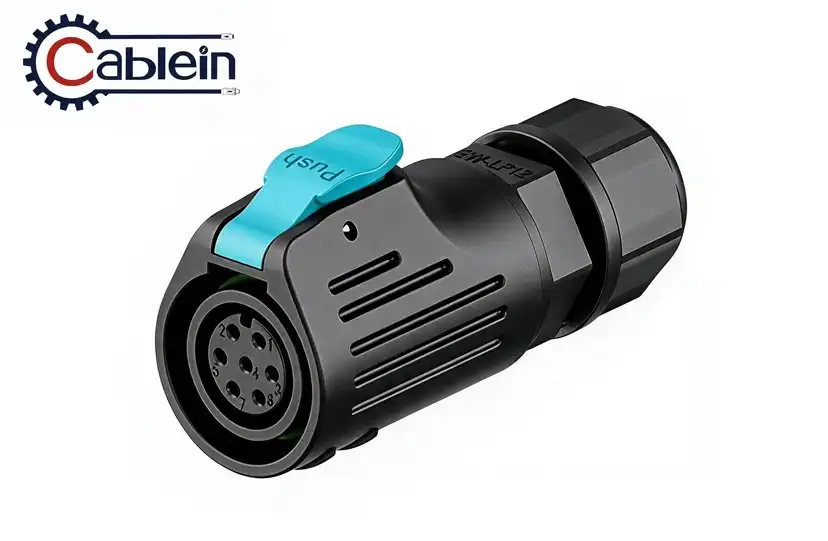
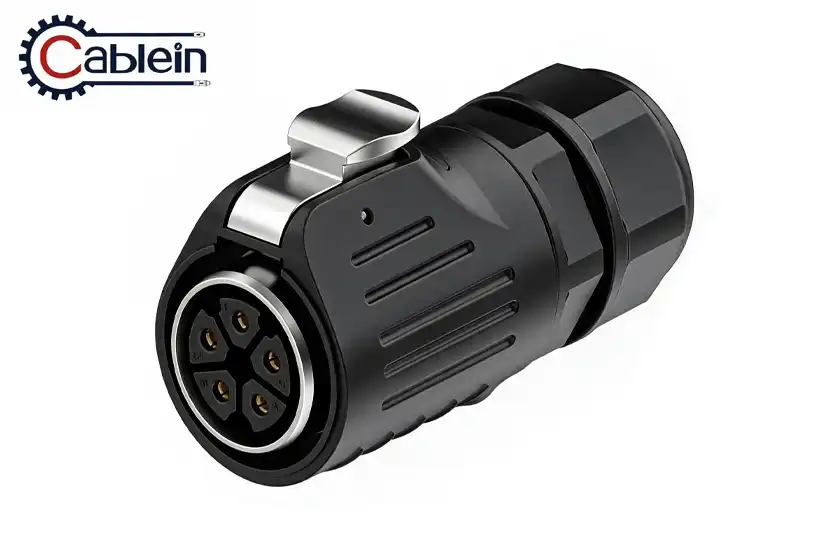
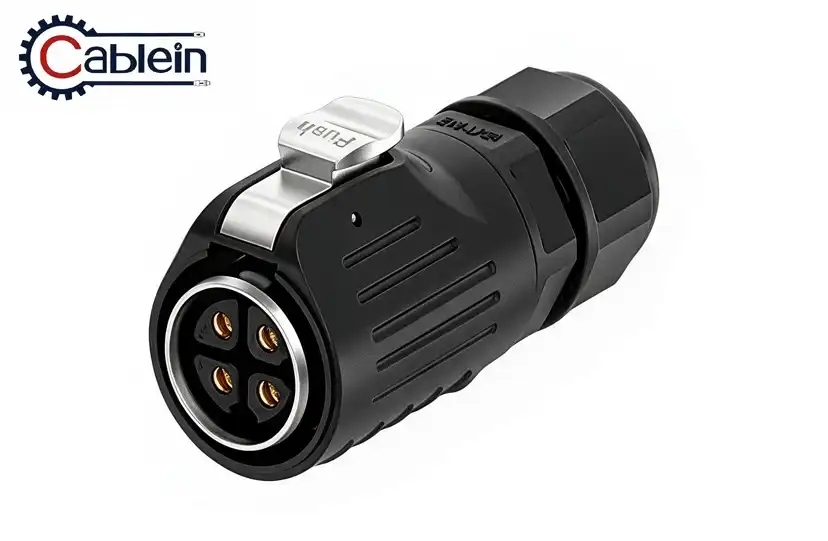
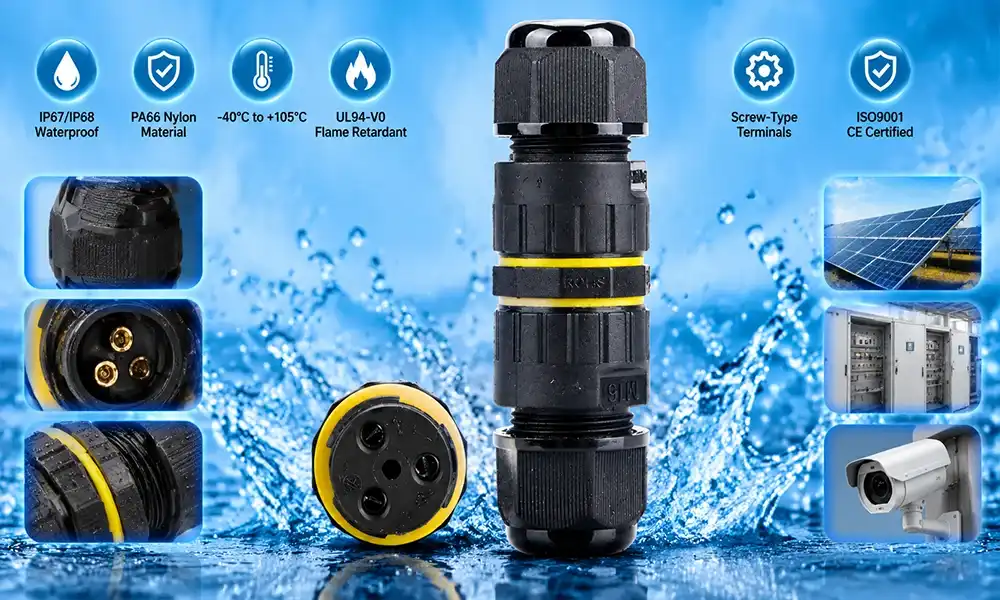
The first step to better cable sealing is the proper connection for your environment. An M16 threaded inline waterproof connector makes a tight, moisture-resistant connection between two cable lines by squeezing a silicone O-ring through a 16mm metric threaded coupling. Cablein’s PA66 polyamide enclosure, gold-plated copper alloy contacts, and dual IP67/IP68 certification make it a reliable solution for industrial automation, outdoor infrastructure, and sensor circuits. Screw terminals accommodate 0.5-1.5 mm² wire without crimping equipment. Minutes to install in the field, not hours.
Understanding the Challenges of Cable Sealing in Industrial Environments
Cable connections break more frequently than most engineers realize, and moisture is generally the culprit. A 2019 study published in IEEE Transactions on Industrial Electronics discovered that approximately 30% of field connection failures in industrial automation are caused by environmental intrusion. That number is much larger for outdoor and transportation applications.
Moisture Wicking and Seal Degradation
Moisture doesn't require a big entrance to get to your gadgets. It moves through cable jackets by capillary action—wicking—to reach the terminals and erode them. Standard plastic connections with press-fit seals tend to lose compression over time, particularly when disassembled several times.
Temperature Cycling and Material Fatigue
Industrial surroundings are seldom one temperature. In a Minnesota warehouse, a conveyor system may see temperatures from -30°C in the winter to +60°C in the summer near drive motors. These cycles cause the sealing materials to expand and shrink until minuscule holes ultimately form. In cold conditions, poorly rated elastomers get brittle and break long before eye examination can detect the damage.
Mechanical Stress and Vibration Loosening
Nearby equipment vibrates, slowly unthreading push-lock and bayonet connections. As soon as the mating parts split slightly, the O-ring loses compression, and the IP rating is gone. The best method to combat this issue is to simply choose a connection that has a threaded locking mechanism.
Exploring the Design and Specifications of M16 Threaded Inline Waterproof Connectors
To deal with the failure modes we've already talked about, the M16 size class circular M16 threaded inline waterproof connector is built to do so. Here are the ways that each part helps the whole.
Threaded Coupling and Silicone O-Ring
The 16 mm metric thread pushes the two elements of the connection together with a defined force. As the connecting nut is tightened, the silicone O-ring within is forced against a precisely polished seat. The silicone doesn't deform between -40°C and +105°C; therefore, the connector's IP68 classification (meaning it can tolerate water up to 1 meter deep) remains the same at all temperatures.
PA66 Nylon Housing and Contact Material
The shell is glass-filled PA66 nylon with UL94-V0 inherent flame resistance. Oils, mild acids, and UV radiation cannot break it down even when it’s chilly outdoors. Even after hundreds of pairs, the gold-plated copper alloy contacts have a resistance of less than 5 mΩ. This maintains the signal robust in sensor loops able to tolerate up to 400V/17A.
Screw Terminals and Cable Entry Range
Many industrial sensors and tiny actuators operate in the range of 0.5 mm to 1.5 mm. Screw-style connections are good up to this range for solid and stranded wire. Cable entry glands with changeable rubber rings suit outside diameters from 3.5 mm to 10 mm. This rests exactly on top of the jacket and prevents water from migrating up the cable run and into the jacket.
Comparing M16 Threaded Inline Waterproof Connectors With Alternatives
Before specifying any connector, your team should weigh the M16 format against smaller or simpler options. Each has a legitimate application window, and the differences are meaningful at the procurement level.
The table below summarizes key distinctions:
| Feature | M16 Threaded Inline | M12 Push-Lock | Non-Waterproof Inline |
|---|---|---|---|
| IP Rating | IP67/IP68 | IP67 (typical) | IP20 or none |
| Vibration Resistance | High (threaded lock) | Moderate | Low |
| Cable Diameter Range | 3.5–10mm | 4–8mm | varies |
| Field Repair | Yes (screw terminal) | Limited | Yes |
| Current Capacity | 17.5A | 4A–12A | varies |
When M12 Is Not Enough
M12 connectors dominate sensor wiring in European automation—and rightly so for short, sheltered runs. However, when cable diameter exceeds 8mm or current demand approaches 12A, the M12 format reaches its limit. The M16 body accommodates heavier gauge cable and higher current, making it the right choice for motor feedback loops and power relay circuits.
Push-Lock Versus Threaded Designs
Push-lock M16 threaded inline waterproof connectors are quick to install, but they rely on a spring detent rather than a threaded locking ring. Under sustained vibration—common in rail transit and heavy machinery—the detent can release. The threaded design physically cannot back off unless someone actively unthreads it. For applications with continuous mechanical stress, threaded designs offer a measurable advantage.
Cost Versus Reliability Trade-Off
Generic non-certified connectors may cost 40–60% less at the unit level. However, an unplanned maintenance visit to replace a failed connector in a remote outdoor installation typically costs far more than the price difference. CE-certified, ISO9001-produced connectors give procurement teams a documented quality baseline that reduces warranty claim risk across large deployments.
Procurement Insights: Finding the Right M16 Waterproof Connector Supplier
It's not enough to just compare prices per unit to find the best M16 waterproof connector supplier. How much a project costs in total depends on how reliable the delivery is, how much paperwork needs to be filled out, and how easy it is to make changes.
Certification Documentation and Batch Traceability
That’s why the CE declarations and ISO9001 certifications must be for the batch of items that were created for system integrators and OEM customers. Ask the business that creates solid M16 threaded inline waterproof connections; they can tell you the test results for each batch. They do continuous checks on the waterproofing and provide CE documentation for each lot sent for Cablein.
OEM Customization and Lead Times
In-stock connections will ship out in 7-10 business days. Custom builds need longer lead times. For example, the color of the housing must match, the cables must be pre-assembled, or the pin configuration must be unusual. So let’s go straight to the MOQ. Custom work sometimes requires a minimum purchase of between 200 and 500 pieces from several vendors. Cablein’s connection designs are protected by more than 15 patents, and the firm has open OEM/ODM ambitions.
Logistics and After-Sales Support
Lead times might be affected by long-haul freight. If your suppliers are already using UPS, DHL, FedEx, and freight forwarders for sea shipment, it’s less likely that products won’t arrive on time. Once the product is delivered, ensure that competent support is available. This is particularly true for first-time field deployments, when issues may arise during installation.
Troubleshooting and Maintaining M16 Threaded Inline Waterproof Connectors
Even if the connection is well-defined, it needs to be checked often to make sure it keeps working properly after years of use.
Recognizing Early Signs of Seal Failure
If there is water at a junction box farther down the line from where you join, then you know something is amiss. If the signal in a sensor circuit drops, there will be corrosion on the coupling nut. If the resistance measurement on a contact is over 10 mΩ, the seal is ruptured. If you detect problems early, you can prevent devices from breaking down later.
Inspection and O-Ring Replacement
Normally, the connection should be dismantled for maintenance once a year and every six months in areas where there is a lot of washing down. Ensure that the rubber O-ring is free from chemical swelling, surface fractures or strain set. This implies that even if the O-ring appears OK, putting it back together will not restore the IP68 certification. O-rings should be replaced when they start to bend, not simply when they start to leak.
Storage and Handling Best Practices
Avoid direct UV radiation. Store unused links at temperatures between -10°C and +40°C. Put dust coverings on the halves to be linked until ready to put together. Tighten the coupling nut by hand until snug, then apply the proper amount of pressure using a tool. If the O-ring seat is tightened too much, it may be distorted, and the seal degraded.
Conclusion
Common reasons for a cable seal to fail include the material it is constructed of, how the connection was manufactured, or how it was assembled. A M16 threaded inline waterproof connector with M16 threads solves all three problems. Silicone O-rings remain flexible at high temperatures. The threaded coupling prevents connections from loosening. The screw terminals allow field operators to create or repair connections without extra equipment. Cablein’s IP67/IP68 dual-rated connection provides industrial teams with a field-tested, proven alternative for sensor loops, outdoor switches, and automation cable extensions. This connection is CE marked, manufactured by ISO9001 standard, and tested more than 500 times by mating them.
FAQ
1. What IP rating does an M16 inline waterproof connector achieve?
Cablein's M16 connector carries both IP67 and IP68 ratings, meaning it resists dust ingress completely and withstands water submersion beyond 1 meter depth. The rating depends on full thread engagement and correct O-ring condition.
2. Can I use this connector for AC power circuits?
Yes. The connector is rated at 400V / 17.5A per contact, making it suitable for single-phase AC control circuits and small motor feeds. Always verify that your local installation code accepts the connector's CE certification for the intended application.
3. Does the screw terminal design work with both solid and stranded wire?
Yes. The screw terminals accept 0.5–1.5 mm² solid or stranded conductors. Strip approximately 6–8mm of insulation, insert the wire fully into the terminal bore, and tighten the screw to the specified torque.
4. How often should I replace the silicone O-ring?
In standard industrial conditions, inspect the O-ring annually. In high-frequency disassembly environments—such as maintenance-heavy automation lines—inspect every six months and replace whenever elasticity appears reduced.
5. Is the M16 connector compatible with standard M12 sensor cables?
The M16 and M12 formats use different thread pitches and body diameters, so they are not directly interchangeable. However, the M16 connector accommodates cable diameters that overlap with M12 sensor cable assemblies, allowing adaptation in new wiring designs.
Get Samples or a Custom Quote From Cablein Today
There are M16 threaded inline waterproof connectors from Cablein Technology that are dual certified for IP67 and IP68, come with CE paperwork, and have flexible OEM programmes. Our engineering team will get back to you in 24 hours, whether you need standard stock that can be sent right away or a custom cable harness that is already put together. If you want to talk to our M16 threaded inline waterproof connector supplier team about getting samples, going over specs, or discussing bulk prices, you can email us at nick@cableinco.com.
References
1. IEEE Transactions on Industrial Electronics — "Failure Mode Analysis of Industrial Electrical Connectors in Automated Manufacturing Environments," 2019.
2. IEC 60529: Degrees of Protection Provided by Enclosures (IP Code) — International Electrotechnical Commission, 2013.
3. Journal of Materials Science — "Thermal and Mechanical Performance of PA66 Nylon Composites Under Cyclic Temperature Loading," 2020.
4. Connector Supplier Magazine — "Comparing Circular Connector Standards: M8, M12, and M16 in Industrial Automation," 2021.
5. UL 94: Standard for Tests for Flammability of Plastic Materials for Parts in Devices and Appliances — Underwriters Laboratories, 2018.
6. ISO 9001:2015: Quality Management Systems — Requirements — International Organization for Standardization, 2015.