M12 Connector Comprehensive Analysis: Performance, Applications and FAQs
A tough M12 quick lock waterproof connector is a compact 12 mm circular interconnect that mates quickly, seals against water and dust, and holds its contact under vibration. Its performance depends on housing material, sealing design, IP rating, coding, and cable construction. Its main applications include sensors, actuators, mobile machinery, robotics, and washdown equipment. I wrote this guide for engineers and buyers who need a connector that survives dust, shock, and pressure washing. Below, I cover construction, specifications, wiring, installation, selection, verification, and common questions.
What Is a Tough M12 Quick-Lock Waterproof Connector?
Core Construction and Materials
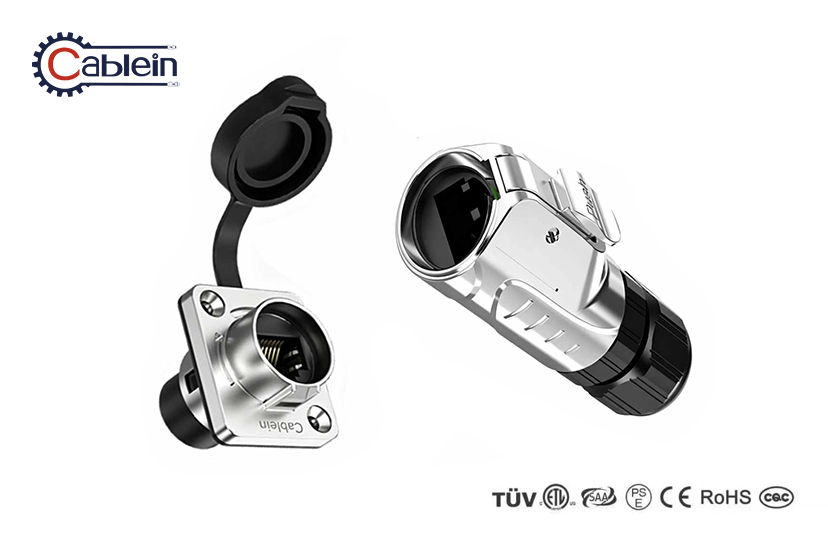
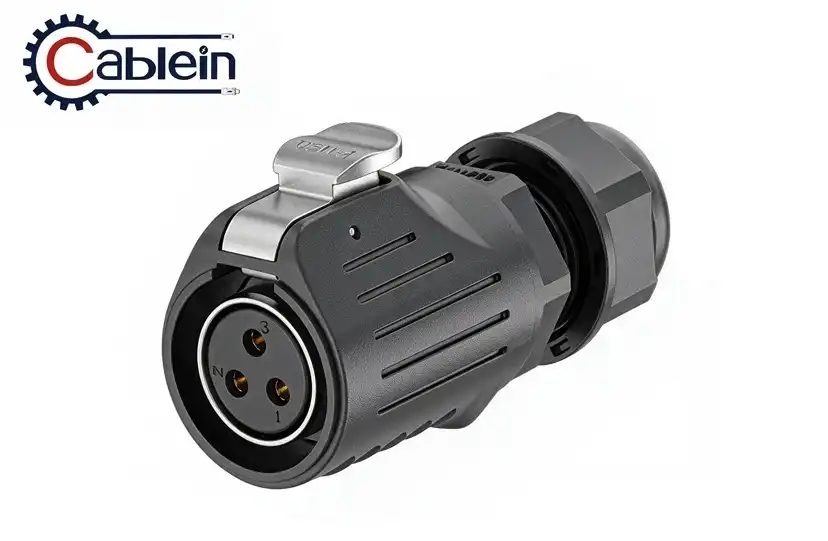
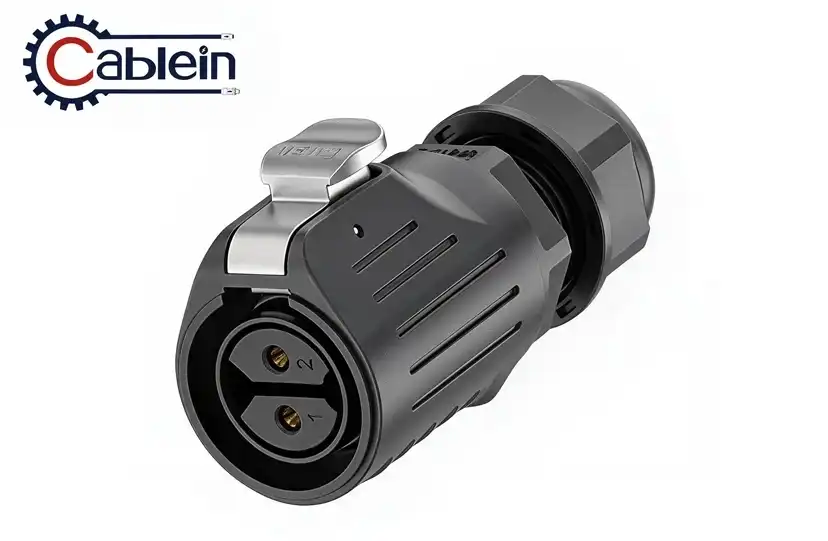
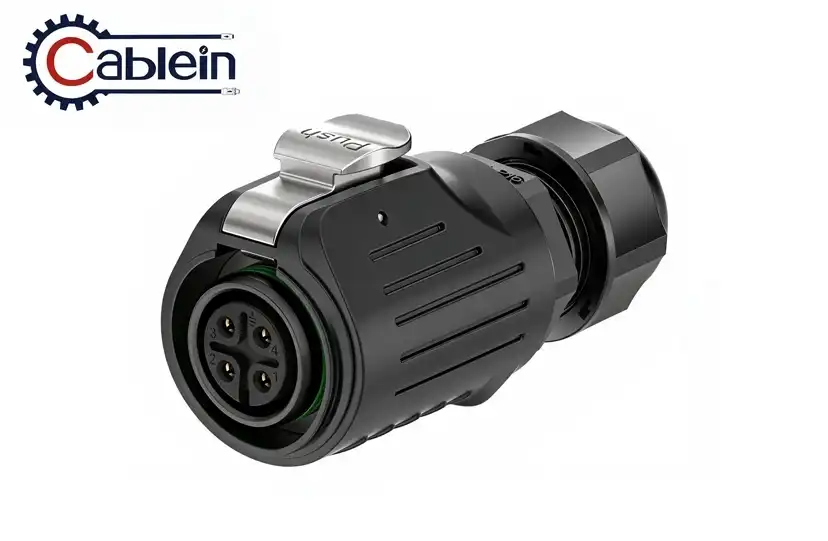
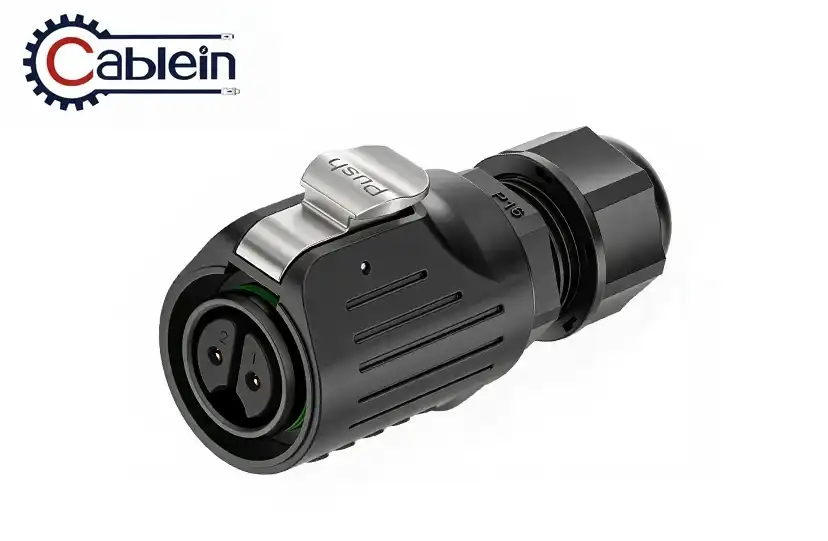
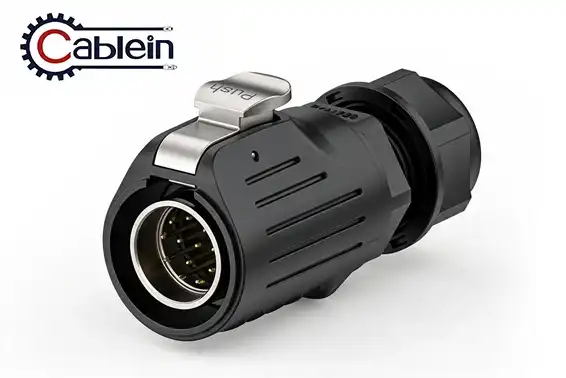
The six main parts of a tough M12 quick-lock waterproof connector are the body, the contacts, the insulator, the gasket, the cable gland, and shielding, if you want it. Silver or brass is used to plate stainless steel and make most metal bodies. They're stronger than plastic and let the shield connect to the ground. The padding keeps the contacts in place, and the cover keeps the face that fits together from getting wet. The clamp keeps the end of the wire from being pushed too far and holds on to the cable jacket. To seat an M12 with threads, you have to do more than one turn. You only need to push or twist a few times for the quick-lock to work. On big machines with lots of links, this saves time.
Prewired and Field-Installable Designs
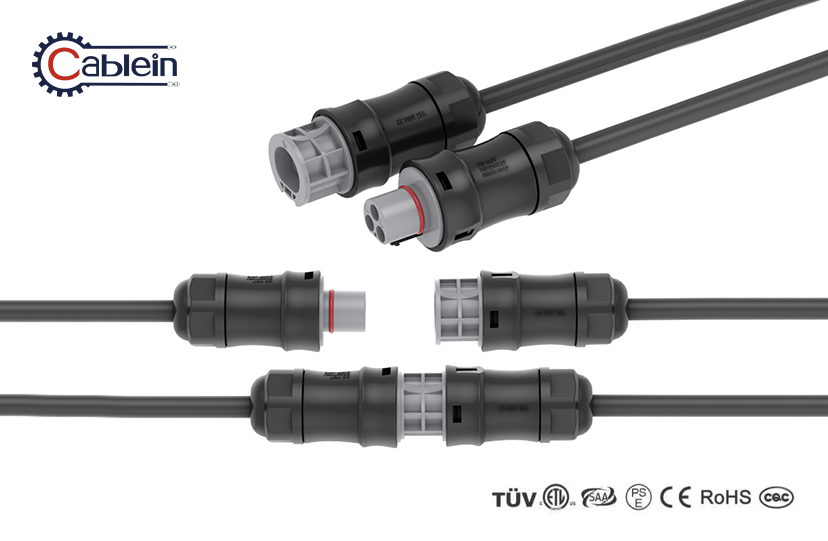
Plugs that are already wired have the line attached by the factory. Each one can be tested before it ships, and the molded joint gets rid of a common place where leaks happen. This makes them good for OEM production. If your connectors can be put in the field, a tech can cut off a cable right there. That's helpful when the wires aren't all the same length or when you need to fix something right away. Be careful when you put them together, because a weak gland or a cut in the wire could break the seal. I often send machinery abroad with prewired main wiring kits and service parts that can be put together on the job site.
Where These Connectors Work
People who buy things for businesses use motor drivers, infrared and proximity sensors, robotic cells, and planes with M12 ports. When people make mining, construction, and other vehicles, they move them around on mobile equipment that is often dusty, vibrated, and washed with high-pressure water. These sensors are used on lines that handle food, so they have to deal with things like water and steam. In each setting, a different part stands out. Chemicals and oil are bad for seals and jackets. Plastics that are left out in the sun also get old from UV light. When you bend the wire and gland over and over, they get stressed. Check to see if the stress is right for the building as the first step in making a good plan.
Specifications and Pinout Guide
Electrical Ratings to Check
Before you start, you need to know the list of contacts, their resistance, the number of contacts, and the rated current. More electricity can flow through M12 plugs with a power code than through ones with an A code. The extra power could be a few amps or more, based on how it's made and how many pins it has. Insulation resistance and hold voltage are two ways to find out how well insulation keeps contacts from touching. It takes a while for small changes in the resistance of the contacts to cause noise and heat. Someone who wants to buy something should read the datasheet for that item instead of relying on a general number. You should think about how the body fits your body and whether a straight or right-angle body is best.
IP67, IP68, and IP69K Ratings
Take a look at IEC 60529. It gives marks to IPs. You can put it in water up to 1 meter deep for 30 minutes, and it won't let any dust in. Immersion that lasts for a long time is covered by IP68 as long as the user and the manufacturer agree on the terms. On the data sheet, you should write down the depth and duration of the immersion. Based on ISO 20653, it checks how well something can handle water jets at 80 to 100 bar and 80 to 90 °C. This is like cleaning with pressure. A grade can only work if it is fully joined or closed. It won't work if the ports are open. You can find out more about shock and vibration tests in IEC 60068-2-6 and IEC 60068-2-27.
Coding and Pinout Basics
The M12 code makes sure that nothing fits incorrectly. Parts that have an A code can be used in sensors and motors. It is possible to use parts with a B code in fieldbus systems like PROFIBUS. Fast Ethernet can use parts with an X code or a D code. Types S and T can use both AC and DC power. Each tough M12 quick lock waterproof connector is unique. Supply voltage is on pin 1, 0 V is on pin 3, and the output is on pin 4. This is how a normal 4-pin sensor is set up. IEC 60947-5-2 shows this. These pins are joined together by brown, blue, and black lines. Look at the drawing to make sure you understand the height, gender, pin numbering, and shield termination before you place your order.
Installation, Locking, and Troubleshooting
Installing a Quick-Lock M12 Step by Step
Before I put it together, I turn off the power and check the gender, wire width, coding, and sides that seal. Cut the jacket to the length that it says to on the directions, then put the gland parts on the wire. Parts that can be put together in the field are made this way. Connect each wire to the right pin. After that, put the insulator inside the body and shut the housing. The gland should be tight enough so that the seal can hold the jacket without squeezing it. Bend the wire just a bit and clamp it close to the connection. You should do a length-of-time test before the first partner.
Confirming a Full Lock
A tough M12 quick lock waterproof connector should be easy to connect with steady, light force. To put the coding key where it needs to be, push or twist it as shown on the plan. After that, look at the document to find the mark that it talks about as a click, alert, or alignment. Then, do not pull on the wire but on the connector's body to make sure it stays in place. When you force a plug that isn't lined up right, the sealing face and contacts can get bent, even if the plug looks like it's in place. There is a leak because of this. If it's hard to mate, check the rings and keys. Cover ports that aren't being used to keep water and dust out.
Troubleshooting and Maintenance
These are some of the main reasons things don't go as planned. Most of the time, signs that come and go are caused by incomplete mating, worn contacts, or a broken wire close to the gland. When a seal is broken, a gland is loose, or a wire at the exit is bent way too far, water often gets in. If clothes are broken or seals are swollen, it means that the material doesn't match the fluids at the site. While the seals and contacts are being used, make sure the lock works and look for wear on the flex points from clothing. This will stop this from taking place. You should keep track of which cleaning products have failed more than once by batch and only use those that have been approved. This will help you find trends fast.
Choosing the Right Connector
Quick-Lock vs. Threaded and Other Options
It's helpful on the shop floor and assembly lines to be able to mate quick-lock devices faster. The screw lock on M12 connectors with threads is explained in IEC 61076-2-101. Threads can come loose when the machine shakes if they are not tight enough. Quick-locks are made in different ways by different companies, so make sure they can be used with standard threaded parts. You can't just have one choice. In small frames, straight bodies take up less room. When drives and motors are shielded, noise is less near them. However, PUR coats last longer and cost less than PVC jackets most of the time. There isn't always one best choice. Space, vibration, noise from electricity, how often repairs need to be done, and how the wires are routed should all be taken into account.
Matching Specifications to Heavy-Equipment Duty
Here are the main factors I match to rugged machinery.
- Vibration and impact: Pick a lock with a metal body and a style that has been shown to work with shock and vibration. If you don't know the test standard, frequency range, or length, you can't compare what different sellers say or see if it matches your machine's job cycle.
- Fluids and cleaning: If you wash things with pressure a lot, make sure the seals and jackets are made of the same stuff as the oils, coolants, and germ killers you use. Also, ask for IP69K data. Find out how physically safe something is before you buy it. Even if a link works in water, it might get bigger when it comes to fuel.
- Temperature and load: Before you start the engine, make sure that the estimated temperature range matches the coldest and hottest spots in the engine bay. To check the circuit, you should look at the current, voltage, code, and shielding. Parts that are close to heat sources get warmer than the air around them, so any extra room should be kept below the limit.
These checks turn a vague request for a rugged connector into a specification a supplier can quote and test.
Total Cost of Ownership
It's not always clear how much something costs when the unit price is low. It often costs more to put in the connection, take the machine offline, send new parts, and do warranty repair than to just buy the tough M12 quick lock waterproof connector. This is very important for tools that come from a long way away. Service calls are cut down by connectors that connect quickly and stay in place even if they shake. Things might not work together in the field if the design changes. It is also important that it is simple to get replacements and that the quality doesn't change from one batch to the next. You should not only compare prices, but also how much each machine will cost during the guarantee period. There should be help and lessons for that math because every line change takes longer without a picture.
Quality Verification and Buying Guide
Tests That Prove Performance
You should check the electrical and environmental parts to make sure everything is fine. You can tell the main function works by looking at continuity, insulation resistance, hold voltage, and contact resistance. Protection against ingress is governed by IEC 60529 or ISO 20653 rules. The rules for shaking are in IEC 60068-2-6, and the rules for shock are in IEC 60068-2-27. There is more proof when there are tests for temperature changes, wire retention, resistance to rust, and joining cycles. When working on big machinery, I believe it's best to test samples on the real thing out in the field or on the road, and then compare the results to data from the lab.
Reading Datasheets and Evaluating Suppliers
A good document lists the IP test conditions, materials, coating, wire specs, and certificates. The things that aren't there can be thought of as inquiries. Find out about a supplier's quality system and how they handle problems, check finished goods, keep track of batches, and handle new materials. There is written proof of a method when you see certifications like ISO 9001, CE, RoHS, and TÜV. But these certifications only work for certain kinds of goods, so make sure you know which one you need to use. You should also write down what the seller will do to assist you while the machine is still under warranty. When the tech is used, failure claims cost more.
Price, Lead Time, and the Purchasing Process
What kind of code, how many pins, what kind of wire, how long it is, how big the wires are, shielding, overmolding, IP performance, testing, packing, and how many things are bought affect the price. It takes longer to put together pieces that can be put in place in the field rather than kits that are already wired. The first part is a precise description. After that, there is sampling. Once the pilot test is done and passed, mass production begins. Getting OEM approval takes three to six months most of the time. Price is not the only thing you should consider. Another thing you should check is the MOQ, the wait time, the experience with exporting, the documents, and the expert help. When people in the U.S. get a price, they should make sure they understand the shipping terms and taxes.
What Cablein Offers
Cablein is a company that was founded in 2017 in Longgang, Shenzhen. They plan and build custom cable assemblies and industrial connectors that are waterproof. There are IP67 and IP68 circle and panel-mount connectors that we have. There are also quick-connect and push-lock types. We can also make custom wiring harnesses for your automation gear. Then we follow ISO9001:2015 and check them all the way through to make sure they are waterproof and will last a long time. We work in a 6,000-㎡ facility with more than 200 other people. We always have more than 10,000 of each item in stock, and stored items are shipped in 7–10 days by UPS, DHL, FedEx, and partners that ship freight. We also offer more than 30 designs for useful models. You decide when to have things made just for you.
Conclusion
A tough M12 quick lock waterproof connector is strong because it quickly and securely locks onto the cable and stays connected even if the cable moves. What it's made of and how it was built determine how strong something is mechanically. The electrical codes and grades tell us what gadgets can connect and work with each other. These grades, IP67, IP68, or IP69K, only matter if the test conditions are good and the port is fully plugged in. If you do it right and make sure the lock works, you should not have many leaks or other problems. You should think about the area you have, how often it will be used, and whether it needs to be threaded or quick-lock. When buyers are sure they are getting what they want, they can check the datasheets, do sample runs, and see how much it will cost in total over the promised time.
FAQ
1. What makes an M12 connector tough?
There are many types of tough M12 quick lock waterproof connector options. The body is usually made of metal; it is sealed; it has been tested for shock and shaking, and it is made of chemical-safe materials. Check the manual to make sure it has all the right information.
2. How does IP67 differ from IP68 and IP69K?
IP67 protects against damage when submerged for a short time up to 1 m. It's okay to be submerged in water all the time if certain conditions are met. ISO 20653 says that IP69K covers close, high-pressure hot water jets.
3. Are M12 pinouts universal?
No, the pinout is different for each maker, code, and number of pins. If you want to know which way the pins should face and how many are on each side, look at the picture first.
4. What should I send to request a quote?
As part of your message, you should describe the IP target, the temperature range, the amount, the position, and the plan. You should also say what kind of application it is for and how many pins it has.
Request a Tough M12 Quick-Lock Waterproof Connector Quote from Cablein
Want to work with suppliers of tough M12 quick lock waterproof connectors who know what they're doing? Cablein can look at your plans and see how you plan to use them. Send an email to nick@cableinco.com with your code, the number of pins, the length of the cable, and the IP target. We will get back to you as soon as possible. You can get computer support seven days a week, 24 hours a day. For quality control, we use ISO9001:2015 and have things in stock that can be sent out in 7–10 days. We also have IP68 technology and private and custom molds.
References
1. IEC 61076-2-101, Connectors for Electronic Equipment: M12 Connectors with Screw-Locking, 2012
2. IEC 60529, Degrees of Protection Provided by Enclosures (IP Code), 2013
3. ISO 20653, Road Vehicles: Degrees of Protection (IP Code), 2013
4. IEC 60068-2-6, Environmental Testing: Test Fc, Vibration (Sinusoidal), 2007
5. IEC 60068-2-27, Environmental Testing: Test Ea and Guidance, Shock, 2008
6. IEC 60947-5-2, Low-Voltage Switchgear and Controlgear: Proximity Switches, 2019