What Is an LP12 Cable to Cable Connector?
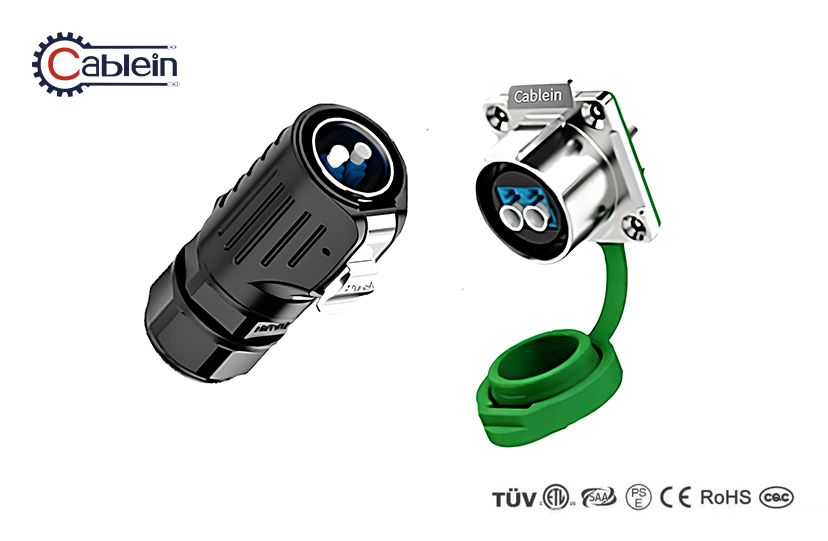
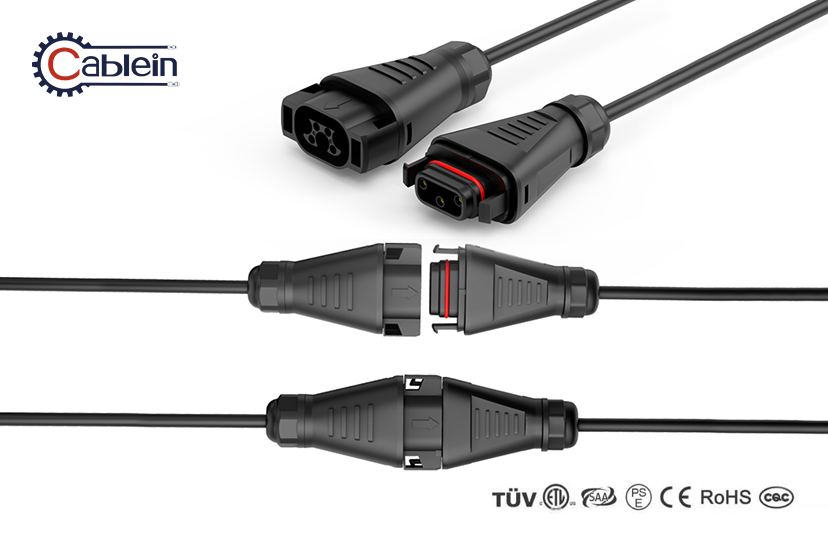
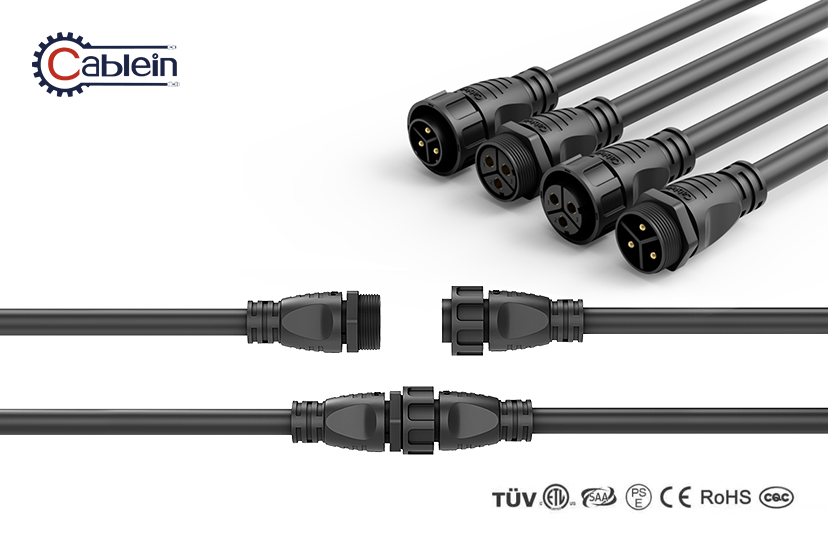
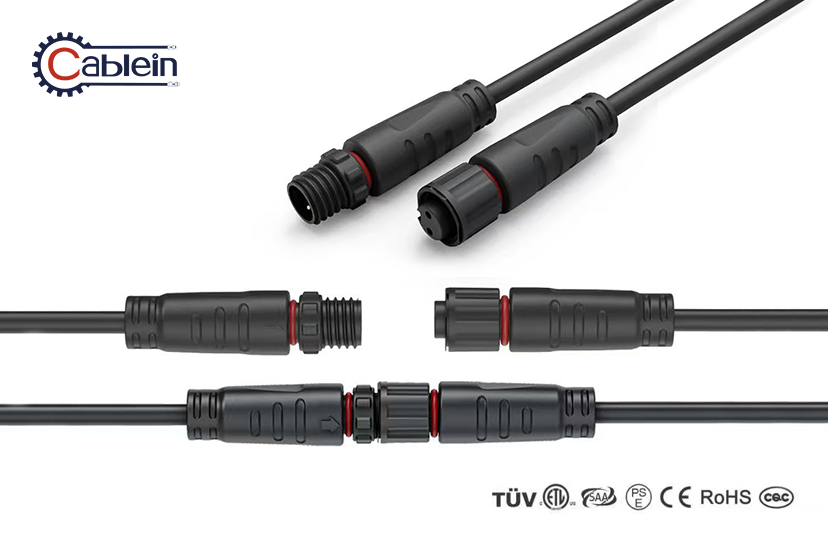
An LP12 cable to cable connector is a compact, circular inline connector engineered for secure wire-to-wire electrical connections in space-constrained industrial environments. With a 12mm mounting diameter, it uses a snap-lock bayonet mechanism to deliver vibration-resistant, tool-free coupling. Built with PA66 nylon housing and gold-plated copper alloy contacts, the LP12 cable to cable connector achieves IP67/IP68 waterproof protection, making it reliable across outdoor lighting, industrial automation, renewable energy, and surveillance systems where moisture ingress and signal instability are persistent operational risks.
Understanding LP12 Cable to Cable Connectors
What Sets LP12 Apart from Standard Inline Connectors?
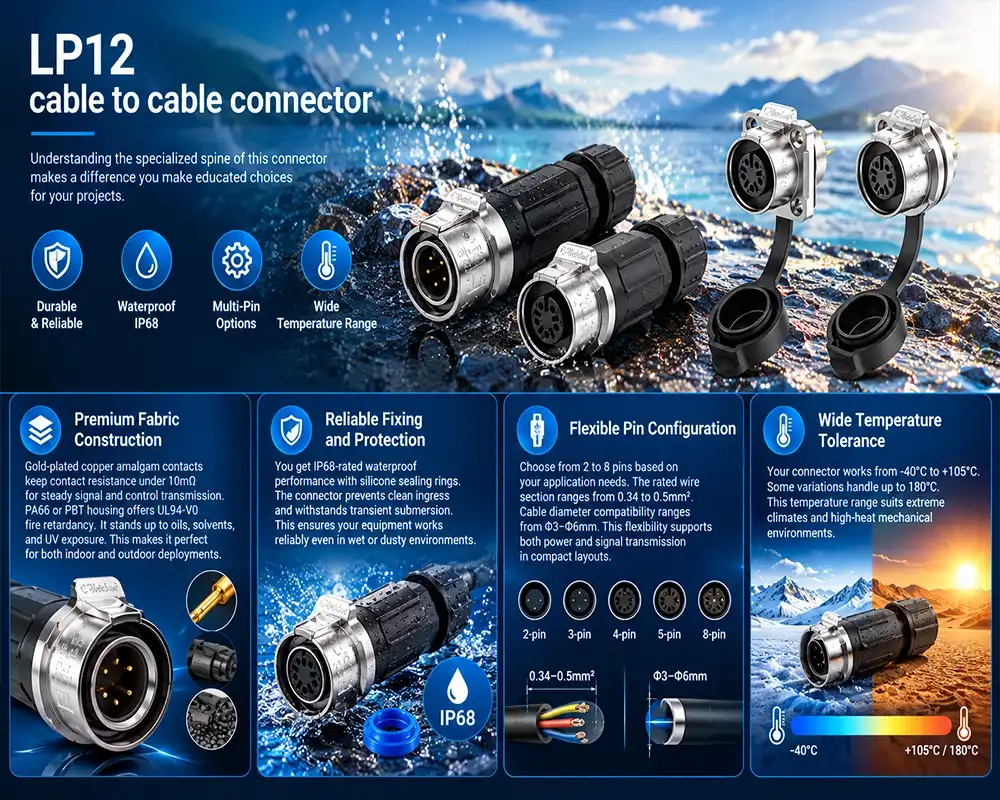
The LP12 series is a miniature circular connector from the LP family. These connectors are widely used in industrial and commercial infrastructure. In contrast to panel-mount versions, a cable-to-cable design does not need solid enclosures, which makes modular field assembly possible. This connection can handle setups with two to eight pins, so it can send both power and signals in a single small body. It works with wires that are 0.34 to 0.5 mm² in cross-section and cables that are 3 to 6 mm in width, so it can be used with a lot of different wiring harness designs.
The LP12 cable to cable connector works reliably between -40°F and +105°F, and its UL94-V0 flame-resistant housing doesn't get damaged by oils, chemicals, or UV light. Because of these features, it clearly belongs to the industrial-grade group, as opposed to consumer-grade connectors that usually don't have approved environmental seals or rated mating cycles.
Advantages and Key Features of LP12 Cable to Cable Connectors
Core Technical Advantages That Matter in the Field
Material integrity and mechanical reliability are musts for engineers when they look at inline connectors for tough deployments. The LP12 cable to cable connector does well on both counts thanks to its well-thought-out use of materials and mechanical design.
The main things that make this connector stand out in B2B settings are these:
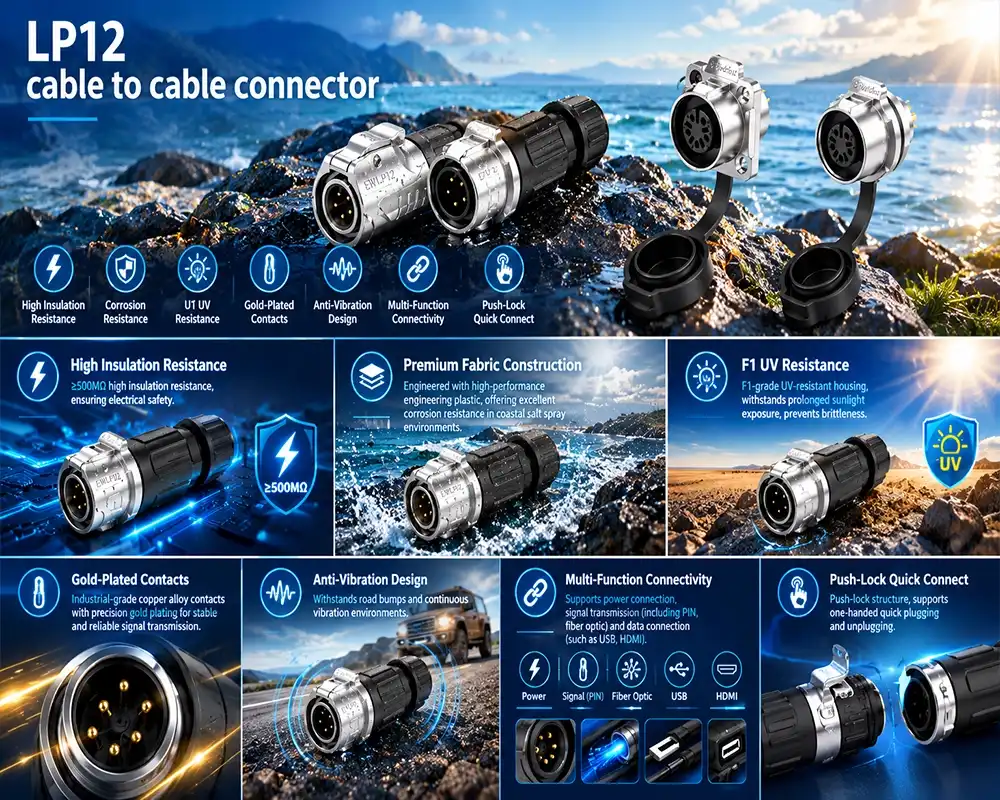
- Gold-plated copper alloy contacts keep the resistance of the contacts below 10mΩ, which makes sure that both signal and power circuits can conduct electricity smoothly. This makes it less likely that voltage will drop in LED lighting networks with multiple nodes or sensor arrays in automated production lines.
- IP67 and IP68 waterproof ratings backed by silicone closing rings, keep dust out and water out for short periods of time. IEC 60529 says that IP68 certification means protection against continuous immersion, which is a very important requirement for outdoor solar installations and marine electronics.
- Snap-lock bayonet coupling lets you plug and unplug with one hand, which makes installation much easier than with threaded or tool-based locking systems. This function directly helps field workers who work on stadium lighting arrays or infrastructure for tracking traffic.
- 2,000+ mating cycle rating proves long-lasting mechanical strength. This means that procurement teams that are in charge of high-rotation repair environments will have to change parts less often and pay less overall.
All of these benefits take care of the biggest problems with outdoor and industrial wiring: water getting in, accidentally disconnecting wires, and having to do too much upkeep. Choosing a connection with a proven cycle life and approved sealing lowers the risk of system failure directly.
How to Install, Test, and Troubleshoot LP12 Cable to Cable Connectors?
Installation and Verification Protocol
Correct placement is the key to long-lasting efficiency that you can count on. Cut each wire to the right length, then run the cable through the cable gland and the body of the housing. Finally, solder each conductor to its matching pin. The LP12 cable to cable connector’s solder-type termination makes a physically safe, low-resistance joint that crimped connections can't always do in places with a lot of vibration.
Once everything is put together, line up the plug and socket housings and rotate the bayonet coupling a quarter of a turn until you hear a click. Before deployment, a voltmeter continuity test across each pin pair makes sure that the connections are correct.
Miswiring from wrong pin-to-conductor mapping is a common problem in the field that can be fixed right away with a wiring plan cross-check. When the contact resistance is high, usually above 15mΩ, it usually means that the solder joint is cold or that the contact surface is dirty. This is always fixed by cleaning with rubbing alcohol and gluing again. If IP68 performance is very important, check the silicone O-ring for compression fit. A badly placed ring is the main reason why moisture gets into field-assembled units.
Comparing LP12 Cable to Cable Connectors with Other Connector Types
LP12 vs. RJ45 vs. LP11: A Practical Assessment
If you choose the wrong type of connection, you'll have integration issues that show up after the fact, which is very expensive for procurement leaders who are in charge of large-scale rollouts.
It is best to use RJ45 connectors for sending data over structured cables. They aren't waterproof by nature, can't handle much mechanical stress, and can't be used in outdoor industrial settings without extra protection housings. The LP12 cable to cable connector can handle both power and signal at the same time, which is something that RJ45 can't do. It is rated to IP68 and can handle up to 5A current.
The LP11 model is similar to the LP12 cable to cable connector in terms of form, but it has an 11mm body and fewer pins per square millimeter. The LP12 cable to cable connector is better for uses that need to be able to change configurations or have long service intervals because it has a wider 2–8 pin range and a higher mating cycle rating. It has a better balance of small size, environmental protection, and electrical capacity for LED drivers, EV charging infrastructure, or robotic sensor harnesses.
Procurement Guide: Buying LP12 Cable to Cable Connectors for B2B Clients
What Procurement Teams Should Evaluate Before Sourcing
Comparing unit prices is only one part of choosing a supplier for industrial connections. The following should be the top priorities for procurement managers in charge of outdoor lighting rollouts, energy storage installations, or automation line upgrades:
Certifications are the first step. The production process meets standards that have been checked by organizations around the world, as shown by the TUV and CE certifications and the ISO9001 quality management system. products that want to sell in the US and Europe must follow RoHS and REACH rules.
Customization ability shows if a seller can meet the unique needs of a project. As custom options for LP12 cable to cable connectors, you should be able to choose between 2 to 8 pins, plastic or metal for the case, and different wire lengths. When suppliers back private mold creation, customers don't have to rely on off-the-shelf specifications as much.
Lead time and inventory levels are very important for operations. A trustworthy LP12 cable to cable connector supplier should keep a steady stock of at least 10,000 units per SKU and be able to deliver standard configurations within 7–10 business days. To keep project deadlines, clearly stated production plans are needed for custom orders.
Conclusion
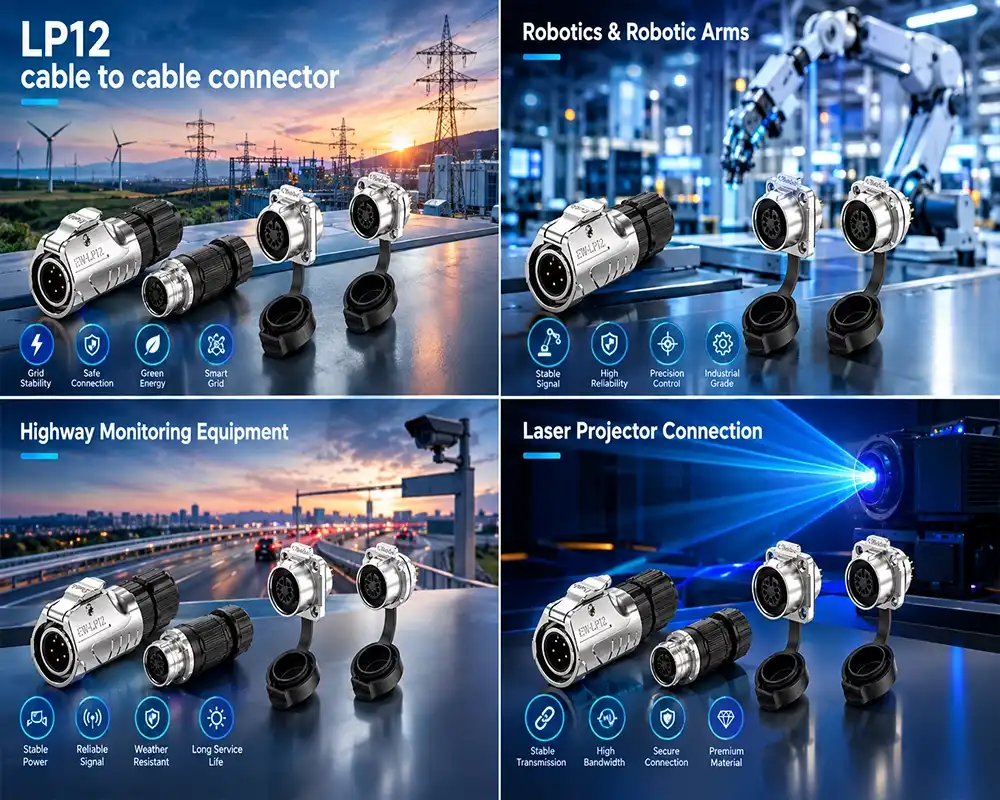
When it comes to outdoor lights, industrial automation, green energy, and transit systems, the LP12 cable to cable connector solves real wiring problems. It has an IP67/IP68 rating, gold-plated contacts, a snap-lock system, and a rating of 2,000+ mating cycles, which makes it a good choice for B2B uses that need to be reliable. Instead of just looking at the price, procurement teams should also look at how many certifications they have, how much customization they offer, and how stable their inventory is. If you buy this connector from a maker that is ISO9001-certified and has a history of on-time delivery, it will last a long time and not need much upkeep.
FAQ
What waterproof rating does the LP12 connector carry?
Depending on how it is set up, the LP12 cable to cable connector can handle both IP67 and IP68 ratings. IP68 approval means that the device is protected during short submersion. It can be used for outdoor solar systems, marine equipment, and wire runs that go underground.
What is the maximum current and voltage rating?
The LP12 cable to cable connector can handle a rated current of up to 5A and a working voltage of up to 125V AC/DC. This means it can be used for most LED driver, sensor, and low-voltage power delivery tasks.
Can the LP12 be customized for specific project requirements?
Yes. You can choose from 2 to 8 pins, a housing made of PA66 nylon or metal alloy, the length of the cable can be changed, and you can make your own mold for OEM projects.
What is the typical lead time for bulk orders?
It takes 7–10 business days to ship standard setups. When a custom order is placed, the production schedule is confirmed. This lets the procurement team make plans.
Is the LP12 compatible with different cable diameters?
The internal sealing gland can fit wire outer widths from Φ3mm to Φ6mm, making sure a watertight fit for all standard wiring harness sizes.
Get LP12 Cable to Cable Connectors from Cablein — Certified, Customizable, and Ready to Ship
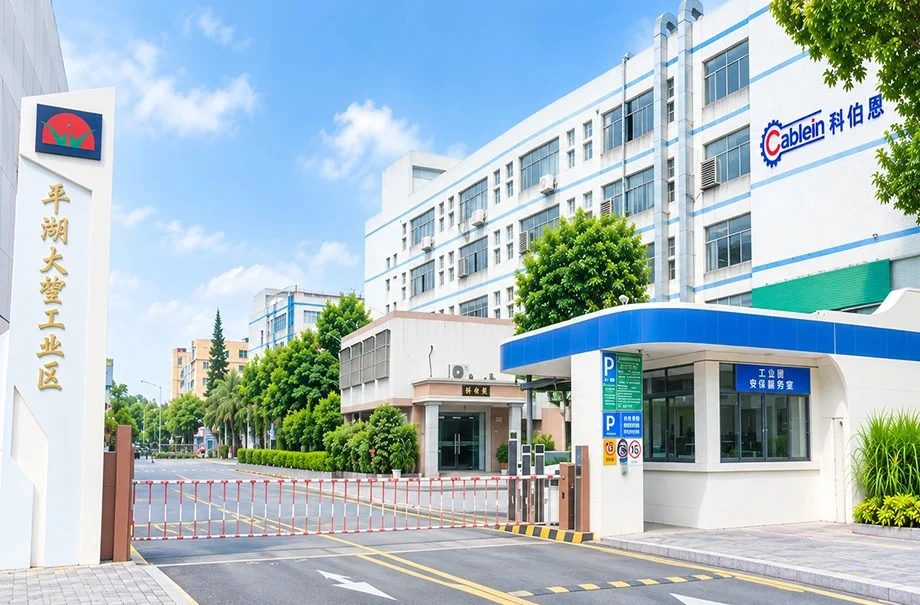
Since 2017, Cablein Technology has sold waterproof connectors with IP67 and IP68 ratings to customers in more than 100 countries. We are a reliable company that makes LP12 cable to cable connectors. We have TUV, CE, ISO9001, RoHS, and REACH certifications, and we keep more than 10,000 units of each SKU in stock. Standard shipping takes 7–10 days. Our engineering team is ready to help you with your project from the sample stage to mass production, whether you need a standard setup or a fully customized assembly. To get a quote right away, email us at nick@cableinco.com or go to connectorswaterproof.com.
References
1. Amphenol LTW Technology. (2022). Circular Connector Design Guide: LP Series Specifications and Application Notes. Amphenol LTW.
2. International Electrotechnical Commission. (2013). IEC 60529: Degrees of Protection Provided by Enclosures (IP Code). IEC.
3. Mouser Electronics. (2023). Connector Termination Methods: Solder vs. Crimp in Industrial Applications. Mouser Electronics Technical Library.
4. TE Connectivity. (2023). Industrial Connector Selection Guide: Waterproof and High-Reliability Series. TE Connectivity.
5. European Commission. (2022). RoHS Directive 2011/65/EU: Restriction of Hazardous Substances in Electrical Equipment. EUR-Lex.
6. UL Standards & Engagement. (2023). UL 94: Standard for Tests for Flammability of Plastic Materials for Parts in Devices and Appliances. UL.