How to Choose a Reliable M25 Waterproof Connector Manufacturer for Your Project
Choose the wrong manufacturer for an M25 threaded inline waterproof connector, and your project may not make it through its first severe winter, or even worse, could break at the most inopportune time. Each unit is sourced from a reputable provider with verifiable certificates, documented current-temperature curves, and a defined change-control policy. This article will assist you in understanding what really differentiates a good vendor from a cheap one so your team can make a purchasing choice based on facts you can measure, not marketing hype.
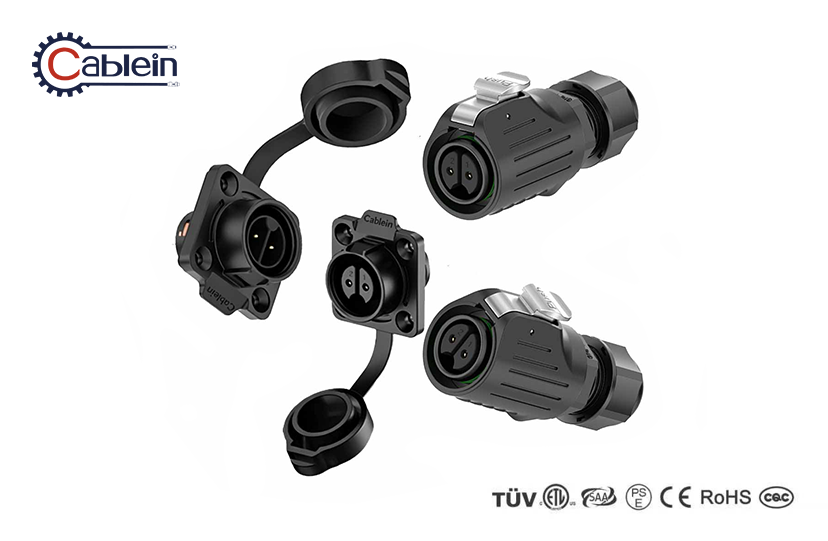
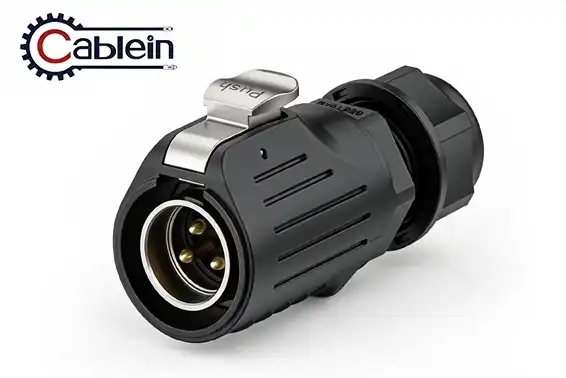
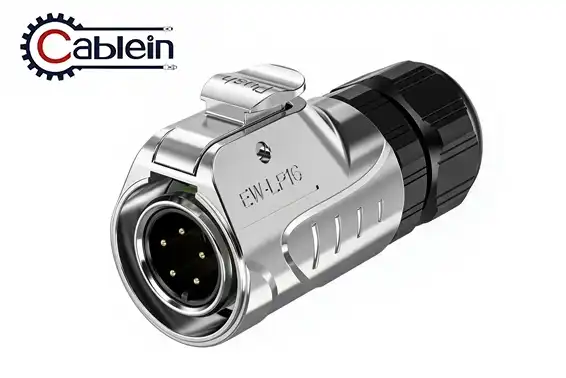
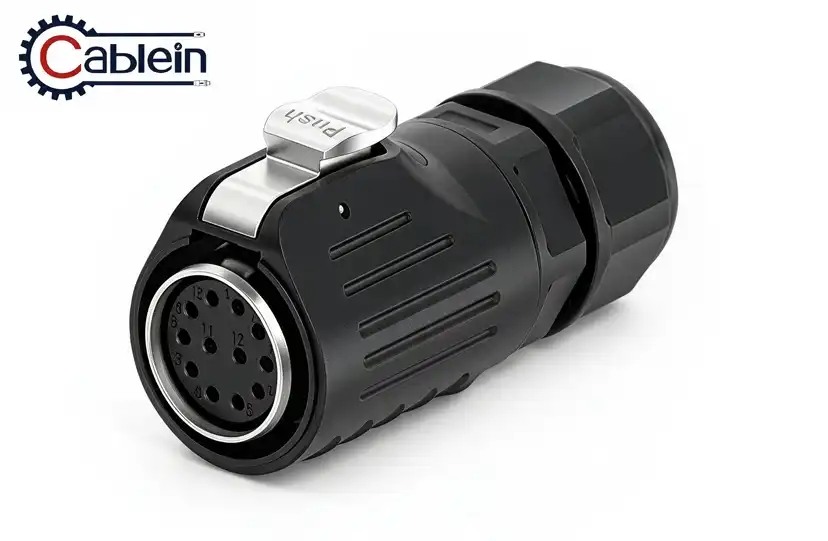
Understanding M25 Threaded Inline Waterproof Connectors
Before your engineering team can judge any provider, they need to have a good idea of what this part does.
What the M25 Designation Means
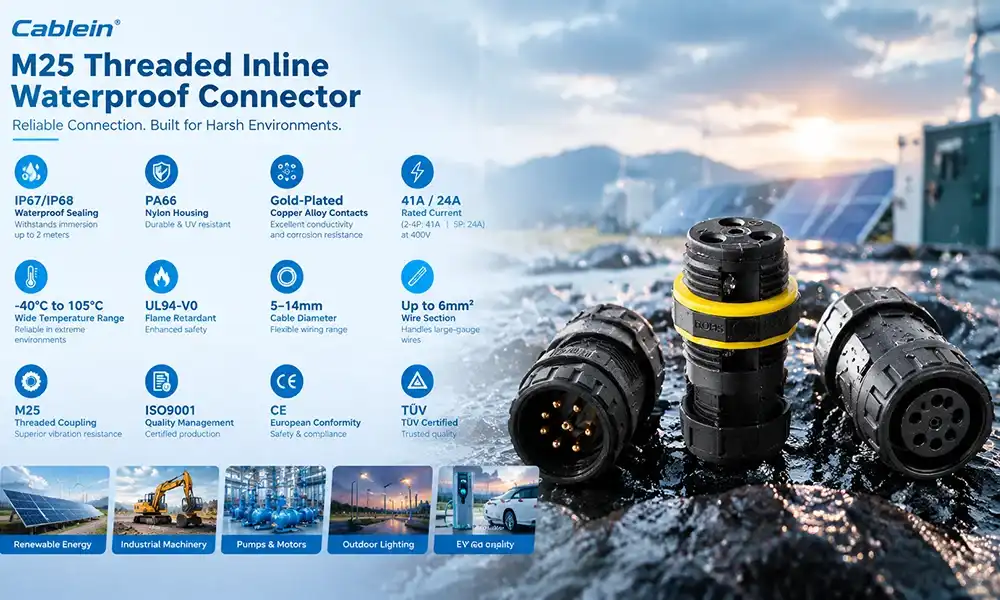
The coupling ring is marked “M25,” which signifies that the thread is 25 mm wide. The pieces move around, but they are all held in by a screw thread, not a push fit or bayonet. When the torque is set correctly, the joint remains closed even if the cable moves or the motor rattles, which constantly exerts mechanical stress on the joint.
Core Construction and Sealing Principle
The UL94-V0 certified PA66 nylon shell and silicone O-ring at the place where the two wires join together make this sort of straight cable connection operate well. When the two pieces are hooked together, the ring becomes tight all the way around the exterior. It is IP67/IP68 sealed; thus, it will keep water out down to around a meter. Tin-plated contacts are less expensive, but after years of usage, they can’t reduce resistance drift from rust.
M25 vs. M20: Choosing the Right Thread Size
The M20 variant is suitable for cables with a diameter of up to 10 mm. For the M25 variant, there are three ranges: 5-9 mm, 9-12 mm, and 10-14 mm. They represent three distinct gland sizes. The ideal size for wire cross-sections from 0.5 mm² to 6 mm² (2-4 pole) or 0.5 mm³ to 2.5 mm² (5 pole) is the M25 bore. When using M20 with a 6 mm² conductor, the insulation jacket will be pressed against the seal. This may cause the unit to fail the IP test at the first check.
Core Criteria to Evaluate M25 Waterproof Connector Manufacturers
You can avoid months of back and forth with the wrong supplier if you know what to look for.
Certification Integrity: Certificate Model Must Match Shipped Model
It is most often because the model number on the TÜV or CE certificate doesn't match the unit in the box that European solar projects are turned down for connecting to the grid. Before you place an order, even a test order, make sure you get the exact license number from the person who made it and check it against the organization's public database. You shouldn't do business with a supplier who can't show you a matching certificate when you ask.
Quality Assurance Protocols That Produce Traceable Data
Brochures from the plant are not as important as documents from a third-party audit. Ask for the following:
- 100% waterproof inspection records with batch traceability numbers, confirming every M25 threaded inline waterproof connector passed an air-leakage or immersion test before shipment.
- 96-hour salt spray test reports per ISO 9227, verifying corrosion resistance of both the housing and gold-plated contacts.
- Thermal cycle test data covering the full −40 °C to +105 °C operating range, confirming no seal failure or material deformation across repeated cycles.
- Dielectric withstand voltage records at 2,000 V AC, confirming insulation integrity under surge conditions.
Comparing Top M25 Waterproof Connector Brands and Suppliers
There are a number of well-known brands of IP-rated straight connectors on the market around the world. Air and defense companies pay a lot of money per unit to get information from the top two companies, Amphenol and TE Connectivity. People who want to buy industrial automation from Weipu and CNLINKO can do so because they have a lot of stock and good prices. For solar, EV charging, and LED building projects where the 41 A current rating is the most important thing, it is usually best to buy from a company that has published current-temperature derating curves and a waterproof connector product line that is just for those uses.
When you rate suppliers, pay more attention to these things: Please let me know if the technical documentation is complete. Can they show me a current-versus-temperature rise curve for a 41 A continuous load that doesn't damage the insulation?
Do they keep 10,000 or more basic sets in stock so that they can be quickly restocked? This is called "distribution network reach."
- Technical documentation completeness: Can they supply a current-versus-temperature rise curve for 41 A continuous load without insulation damage?
- Distribution network reach: Do they maintain 10,000+ units of standard configurations in stock for fast replenishment?
- After-sales responsiveness: Is there a named technical contact available within 24 hours, not just a ticket queue?
For each question, the provider who can give proof along with their answer is the one who should move on to the sample step.
Procurement and Cost Considerations for Waterproof Inline Connectors
Price is a variable, not a fixed constraint—and the cheapest landed cost rarely reflects total project risk.
Pricing Variables That Affect Your Budget
The unit cost is mostly composed of material inputs. Gold-plated contacts are more expensive than tin-plated contacts, but they keep the contact resistance stable for the lifetime of the power plant (25 years). The cost to the manufacturer of an M25 threaded inline waterproof connector includes the overhead of certification (TÜV filing, yearly surveillance audits) and should be included in talks on price transparency. If a given price seems too good to include both gold contacts and a TÜV certificate, it’s likely one of them is missing.
Lead Times and Logistics Planning
Manufacturers that retain enough safety stock often supply standard catalog configurations in 7 to 10 days. Custom configurations (special overmold colors, non-standard pre-assembled wire lengths) will need scheduled manufacturing runs and should be arranged 4-6 weeks prior to installation windows. If ordering internationally, verify that the provider does export papers (HS code declaration, REACH SVHC compliance declarations) themselves. Missing documents create customs delays that may derail grid-connection bonus windows.
Negotiating for Value, Not Just Price
Frame discussions around the overall cost of ownership. Save a few pennies per unit at purchase, and you’ll pay a lot more during the 25-year lifespan of a solar asset with a connection that needs a repair crew visit. Negotiate in writing for batch traceability promises, for engineering change notification (ECN) lead times, for clearly defined incoming inspection approval requirements, not simply the per-piece pricing.
Step-by-Step Guide: F-1 Criteria Screening Approach
With this organized method, buying teams can move from a long list of possible suppliers to a chosen one in a planned way.
Step 1 — Define Project-Specific Requirements
Add the temperature range, immersion depth, and UV exposure class. Add the electrical specifics (pole count, current rating, wire gauge) and the mechanical limits (cable OD, connection technique, screw terminal in the field or solder in the workshop). Write all of this down. There is a written requirement sheet that says the same thing to all the applicants; This avoids scope creep while the suppliers are under review.
Step 2 — Build a Weighted Evaluation Matrix
Each should be scored numerically, with 30% for the certification’s validity, 25% for the current-temperature test results, 20% for the ability to monitor batches, 15% for the time it takes to make modifications, and 10% for the price. When scoring each selected provider on these criteria, only utilize papers that can be validated, not sales claims. This provides a record for you to audit your quality management system and prevents a choice based on taste.
Step 3 — Request Samples and Run Independent Tests
Collect at least 10 samples from each source. You should use a milliohm meter to measure the resistance of the contacts. You should also run your own dip test at 1m deep for 30 minutes. For 6 mm² terminations, you should additionally follow EN 62444 and perform a pull-out test with a force of at least 100 N. If the samples pass all three checks, they will be accepted from a supplier. If they fail, they are immediately dismissed; no more negotiations.
Conclusion
Choosing a manufacturer for your IP-rated straight connection project, including a M25 threaded inline waterproof connector, is a technical decision as much as it is a task you need to accomplish. Every need must be linked with a record such as current rate, temperature range, seal integrity, and material compliance. This record should be capable of outside inspection. Ensure batch records can be located and ECN understands what they have to perform before signing a framework agreement for the aforesaid F-1 screening technique. Spend 12 to 20 weeks to ensure the proper personnel are qualified. It will pay for itself throughout the life of your installation.
FAQ
1. What is the difference between an M25 and an M20 waterproof connector?
The key difference is thread diameter and cable capacity. The M25 version handles cable outer diameters from 5 mm to 14 mm and supports wire cross-sections up to 6 mm². The M20 is rated for smaller cable diameters and lower current loads. For 41 A trunk-line applications in solar or EV charging, the M25 is the correct specification.
2. How do I verify an IP68 rating before I buy?
Ask the manufacturer for the third-party test report referencing the specific model number you are ordering. Cross-check the test laboratory accreditation number against the relevant national accreditation body database. An IP68 claim without a traceable test report is unverified.
3. What certifications should a supplier hold for solar or EV projects?
At minimum: ISO 9001:2015 for quality management, CE marking for European market compliance, TÜV certification for the exact model number shipped, RoHS and REACH SVHC declarations, and UL94-V0 flame rating on the housing material.
4. Is the screw-terminal version suitable for field installation?
Yes. Screw-type termination requires only a standard screwdriver, accepts cables up to 6 mm², and produces a vibration-proof connection once torqued correctly. Solder-type versions are available for workshop pre-assembly environments where controlled conditions allow higher-precision termination.
Partner With Cablein for Your Next M25 Connector Project
Since 2017, our 6,000 m² building in Shenzhen, China, has offered verified waterproof interconnection options. Each shipment of our M25 threaded inline waterproof connector can be fully traced back to its original batch. It is approved by ISO 9001, CE, and TÜV. We keep more than 10,000 units in stock and can send them out in 7–10 days, so they can be bought in bulk or by OEMs. Email our team at nick@cableinco.com if you need a paper, example, or bulk quote for your project.
References
1. International Electrotechnical Commission. IEC 60529: Degrees of Protection Provided by Enclosures (IP Code). IEC, 2013.
2. International Electrotechnical Commission. IEC 61984: Connectors — Safety Requirements and Tests. IEC, 2008.
3. International Organization for Standardization. ISO 9227: Corrosion Tests in Artificial Atmospheres — Salt Spray Tests. ISO, 2017.
4. Underwriters Laboratories. UL 94: Tests for Flammability of Plastic Materials for Parts in Devices and Appliances. UL Standards, 2018.
5. International Organization for Standardization. ISO 9001:2015 Quality Management Systems — Requirements. ISO, 2015.
6. European Chemicals Agency. REACH Regulation (EC) No 1907/2006: Registration, Evaluation, Authorisation and Restriction of Chemicals. ECHA, 2022.