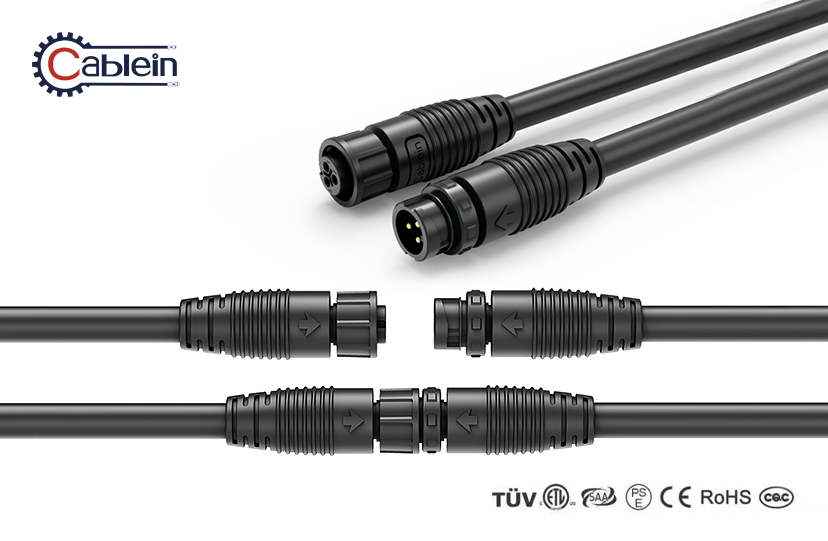
How to Choose IP67 Modular Connectors for Industrial Applications
If you're looking for ip67 modular connectors for industrial use, make sure the connector fits the way you will be using it, not just the rating on the label. IP67 means that it is dust-tight and can withstand short-term immersion. Make sure you know your equipment's contact count, current rating, housing material, locking style, and cable diameter. Next, make sure that the certificates are for the right model, and test samples in water, over time, and vibrations before placing large orders. Professionals in the US who work with outdoor lighting and automation asked me to write this guide. It includes ratings, specs, uses, and checks on the supplier, so you can approve parts with fewer surprises.
Start With the IP67 Rating and Your Operating Environment
What the IP67 Rating Actually Tells You?
IEC 60529 is the international standard for protecting enclosures, and IP67 is based on that. The first number, 6, means that it is dust-tight. The second number, 7, means that the product can be submerged in water for a short time, usually up to one meter deep and for thirty minutes in a lab setting. That's all the code says it will do. It doesn't cover chemical attack, high-pressure washing down, deep submersion, UV aging, vibration, or chemical attack. Also, a connector can only seal if its housing, O-rings, cable gland, and locking system are all put together correctly. We look at more than just the label on a datasheet. We look at the range of cable diameters, the state of mating, the temperature range, and the materials. These specifics show if the rating is valid in the field.
Define Your Application and Operating Environment
Write out where the plug will go before you compare goods. Street lights must face rain, fog, sun and fluctuations in temperature. The stadium fixtures shake the ground and require servicing a lot. Automation cells introduce moving cables, oil and coolant. Monitor shock levels, chemical exposure, operating and storage temperatures, and electromagnetic interference. Also, write down the present load, as the heat from the current may destroy seals and age cable jackets. A connection designed for short term use in water, but heated within a sealed box might fail in a few months. If you provide this information to your supplier right from the beginning, they will be able to pick samples faster and prevent costly adjustments after testing.
IP67 vs. IP65, IP68, and Unsealed Connectors
If you test IP65 with a 6.3 mm nozzle, you can see that it protects against low-pressure water jets but not immersion. IP67 adds protection against short-term immersion, so it can be used on fixtures where water can pool around a joint. While IP68 covers deeper or longer immersion, the depth and length of time are set by the manufacturer, so you need to read the test conditions. It's not always true that a higher number means better performance in terms of vibration, chemicals, or electricity. Unsealed connectors are less expensive, but they let dust and water get to the contacts, which means more maintenance calls. People in the US may also see NEMA 250 enclosure types, which are not the same as IP codes. Look at the whole assembled part, including where the cables go in and how they connect to the connectors.
Match Specifications and Construction to the Job
Electrical Specifications That Prevent Overheating
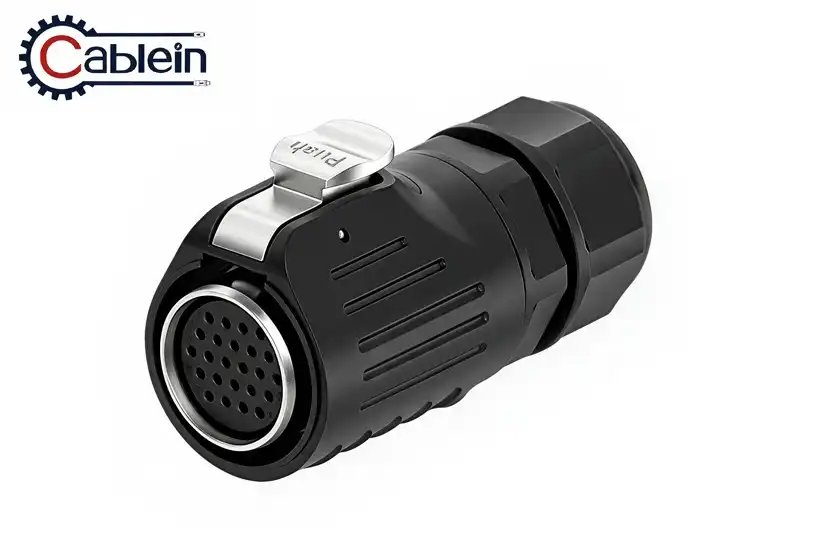
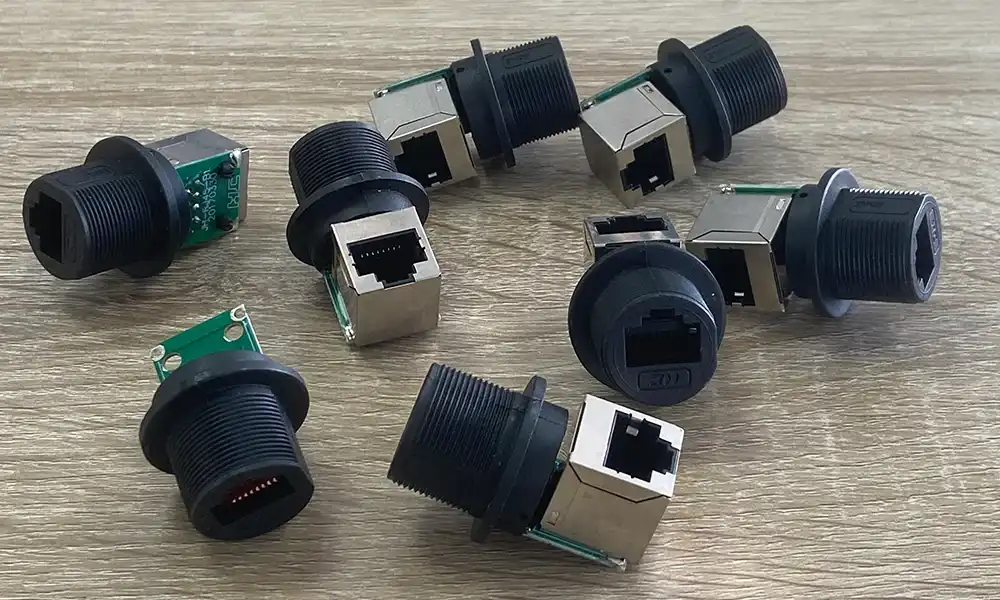
Start with how many contacts you have for ip67 modular connectors. Count the number of data, signal, ground, and power lines, and then compare the pin layout to the wiring diagram. Check the ratings for current and voltage when the load is on all the time. When a lot of contacts are carrying current at the same time or the temperature outside is high, derating should be used. It's also important to look at the dielectric withstand voltage, insulation resistance, and contact resistance. This is because low contact resistance keeps heat down at the interface. As an example, the contact resistance for our LP-24 Series HDMI Cable Connector IP67 is less than 30 m© and the insulation resistance is more than 500 M©. Don't compare these numbers to the first line of a catalog, but to your own load.
Mechanical Fit, Mounting, and Cable Handling
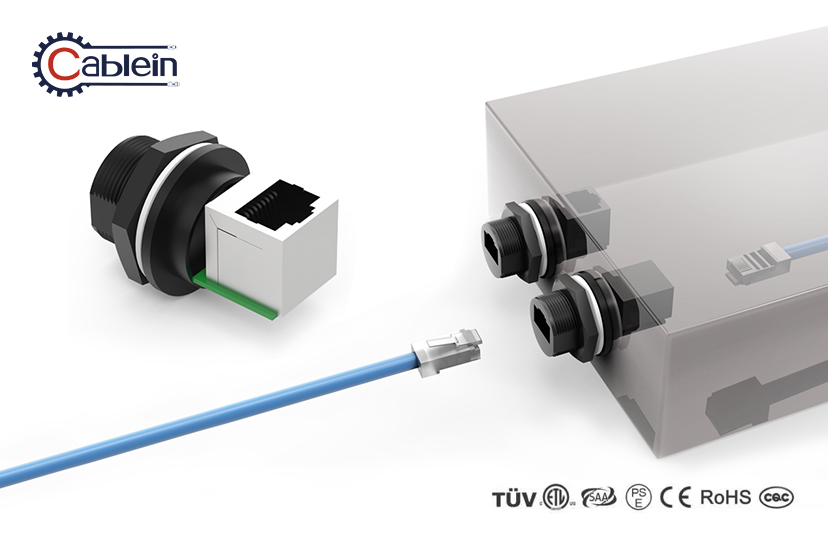
A connector that works with electricity might not work on the line if it doesn't fit. Check the panel cutout, the depth of the mounting, and the direction of the cable exit. Check to see how far the cable can be bent and how much space there is for tools during assembly. Check the mating cycle rating and how well it handles vibration and shock, because seals wear out after a while of being serviced. Because there isn't much room in small luminaire housings, look at the straight and right-angle versions side by side. A 24 mm mounting hole is used for the LP-24 Series, and our mechanical life test shows that the bayonet lock stays in place after more than 500 mating cycles. On the assembly line, push-lock and quick-connect styles also cut down on the time needed for wiring.
Housing Materials and Locking Systems
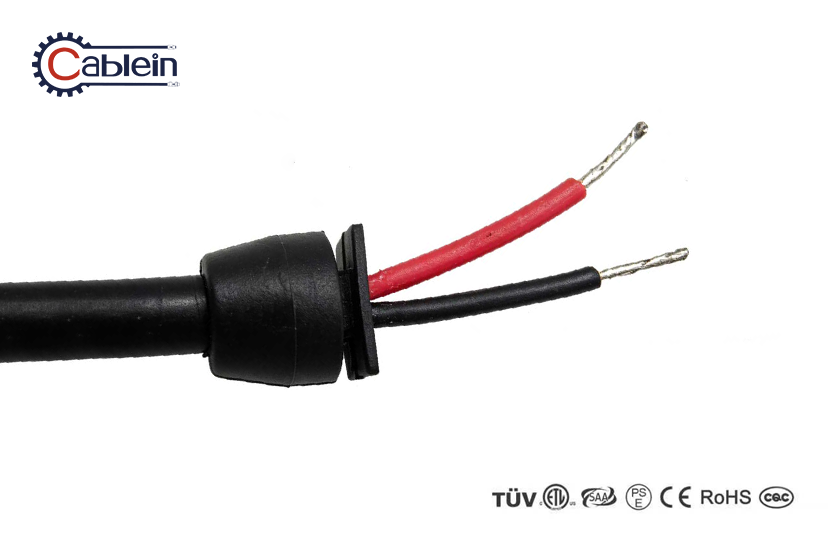
Plastic housings are cheap, light, and don't rust, so they're good for many outdoor and automation uses. Metal housings protect against impact, ground, and radiation. The LP-24 Series uses either zinc alloy or PBT plastic, based on the type of model. Screw locks keep equipment that vibrates securely in place. Push-pull and push-lock designs make installation and maintenance faster, which is helpful on tall poles and assembly lines with a lot of people. The LP-24 bayonet system lets you use it with one hand. Just as important are the cable glands. The sealing range needs to match the outer diameter of the cable, and the material used for the seal needs to be able to handle oil, coolant, UV light, and changes in temperature. A gland that doesn't fit right is a common cause of leaks.
Apply IP67 Modular Connectors to Your Application
Industrial Automation and Robotics
Automation systems link sensors, actuators, motors, and I/O modules, so the layout of the contacts on each device needs to be the same. Seal materials need to be able to work with common chemicals like oil mist, coolant, and maintenance work. Robots make repeated movement possible. Look for compatibility with flexible cables, resistance to torsion, secure locking, and performance that has been tested in continuous motion. Fixed-installation connectors shouldn't be used in moving parts until they've been tested and proven to work. This is because flex fatigue can break conductors close to the strain relief. LP-24 Series connectors are used in smart factories to send monitoring data from high-speed cameras to control centers. They can handle mechanical vibration and oil mist. Request test data from suppliers that matches the way you move.
Outdoor LED Lighting and Displays
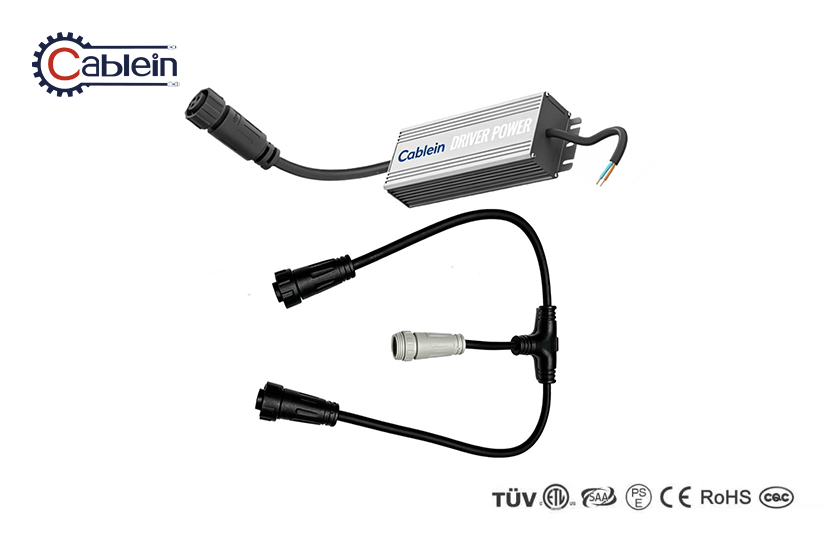
Connectors are exposed to rain, UV light, and condensation for years when they are lit up for street, landscape, or stadium events. Put UV-resistant materials, reliable cable sealing, and enough current capacity for the driver output at the top of your list. Field wiring on poles is shorter and less likely to go wrong with quick-connect and solder-free designs. Cablein sells waterproof connectors (IP67 and IP68), T and Y splitters, and custom wiring harnesses for LED lighting in places like stadiums, farms, and urban landscapes. The LP-24 Series HDMI Cable Connector IP67 keeps video safe from rain, dust, and UV light on outdoor LED displays and digital signage. Up to 18 Gbps of data can be sent over HDMI 2.0 for 4K at 60 Hz.
Marine, Medical, and Mobile Equipment
Connectors used in marine, medical, and mobile devices are damaged by salt air, being cleaned often, and changes in temperature. Check for shells that won't rust and contacts that are plated in gold. Also, ask for salt spray data. To check the metal shell and gold-plated pins, the LP-24 Series goes through a salt spray test for at least 48 hours. More expensive models often go through the test for 72 hours. It works between -40°C and +80°C. People buy it to put in medical imaging devices and shipboard navigation systems that have to deal with humidity and germs. For mobile projects, you may also need secondary locking or qualification specific to the industry. Make sure your supplier knows about these needs as soon as possible.
Choose a Supplier and Plan the Order
What to Verify in an IP67 Modular Connectors Supplier
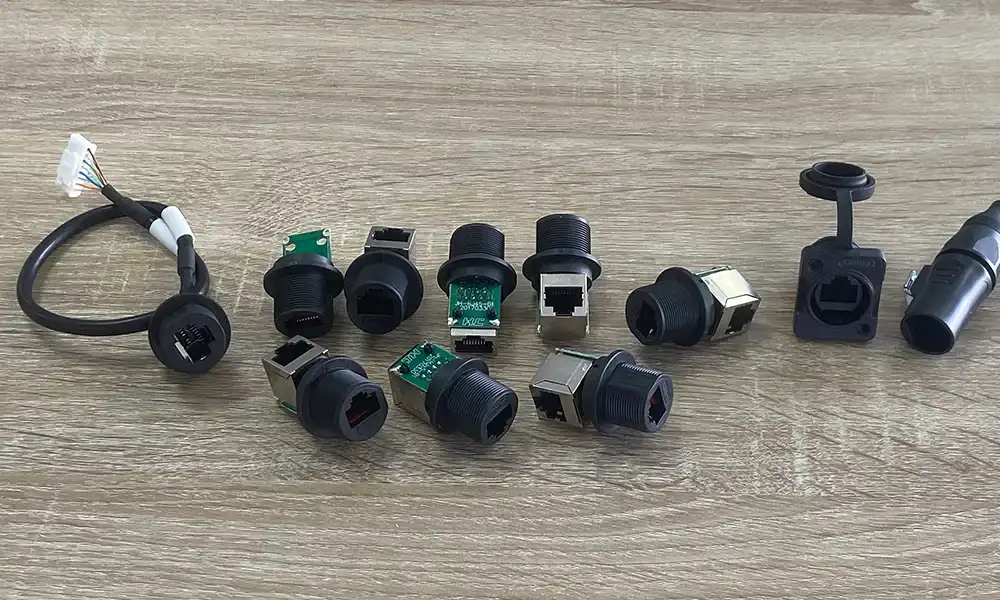
They should have more than just a catalog for ip67 modular connectors. For the exact model you want to buy, ask for datasheets, dimensional drawings, pinout diagrams, samples, and test reports. Make sure that the certificates cover that configuration and not just a series that is similar. Cablein was started in 2017 in Shenzhen. It has a 6,000-yuan building with more than 200 employees and follows ISO9001:2015 standards. There are different product series with different CE, RoHS, ETL, and TUV certifications. Let us know who you're trying to sell to, and we'll match the documents to the right part. Our team has more than 30 utility model patents and checks all of our products to make sure they are waterproof.
Customization and Cable Assembly
Set up early on how customization will work, especially for OEM runs. Type of cable, size of conductors, material of jacket, shielding, length tolerance, orientation of connectors, pinout, labels, and packaging should all be specified. When technicians plug in pre-assembled, tested cable assemblies instead of stripping and sealing cable at the pole or on the line, they save time and money on wiring mistakes and work that needs to be done in the field. This is a good idea when a fixture needs a special housing, cable exit, or logo. Before production starts, make sure everyone knows who owns the tools, how to approve samples, and how to handle engineering changes. Cablein can customize OEM/ODM products and make private molds. They can also make custom wiring harnesses for LED, new energy, and automation equipment. We'll look over your drawing after you send it to us.
Bulk Orders, Lead Time, and Pilot Runs
Look at more than just the unit price. When you add up the costs of freight, warranty, inventory, testing, assembly time, and tools, you can see how much an order really costs. Due dates for projects make lead time very important. Cablein keeps over 10,000 of each item in stock and ships them out within 7–10 days. Custom orders are delivered on a schedule that you set with them. We use UPS, DHL, FedEx, and other reputable freight forwarders to ship by air or sea. Inquiries are usually followed by samples, tests with water and time, a small pilot batch, and then large orders. A recorded test run makes sure that the batches are consistent before you commit.
Avoid Mistakes and Build a Selection Checklist
Common Selection Mistakes
Most people make the mistake of choosing based only on the label. It's important to note that an IP67 mark does not cover chemicals, UV light, high temperatures, vibrations, or pressure, so check those limits separately. It's also possible for a well-built connector to break the seal if the cable diameter and gland don't match up. Buyers also forget to check for maintenance, so make sure you can get replacement seals, protective caps, and extra connectors. A lot of teams approve a replacement part without checking the drawing again, which means that a small change in size gets made. Make a formal record of the approved model and configuration, and ask your supplier for change notices for any changes.
Installation and Testing Before Power-Up
It's usually the installation that goes wrong in the field. Tighten the glands to the required torque, make sure there are no sharp bends near the connector, and make sure the cable has the right strain relief. Wiring mistakes happen when you misread the contact numbering or the orientation of the mating side, so look at the pinout diagram from the mating side. Before turning on equipment, make sure it passes tests for continuity, polarity, grounding, and insulation. Instead of overtightening to make up for it, replace any damaged seal. For the LP-24 Series, we check the integrity of the seal by finding vacuum leaks and immersing it in water. Also, we follow MIL-STD-202G and do vibration and shock tests. To make sure the HDMI impedance is 100 © ±15%, we use TDR analysis.
A Practical Selection Checklist
For every project, use this list. First, make a list of the use, the temperature, the chemicals, the UV rays, the vibrations, the movement of the cables, and the access for maintenance. Next, check the number of contacts, the layout of the pins, the current and voltage, the derating, the dimensions, the panel cutout, the locking method, the mating cycles, the cable diameter, the bend radius, and the strain relief. Third, look over the supplier's drawings, samples, certificates, test reports, minimum order quantity (MOQ), prices, lead time, warranties, and quality control. Fit for the job and long-term durability are more important than the lowest unit price. Then, test samples with water and time, as well as a small pilot batch, before placing large orders. This order finds issues quickly, when they are still easy and cheap to fix.
Conclusion
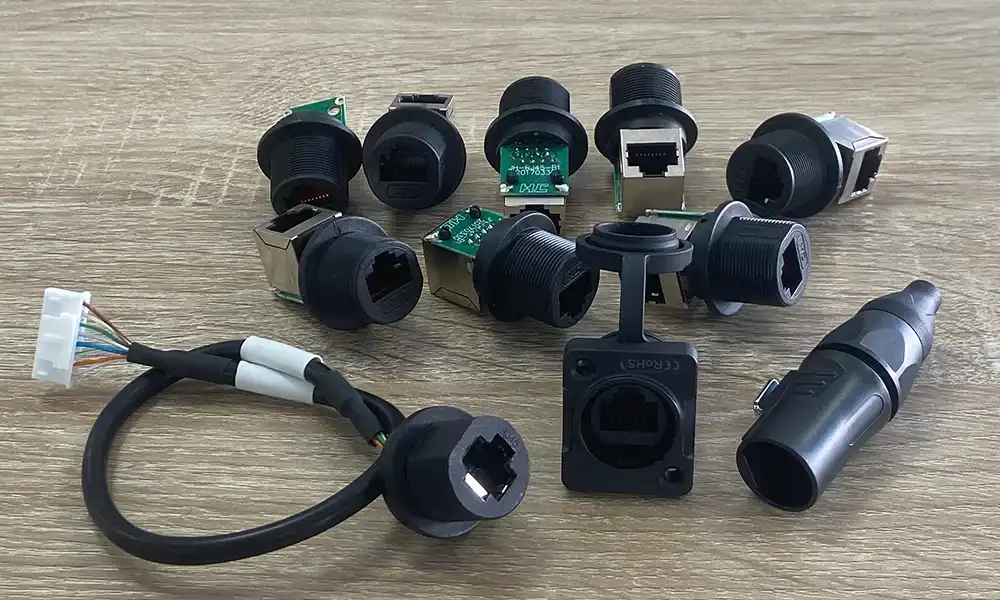
The first step in selecting IP67 modular connectors is to understand what the rating means. It means that the connectors are dust-tight and can be submerged up to 1 meter for 30 minutes. However, it does not mean that the connectors are completely protected from chemicals, UV light, or vibration. Buyers should match the operating conditions to the electrical ratings, mechanical fit, housing material, and locking style. They should then make sure that the matches are correct for the use, such as for automation, robotics, outdoor LED lighting, medical and marine equipment. Proof from the supplier is just as important as the part itself. Project risk is affected by things like drawings, test reports, model-specific certificates, the ability to customize, stock, and lead time. Careful installation, testing before powering on, and a pilot batch all help cut down on leaks and rework. A written checklist that puts durability ahead of the lowest price per unit gives buyers a reliable way to make a choice.
FAQ
Does IP67 mean a connector can stay underwater?
No, IP67 only covers short-term immersion, usually up to 1 meter for 30 minutes during testing. For longer or continuous submersion, look at the IP68 data and the manufacturer's information about how deep and how long.
How do I choose between IP65, IP67, and IP68?
If the main threat is water jets, choose IP65. If pooling or short immersion is possible, choose IP67. For longer immersion with proven test conditions, choose IP68.
What should I send for an accurate quotation?
Send nick@cableinco.com the type of equipment, the environment, the temperature, the electrical load, the contact layout, the cable details, the size, the quantity, the certifications that are needed, the delivery date, and any customizations that you need.
Are certifications available for US projects?
Each product line comes with ETL, CE, RoHS, and TUV certifications. Let us know what you need for your project, and we'll check the documents to make sure they match the exact model.
Request IP67 Modular Connectors From Cablein
Cablein can assist you if you're looking for a supplier of IP67 modular connectors who has more than 10,000 of each item in stock and can ship them to you in 7–10 days. Email your plans, load, and cable information to nick@cableinco.com. For each product series, our engineers offer technical support 24 hours a day, 7 days a week, and customizations based on OEM/ODM. They can also provide certifications like CE, RoHS, ETL, and TUV.
References
1. IEC 60529: Degrees of Protection Provided by Enclosures (IP Code), International Electrotechnical Commission, 2013
2. NEMA 250: Enclosures for Electrical Equipment (1000 Volts Maximum), National Electrical Manufacturers Association, 2020
3. ASTM B117: Standard Practice for Operating Salt Spray (Fog) Apparatus, ASTM International, 2019
4. MIL-STD-202G: Test Method Standard for Electronic and Electrical Component Parts, U.S. Department of Defense, 2002
5. IEC 61984: Connectors – Safety Requirements and Tests, International Electrotechnical Commission, 2008
6. IEC 60512-1: Connectors for Electronic Equipment – Tests and Measurements, International Electrotechnical Commission, 2018