The Versatility And Necessity Of Waterproof USB-C Connectors
Waterproof USB-C connectors are necessary because standard USB-C ports let in water, dust, and vibration once a product leaves the lab. They are versatile because one sealed interface can carry power and data in camping power stations, bike computers, outdoor lights, and industrial gear. The waterproof usb connectors market is drawing more attention as products move outdoors, and buyers now ask for sealed ports with an IP67 or IP68 rating. I wrote this guide for product managers who are still researching, comparing options, and deciding whether a new waterproof USB-C product deserves a pilot run.
Waterproof USB Connector Market Overview and Industry Trends
What Is Driving Demand for Sealed USB Ports
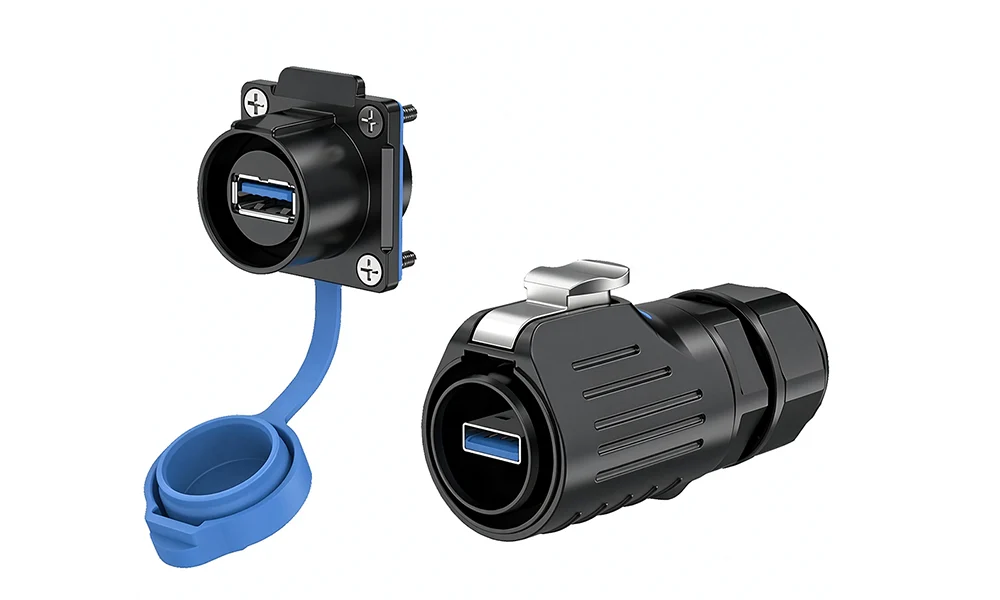
Things that used to only work inside can now be used outside in the rain, mud, and spray. There are times when outdoor lighting, field sensors, bicycle computers, and camping power stations need ports that can handle the weather. Smart city tools, electric cars, green energy systems, and automation in factories are all making the need bigger. This is because all of these things need charging or repair ports that can be reached from the outside. There are gaps in most USB-C plugs between the shell and the contacts. This lets dirt and water get to the pins. These paths can't go through a sealed design because of the gaskets, O-rings, and covered housings. A regular USB port isn't very useful if you take your device outside a lot. Since more things are used outside, more people are interested in the waterproof USB connectors market.
Why USB-C Is Replacing USB-A in New Designs
USB-C is small, can be used either way, and can send data and power in modern ways. The connector is described in the USB Type-C specification from the USB Implementers Forum. With USB Power Delivery 3.1, the maximum power that can be sent has been raised to 240 W. Directive (EU) 2022/2380 says that many portable electronics sold in the European Union must have a USB-C charging port by December 28, 2024. This makes things even more stressful. There are many American brands that are sold all over the world, so one USB-C design can be used in many places. There are people who plan to buy both options because USB-A is still used in older devices and for making changes. I believe that in the future, designs will focus on small holes, insulation, high cycle dependability, and wire systems that are built in.
How to Read Market Forecasts Without Overbuying
Market papers talk about things in different ways. Some count only the connector, while others count the whole cable assembly. Also, scopes change from place to place. So I'm not sure about any one number I think will come true. Check Google Trends to see how popular words like "waterproof USB-C" and "waterproof USB cable" are before you buy anything. Keep an eye on Kickstarter projects to find outdoor items with sealed charging ports, and ask sellers what kinds of connectors they ship most often. You'll have real sell-through data after a small test sale. In your niche of the waterproof usb connectors market, demand is still being tested. This staged approach makes it less likely that you will run out of stock.
Understanding Waterproof USB-C Connector Construction, IP Ratings, and Types
What Is Inside a Waterproof USB-C Connector
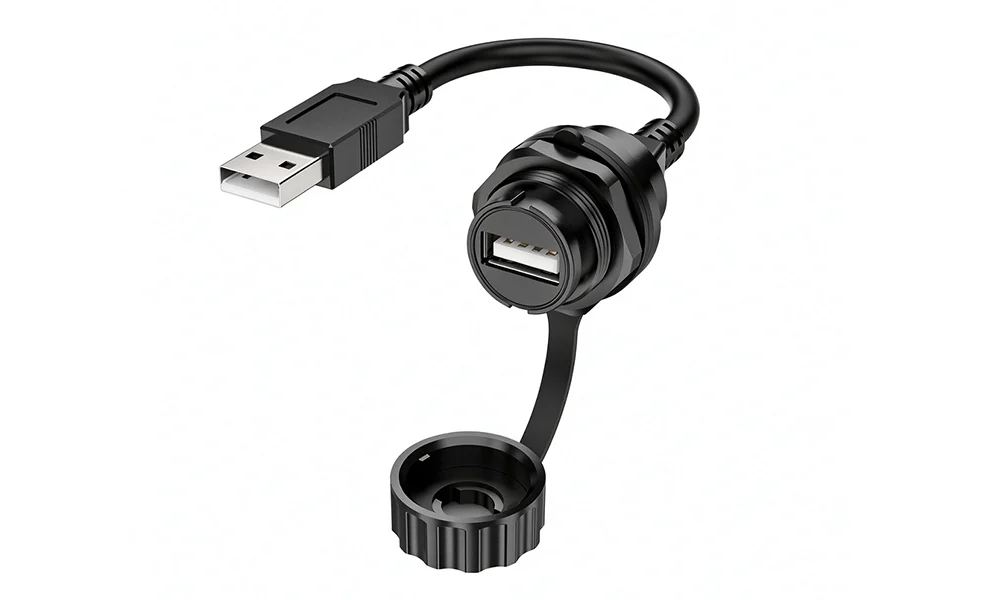
It has locking mechanisms, a protective shell, sealing gaskets or O-rings, a housing that keeps heat in, USB-C ports, and a cable interface with strain relief. It won't get wet. Each part does something. Its shell makes it stronger and, when made of metal, keeps electric fields away. The lock holds the plug in place even when the product shakes, and the gasket seals the face that connects the two parts. Most panel-mount models have a dust cap that goes over a port when it's not being used. Outside gear is under a lot of stress when a wire gets pulled, so it's important to pay attention to strain relief. Don't just use the document's IP number when you compare samples; look at all of these parts as well.
IP67 vs IP68: What the Numbers Mean
The IP Code comes from IEC 60529. The first number, 6, means it doesn't let dust in. It's IP67, which means it can handle being submerged in water for up to 30 minutes. IP68 doesn't matter how deep or how long you submerge it in water; it can be used as long as the manufacturer says it can. When something is tested, it can only be rated in the fully joined and locked state. It doesn't check the temperature range, signal quality, current capacity, or chemical resistance. As long as it doesn't rain or splash, an IP67 power bank might work for camping. But for a dive light or underwater robot, it might need an IP68 depth rating. Get a written copy of the conditions of the test.
Panel-Mount, Inline, and Overmolded Types Compared
Connectors that are built into the wall can be used in power stations, control cabinets, dashboards, and service ports. It is possible to use inline and overmolded forms on portable devices, field tools, and cable-to-cable joints. The wire and coupler are joined by an overmolded link, which means you don't have to put them together. It is possible to connect a USB-C device to a USB-C port or a USB-A port that is not shielded. It is important to protect things that can cause electromagnetic interference (EMI) to mess up data or power, like things that are close to motors or radios. The case, gasket, shell, and cable jacket must all be made of materials that can stand up to the required temperature, corrosion, chemicals, and mechanical forces. It is best to choose panel-mount for your first camping, cycling, or lighting product because it keeps the design of the enclosure simple.
How to Choose and Verify Waterproof USB-C Connectors for Outdoor Products
Define the Environment and the Electrical Needs First
Choose the area where the item will go first. Write down the temperature range, the chance of rain, water, dust, UV light, salt, shaking, and how often people plug in. Then, make a list of the types of electricity you need, such as the USB version, data speed, power transfer speed, current, voltage, and wire size. A bike computer doesn't need a lot of power, but it shakes all the time. On the other hand, a camping power station might need more power and more connections. Write down where you want to put it, how the wires will go, and how big the hole needs to be. These will show if a standard part will work or if it makes more sense to make a custom part. You can save a lot of time and work by writing down all the requirements on one page.
Which Tests Matter Before You Approve a Sample
Find out what the source did and how they did it. There are many useful checks that can be done on things like water getting in, dust, temperature changes, salt spray, vibration, joining cycles, wire pull, contact resistance, insulation resistance, and data integrity. You can use ASTM B117 to test for salt spray, and MIL-STD-810H to talk about environmental studies that include shaking and salt fog. Make sure the sample size, test length, and failure factors are right for the connector and cable you want to buy by reading them over. Before you place a trial order, check the sample yourself with soaking and drop tests to see if it's hard to fix after it's been sold.
Common Selection Mistakes and How to Avoid Them
A lot of people get it wrong and think that the IP number is the only way to tell how good something is. The fact that the device can handle shocks and water doesn't mean that the data is stable or that the chemicals will last. Another mistake that can happen is choosing a USB-C part without first checking the USB version, pin configuration, power needs, and data needs. This can lead to damaged seals, the wrong torque, and improper mating. When you pick the best unit price, the total cost may go up because of returns and warranty claims. I think you should have a written standard, an easy-to-follow installation guide for your team, and a cost comparison that looks at wages, the chance of failure, and repairs. These three habits help find bugs before they are released most of the time.
Procurement, Customization, and Choosing a Waterproof USB Connector Supplier
Pricing, MOQ, and Lead Time for Pilot Orders
Prices depend on how well the USB works, how much power it can hold, its IP rating, how well it is shielded, what materials it is made of, how long it is, how it is overmolded, how it is packaged, and what testing or certification it needs. There may be different MOQ and wait times for standard parts, special wire systems, private marking, and new tools. For a project that is still in its early stages, get a price that breaks down the costs of inspection, freight, equipment, trial production, mass production, and samples. Giving the supplier a range of likely first-year volume will help them make plans. Also, be clear that the first order is just a test of the waterproof usb connectors market. When you ask for a low price, being honest about the MOQ is more likely to lead to a good talk.
When Custom Cable Assemblies Make Sense
All standard parts work as long as the wires are the right size, length, and volume. It's better to make things yourself when there isn't much space, panel holes aren't common, wires need to come out at an angle, or the product will be exposed to chemicals, heavy vibration, or high or low temperatures. With pre-assembled cable options, you don't have to connect the cables yourself, make mistakes at the end, or worry about whether the shielding on your line is even. The usual steps are to look over the plans and application, make samples, assign pins, pick cables, check the design, make pilots, and test to get approval. Following batches are more likely to match the accepted sample if change control and quality records are easy to understand. If sales go up after a good launch, this is important.
What to Check in a Manufacturer or Supplier
They should be able to consistently mold, crimp, solder, overmold, build, check, and test things. They should also know how to keep USB signals safe and seal things against water. Check to see if the company makes the goods itself or hires other people to do it. You should also ask about their export history, their ability to do so, their test documents, who owns the tools, their lead times, their warranties, their ability to be tracked, and their customer service after the sale. It's also important to be able to talk about complex things. As soon as you work with a good partner, they will find issues with installation, EMC, sealing, and wire handling that could cost a lot at launch. For instance, if RoHS and REACH statements are important to your market, ask for them.
Cablein Waterproof USB Connectors for New Product Teams
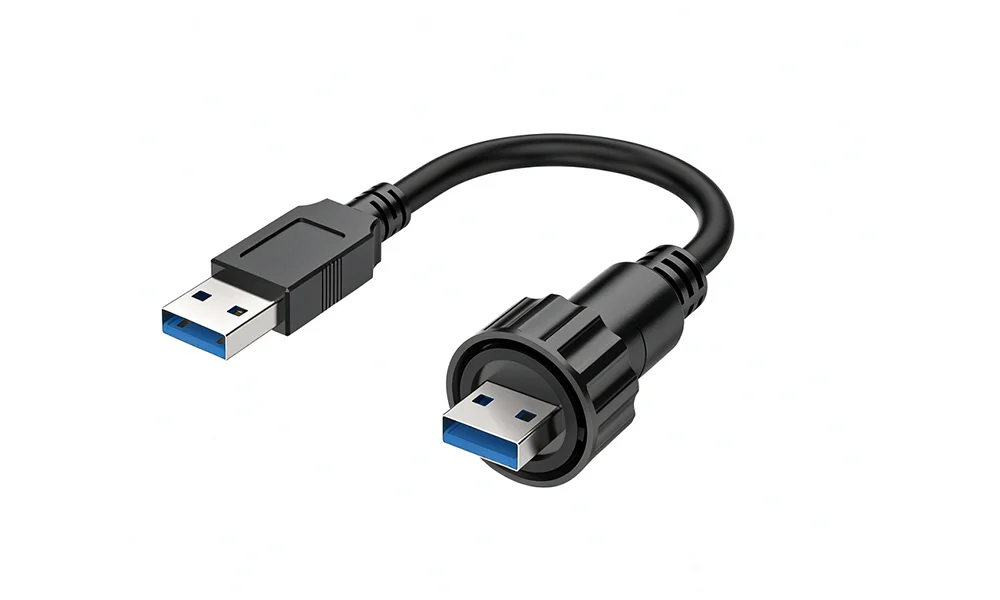
LP24 Waterproof USB Connector Specifications
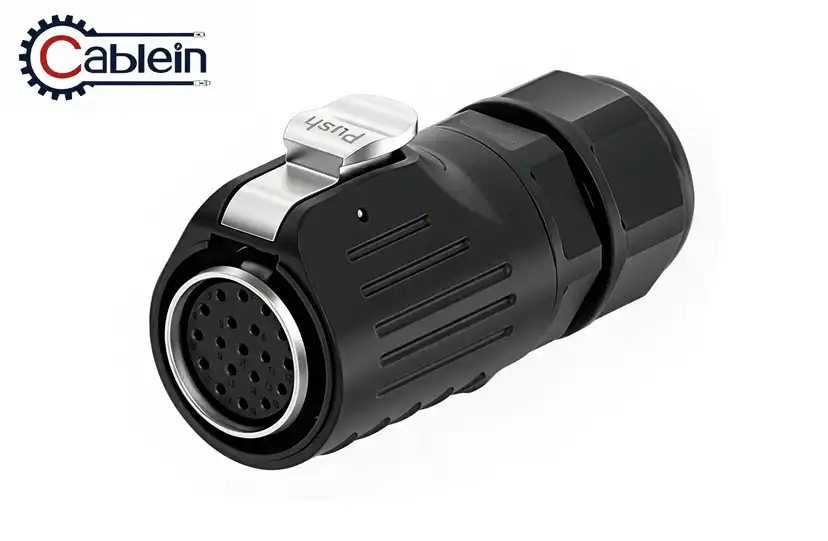
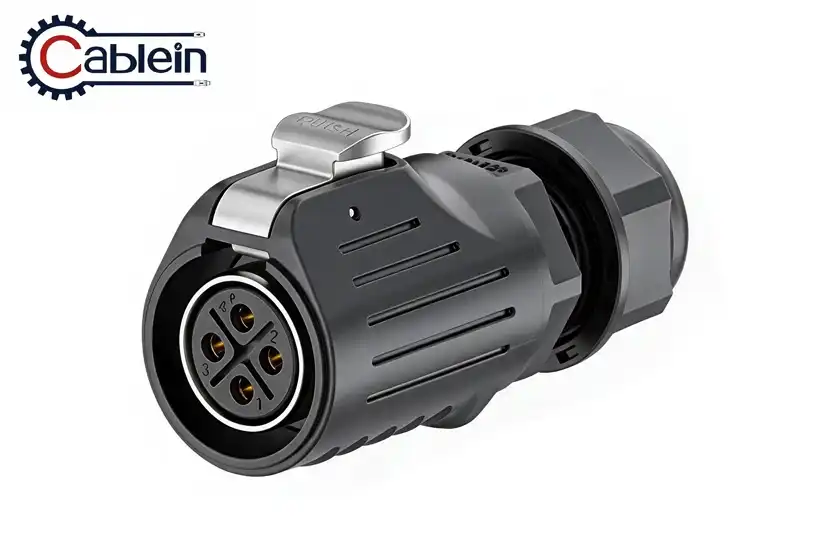
Our LP series includes the LP24 Waterproof USB Connector. The mounting hole is 24mm wide, and the 1/4 bayonet lock may be installed without tools. The shells may be constructed of zinc alloy or tougher PBT, with metal-shell variants offering protection on all sides. Current RMS may be 1.5 A to 5 A. Some variants can achieve USB 3.0 rates of 5 Gbps. It is non-flammable (UL94-V0), and contact resistance is <30 mΩ. The insulating resistance is greater than 500 MΩ. The mating life is more than 500 times. It has an IP67/IP68 classification, meaning that it can operate in temperatures from -40°C to +80°C.
Testing and Applications Behind the LP24
We did mechanical life testing, high-frequency vibration tests, and voltage tests on the LP24 to assess how well the insulation holds up. Water resistance is up to IPX7 or IPX8. The salt spray test is 48 to 96 hours. The parts are RoHS and REACH compliant. This connection is used for outdoor digital signage and LED displays. It is also found in industrial automation and robotics, especially in naval equipment such as sonar systems and deck sensors. Outside lights, cycle computers, and camping power stations all have to cope with weather, dust, vibration, and being plugged in and out several times. I mentioned this overlap only to show you how to seal something. This is not a completed design for your product category.
Why Early-Stage Teams Work with Cablein
Cablein was founded in 2017 in Longgang, Shenzhen. The 6000 ㎡ facility employs around 200 individuals. We follow the ISO9001:2015 guidelines, and we make sure that our work is waterproof and will endure. We also offer more than 30 designs of helpful models. There are several sorts of certifications including CE, RoHS, ETL, PSE, SAA, TUV. We have them in stock, more than 10,000 of each item. Standard goods ship within 7-10 days. We can work with your schedule to ensure special orders are on time. If your project requires USB-C, email us a photo, and our OEM/ODM staff will take a look at the construction. The LP24 is ready for USB 2.0/3.0. Our experienced help is available 24/7 if you have any inquiries regarding samples or MOQs throughout your investigation.
Conclusion
Standard ports may enable water, dust, and debris to enter electronics used outdoors every day. This is why it is crucial that USB-C connections be waterproof. The USB-C is tiny and reversible, and this is boosting the waterproof usb connectors market along with products utilized for smart infrastructure, industrial, marine, and outdoor power. But estimates may be interpreted in numerous ways, so it is vital to read them with caution. Buyers should be aware that IP67 and IP68 grades only indicate the level of seal achieved when tested. They should also utilize written tests to assess the current output of data, temperature range, chemical protection, and mechanical strength. Choose panel-mount or overmolded connections based on product case and purpose. You should receive written estimates from many vendors and evaluate pricing, wait times, minimum order quantities (MOQs), and the flexibility to make adjustments. You should also explore what can be done by the vendors. A step-by-step procedure from research to samples to pilot sales keeps risk minimal while it’s still a mystery what customers desire.
FAQ
1. What does IP67 mean for a USB-C connector?
The number IP67 means that it doesn't let dust in and can stay wet for up to 30 minutes. To get the correct rating, you must look at the test conditions that the supplier gives you. These conditions must be met for the fully mated configuration to work.
2. Is IP68 always better than IP67?
Not all the time. Based on what the maker says about the depth and time, IP68 has to be used. You should compare more than just the number on the datasheet for your use case.
3. Can a standard USB-C port work outdoors?
I believe you should not do it. Water, dust, shaking, and chemicals shouldn't be able to get into a standard port all the time. It's better to use a sealed waterproof connector for electronics used outside, for camping, and for bike gear.
4. Does Cablein offer custom waterproof USB cable assemblies?
Yes. We can make OEM/ODM changes and cable harnesses that are just right for you. We need to see your picture, USB version, IP rating, and goal volume at nick@cableinco.com so that we can look it over technically.
Request Waterproof USB-C Samples and a Quote from Cablein
Cablein talks about samples, makes custom cable assemblies, and looks over technical documents to help product teams in the early stages. For the waterproof usb connectors market, we always have items in stock, and most of them are sent out within 7–10 days. Nick@cableinco.com needs to know the type of connection, the IP grade, the USB version, the length of the wire, and the expected volume. Right now, send us your drawing, and our team will get back to you with helpful next steps.
References
1. IEC 60529: Degrees of Protection Provided by Enclosures (IP Code), 2013
2. USB Type-C Cable and Connector Specification, USB Implementers Forum, 2022
3. Directive (EU) 2022/2380 on Radio Equipment and Common Chargers, Official Journal of the European Union, 2022
4. MIL-STD-810H: Environmental Engineering Considerations and Laboratory Tests, U.S. Department of Defense, 2019
5. ASTM B117: Standard Practice for Operating Salt Spray (Fog) Apparatus, ASTM International, 2019
6. ISO 9001: Quality Management Systems – Requirements, International Organization for Standardization, 2015