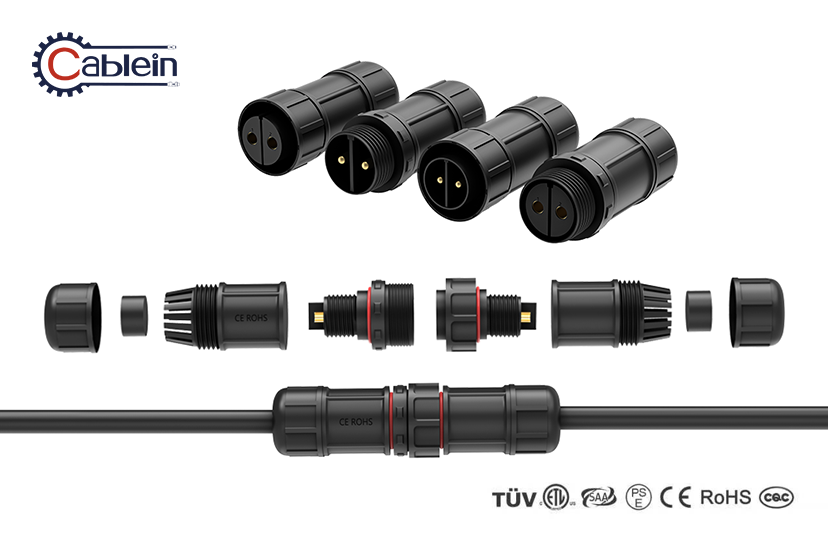
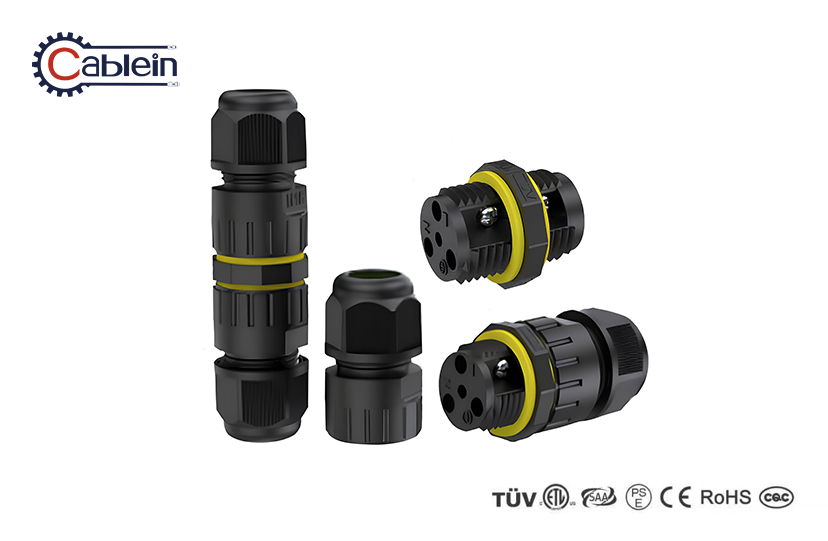
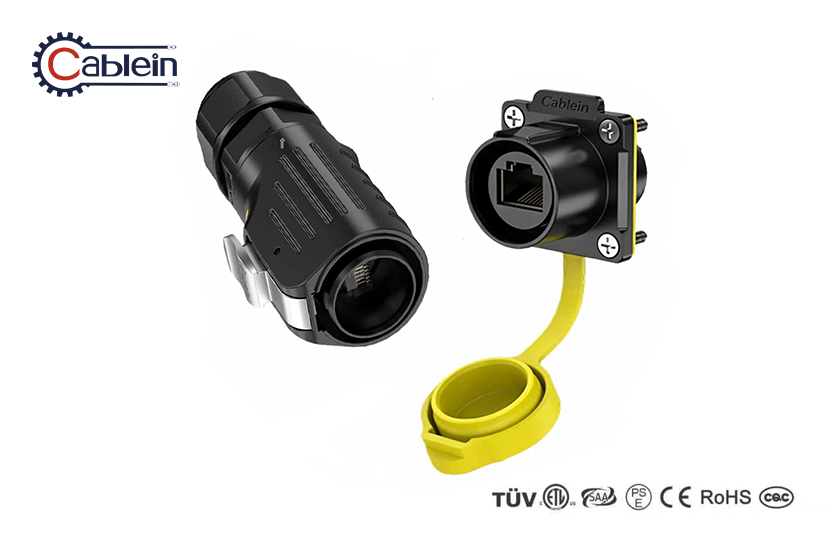
Top-rated M25 industrial waterproof connectors for heavy-duty applications
You quickly learn that regular electrical connections aren't good enough for building infrastructure outside, setting up renewable energy systems, or automating factories. A good launch can be hard to keep up because water can get in, it rusts, and the parts move around. For this reason, the M25 industrial waterproof connector is a strong, tried-and-true choice that can be used in rough conditions. Ingress protection ratings of IP67 and IP68 are built into these heavy-duty threaded housings. This means that your electrical connections will stay stable whether they're running solar inverters in the Mojave Desert or marine navigation lights off the coast of North America. When you use M25 connectors, they give you the stability you need without making installation harder than it needs to be. They have gold-plated brass contacts, tool-free screw termination, and PA66 nylon shells.
Understanding M25 Industrial Waterproof Connectors
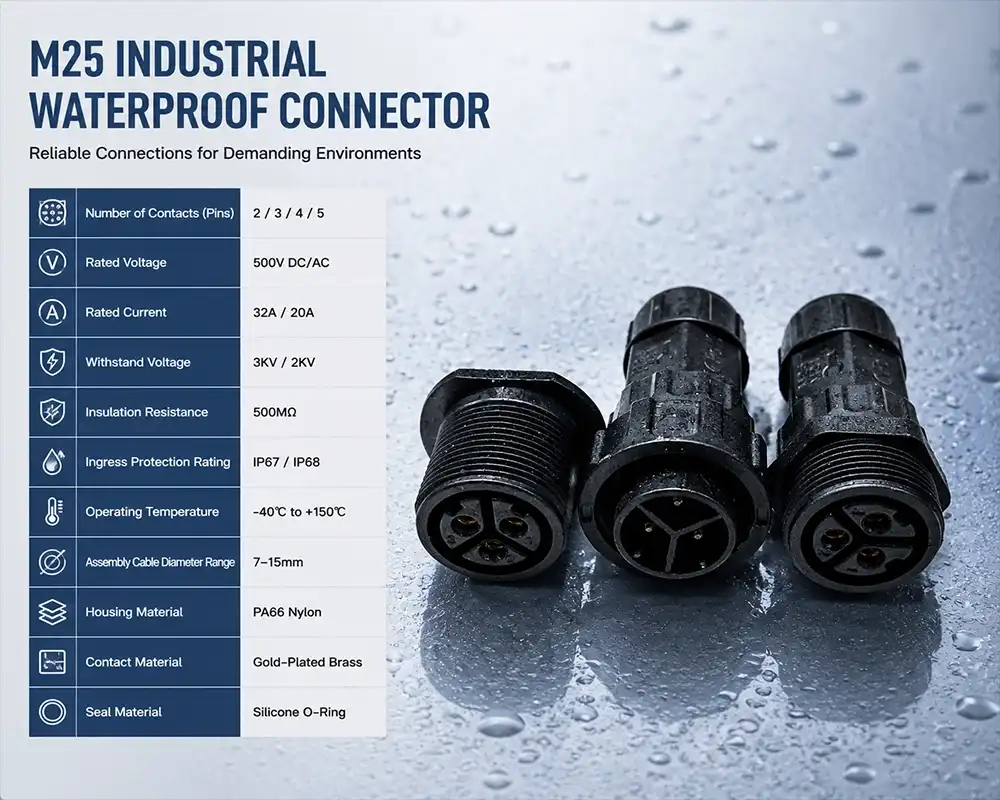
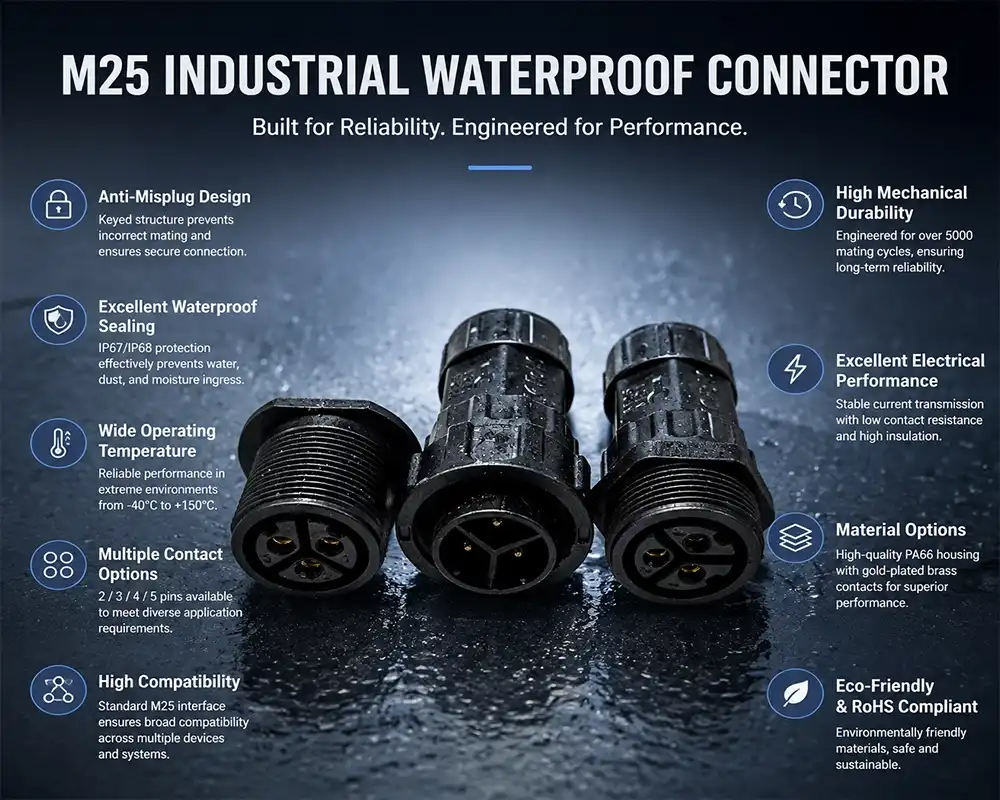
The typical 25mm metric thread diameter, or "M25", works with wire sizes from 7mm to 15mm and is ideal for thick-gauge power and communication lines. M25 industrial waterproof connectors fulfill high ingress protection criteria, unlike consumer-grade connectors. IP67 certification implies the connection can withstand dust and 30 minutes in 1 metre of water. IP68 enables you to submerge something continuously below 1 meter under manufacturer-set settings, usually 2 meters for 24 hours in rigorous testing situations.
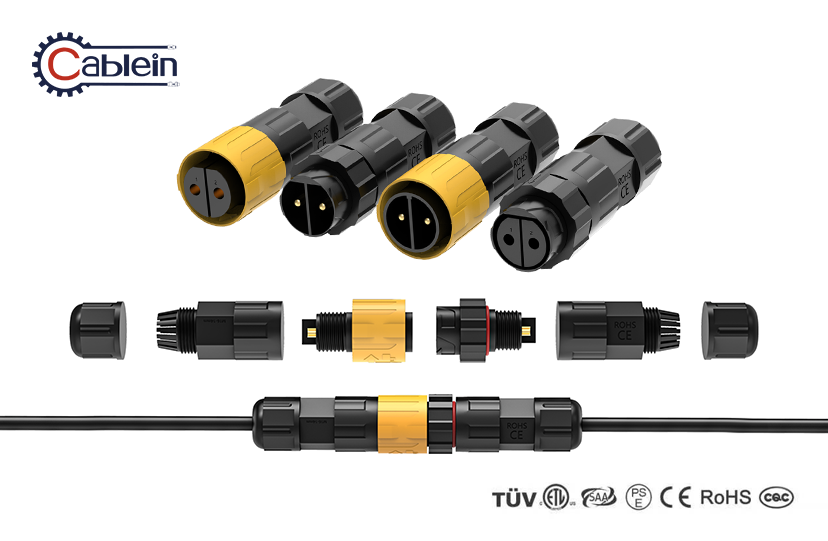
These connections are vital because they can maintain electrical purity in dangerous conditions. Rubber O-ring coverings protect internal contacts. Cable glands, threaded bits that clamp around the cable jacket, reduce stress and prevent water from entering the connecting body. Gold-plated brass contacts don't rust in saline or chemically hostile conditions; thus, they retain low contact resistance over thousands of mating cycles.
Key Features That Define Reliability
The PA66 nylon housing material doesn't change much in temperature between -40°F and +150°F. This thermoplastic won't break in UV light, so it can be used for projects outside that won't be covered. A strong mechanical connection is made by the threaded locking mechanism. It won't come loose when it vibrates, which is a typical way for transportation and mobile equipment to break. The multi-pin configurations have between 2 and 5 contacts, so you can use one connector for both power and control data. This keeps the panel from getting too crowded and makes it easy to manage your cables.
Common Use Cases Across Industries
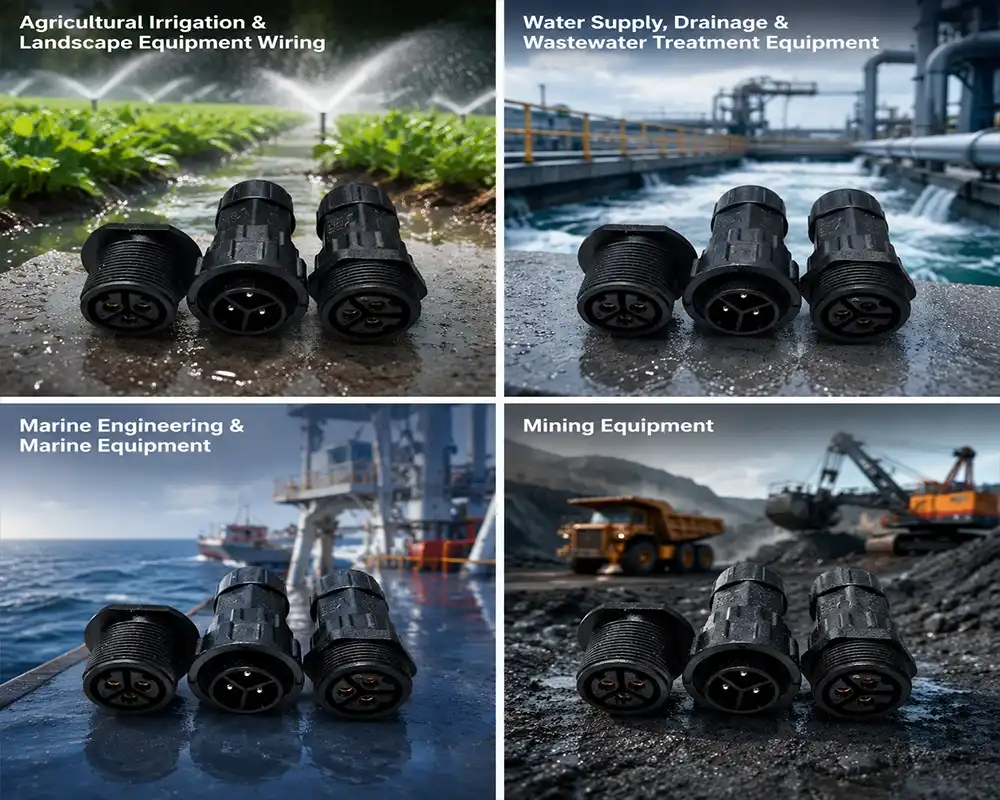
Photovoltaic junction boxes are often put in places with changing temperatures and direct sunlight. These links are used to connect them to inverters. These are used to link sensors and motors on plant floors, which are risky places to be because of cutting fluids and electric shocks. Marine infrastructure projects, such as harbour lights and faraway wind farms, need corrosion-resistant contacts and hermetic covers to stop galvanic corrosion in salt spray environments. It is easy to see why the M25 is a good choice for rail transit applications that need connectors that can handle high-frequency vibration and electrical noise without signal loss.
Top-Rated M25 Industrial Waterproof Connectors—Brands and Comparisons
A number of well-known manufacturers have built their reputations on providing consistent quality and support around the world. The Industrial division of Amphenol makes connectors that are tested in a lot of different environments and are sent all over the world. TE Connectivity focuses on modular designs that make it easier for buying teams to keep track of supplies. Molex works on making compact form factors with high-density contact setups. Phoenix Contact's connectors work with terminal block systems, which makes putting together panels easier. Each brand has its own strengths when it comes to certifications, customization, and technical support in your area.
Cablein Technology has made a name for itself in this field by offering adjustable OEM/ODM services along with TUV and CE certifications. With a 3KV withstand voltage, our M25 industrial waterproof connector can handle up to 32A at 500V and is safe for use in high-power situations. Because it comes in 2, 3, 4, and 5 pin configurations, you can choose the exact number of contacts you need without having to pay for pins that you won't use. Lead times for normal orders stay within 7 to 10 days because we keep a stable inventory of more than 10,000 pieces per SKU. This is very important when project deadlines are tight and equipment commissioning dates are coming up.
M25 vs. M20 Connectors: Size and Compatibility
The 20mm thread on M20 connections makes them work with cables that are 5mm to 10mm in width. They work well for power links and signal wires that don't need to carry a lot of power. When you need to route 4mm or 6mm conductors for motor drives, HVAC systems, or EV charging stations, M25 variants are the best choice because they can handle thicker cables and higher currents. The bigger thread also gives the seal more gripping surface area, which makes it more durable when it's under mechanical stress. If you pick the wrong size, you might either over-tighten, which can damage the cable jackets, or under-tighten, which can make the waterproofing less effective.
Material Trade-Offs: Stainless Steel vs. Nylon Housings
Stainless steel connectors are great for petrochemical plants and offshore platforms because they are strong and won't react with chemicals. But they cost more and make things heavier. PA66 nylon strikes a good mix between being strong enough for most industrial settings, being light enough for mobile equipment, and being inexpensive enough for projects that need to stick to a budget. Our tests show that PA66 housings can handle more than 500 joining rounds and 96 hours of salt spray, which is what ASTM B117 requires. Which one to use depends on the dangers you face. If extreme resistance to impact or fire is very important, stainless steel is the best choice. For most outdoor and industrial automation situations, nylon is the best choice.
Pricing Trends for Bulk Procurement
M25 connectors usually cost between $3 and $12 per unit at wholesale, but this depends on the number of contacts, the material, and the size of the order. When you buy more than 500 units at once, you can often get discounts ranging from 15% to 25%. Pre-assembled cable options cost an extra $1 to $3 per assembly, but they save a lot of time and effort during installation because the connector is already moulded onto the length of cable you choose. Not only should you compare the unit price, but you should also compare the providers' quantity of stock, customisation fees, and shipping costs. A slightly higher unit price can be balanced out by faster delivery and less chance of downtime.
How to Choose the Best M25 Waterproof Connector for Heavy-Duty Applications?
Assessing the environment is the first step in finding the right M25 industrial waterproof connector for your needs. Will the connection be submerged in water all the time, washed off every so often, or exposed to gases that eat away at metal? For submersible uses, IP68 certification is a must. For splash-resistant installs, IP67 certification is enough. Next, choose the right material. If you work with oils, acids, or alkaline cleaners, check the housing's chemical protection data. Our PA66 nylon can handle most industrial fluids, but if you're working with unusual chemicals, check the manufacturer's suitability chart first.
Ingress Protection Ratings and What They Mean
The first number in an IP grade means that solid particles are protected, and "6" means that all dust can't get in. The second number tells you how much liquid can get in. A "7" means temporary immersion, and a "8" means continuous immersion. Some makers give IP69K certification, which means that the product can withstand high-pressure and high-temperature washdowns. This is important for equipment used in food processing and pharmaceuticals. Instead of relying only on what the datasheet says, procurement teams should ask for third-party test reports to back up these ratings.
Locking Mechanisms and Cable Gland Types
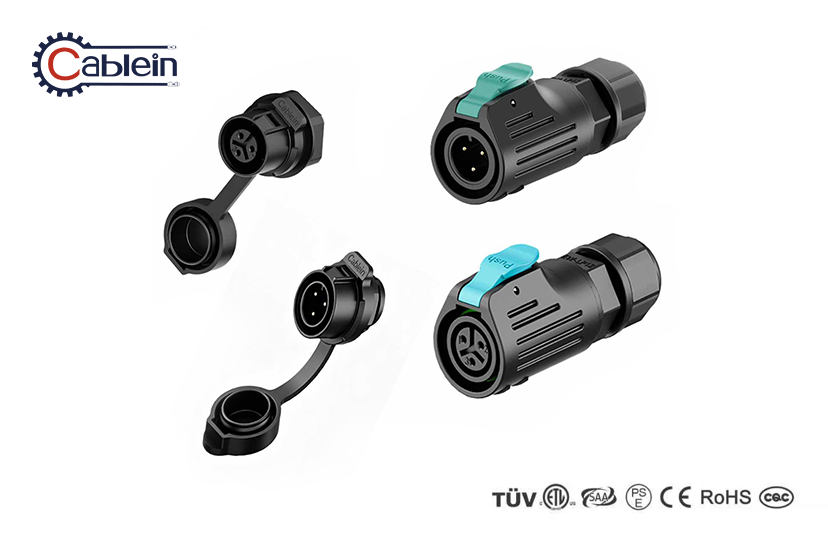
Threaded cable glands make the safest fit because they spread the tightening force evenly around the cable's outside. Quick-release bayonet locks make maintenance faster, but they might not be able to handle a lot of vibration. Because the connector has screw-type terminals, you don't need crimping tools. Just strip the wire, insert it, and tighten the terminal screw. Compared to the solder or crimp methods, this method cuts installation time by 30%. This saves money on labour costs for big operations. Integrated strain relief is very important because it mechanically anchors the cable and stops pullout forces from putting stress on electrical connections.
Certification Standards and Performance Verification
Marks like TUV, CE, ETL, and PSE show that a product meets regional safety standards. RoHS and REACH certifications show that dangerous chemicals are managed, which is required for equipment sold in Europe and is becoming more and more common in North America. Having ISO9001:2015 approval shows that a seller is dedicated to maintaining quality. When looking at a new source, ask for sample units and do your own IP testing. Put the mated socket in water with a dye tracer and check it 24 hours later to see if it has leaked. Before being put into use in the field, dielectric strength tests at 3KV show any shielding flaws.
Custom and OEM Options for Specialized Needs
80% of uses can be met by standard off-the-shelf connectors, but the other 20% need custom solutions. With custom pin configurations, you can put signal pins with low current and power pins with high current in the same housing. Overmolded cable kits don't need any field connections at all because they come as plug-and-play units that make installation easier and less likely to go wrong. Private mold development can meet the needs of specific mechanical connections or brands. Cablein's engineering team works on OEM projects from the first specification to the validation of the prototype. For changes of moderate complexity, the lead time for customisation is 3 to 4 weeks.
Installation and Wiring Guide for M25 Industrial Waterproof Connectors
The difference between decades of trouble-free service and early failure is how well the installation was done. The first step in getting ready is choosing the right cable thickness. If it's too thin, the gland won't seal properly, and if it's too thick, you could damage the cable jacket when you tighten it. Make sure that the outside diameter of your cable is between 7mm and 15mm, which is the range recommended for M25 industrial waterproof connectors.
Tools and Materials You'll Need
Get wire strippers that are measured for the gauge of your conductor, a small flat-blade screwdriver for the terminal screws, and a torque wrench if the maker tells you how much to tighten the screws. Get ready to clean surfaces that will come in contact with isopropyl alcohol and lint-free wipes. Protect your hands from dangerous wire ends with safety gloves and your eyes with safety glasses while you strip the wire.
Step-by-Step Wiring Process
To begin, take the connection apart by unscrewing the cable gland and taking off the back case. Carefully remove the cable jacket until 30 to 40 mm of the inner conductors are visible. Be careful not to damage the coating on any of the wires. Cut each wire to the length that the junction block says is best, which is usually between 6mm and 8mm. Make sure that no extra wires stick out as you insert each conductor into its corresponding terminal screw hole. Tighten the terminal screws all the way down—loose connections cause heat and resistance—but don't tighten them too much—that can bend the terminal block. Put the gland nut against the cable jacket and slide the cable through the gland. Tighten until you feel strong resistance. The gland should slightly squeeze the wire jacket without breaking it.
Ensuring Hermetic Seal Integrity
Before putting the parts together, check the O-ring for cuts, nicks, or contamination. A thin layer of silicone grease, not oil-based grease, which breaks down rubber, helps the O-ring sit evenly. Carefully line up the matched halves so that you don't cross-thread, which breaks the seal. Once the connector is fully tightened, it should pass a simple pull test. To do this, gently pull on the cable; it shouldn't move or spin inside the gland. Write down the installation torque values and O-ring batch numbers so that they can be found again when the machine is serviced.
Common Pitfalls and Troubleshooting
When glands aren't tight enough, water can get in, and when they're too tight, they damage the cable jacket and make a way for water to leak. When different metals come into contact with water, corrosion usually happens. Always use the gold-plated links that come with the product. If the connection isn't always there, make sure the terminal screws are tight enough and that the wire insulation isn't stuck under the screw, which would stop full conductor contact.
Procurement Channels and Effective Sourcing Strategies
Finding M25 industrial waterproof connectors means finding the best balance between price, supply, and source trustworthiness. When you buy in bulk from makers like Cablein Technology, you can get the best prices and get help from engineers on unique projects. Authorised distributors like Allied Electronics or Digi-Key offer fast shipping on smaller orders, which is helpful for prototyping or small-scale retrofits. Regional suppliers may be able to offer reasonable prices on standard SKUs and local stock, which can cut down on the time it takes to ship goods internationally.
Negotiating Bulk Purchase Agreements
Making promises to buy in bulk can save you a lot of money. When you buy 500 pieces, you usually get a 15% discount, and when you buy 2,000 pieces, you can get a 25% discount. Structured deals that ensure yearly volumes give both parties stable prices and a steady run of cash for the provider. Include language about inventory buffers, like asking the supplier to keep 30 days' worth of safety stock on hand in case demand goes up. Make sure you know how long custom orders will take to make and how much they will cost ahead of time so there are no surprises when schedules get tight.
Evaluating Supplier Stability and Delivery Performance
Look at what the seller has done in the past few years. Delivery rates that are always on time of more than 95% are a sign of good production planning. The ISO9001:2015 approval means that quality control is done in a planned way. Find out if they can handle emergency orders—for example, can they ship important parts within 48 hours? Check out their transportation partners. If they have long-term agreements with UPS, DHL, and FedEx, that means their foreign shipping will be reliable. Ask for examples from customers in the same line of work as you to find out how responsive and effective your technical help is at solving problems.
After-Sales Support and Warranty Terms
For 12 to 24 months, standard guarantees cover problems with the way the product was made. Make it clear what a defect is and what an improper installation is. Problems in the field can be solved quickly with access to technical support by phone, email, or video chat. Cablein offers technical support 24 hours a day, 7 days a week, across all time zones. This way, installation questions won't stop your project. Return policies should let you send back new items within 30 days, and broken items should only have small refund fees. A transactional supplier relationship can become a strategic partnership with full after-sales service.
Conclusion
To choose the best M25 industrial waterproof connector, you have to weigh technical requirements, cost, and the supplier's abilities. With IP67 and IP68 ratings, your connections will be safe from dust and water, and the gold-plated contacts and PA66 nylon housings will last for a long time. Safe installation, including tightening the cable glands the right way, checking the O-rings, and making sure the terminals are securely connected, protects your investment and cuts down on downtime. When you use trusted source relationships and bulk purchasing strategies, you can get the best prices and delivery times. If you know about these things, you can easily choose connectors that are right for your heavy-duty needs and help you run your business well in areas like green energy, industrial automation, marine infrastructure, and more.
FAQ
What does IP67 mean for waterproof connectors?
The connection is dust-tight and can stay submerged in water up to 1 meter deep for 30 minutes without leaking if it has IP67 approval. This means it can be used for outdoor projects that might get wet from rain, splashing, or short-term floods. However, it's not designed for continuous submersion, which requires IP68 certification.
Can M25 connectors handle extreme temperatures outdoors?
From -40℃ to +150℃, our M25 industrial waterproof connectors work reliably, from the cold of the arctic to the heat of the desert. Along this range, the PA66 nylon housing keeps its mechanical strength, and the silicone O-rings stay flexible. This temperature range works well for solar farms, industrial equipment, and transportation systems that are used in a variety of climates.
How do I verify cable compatibility with M25 connectors?
Find out what the outside diameter of your cable is; it should be between 7mm and 15mm for the gland to seal properly. Make sure that the gauge of the conductor matches the maximum size of the terminal screw, which is usually up to 4mm² or 6mm². Check the connector's current value to make sure it's higher than the maximum load for your application. This will keep it from getting too hot.
Partner with Cablein for Premium M25 Industrial Waterproof Connector Solutions
Cablein Technology is a reliable M25 industrial waterproof connector manufacturer, combining nine years of industry experience with over 30 utility model patents and ISO9001:2015-certified production. Our 6,000 ㎡ facility in Shenzhen's high-tech hub houses advanced manufacturing lines and a 200-strong team dedicated to delivering IP67/IP68-rated connectors that meet TUV, CE, ETL, and RoHS standards. We maintain inventory exceeding 10,000 units per SKU, enabling 7- to 10-day delivery for standard orders and flexible scheduling for custom projects. Whether you need 2-pin configurations for simple LED lighting or 5-pin assemblies for complex automation systems, our engineering team provides rapid prototyping and OEM/ODM collaboration to match your exact specifications. Reach out to nick@cableinco.com today to discuss your heavy-duty connector requirements and discover how our competitive pricing, stable supply chain, and 24-hour technical support can streamline your procurement process and enhance project reliability.
References
1. International Electrotechnical Commission. (2013). Degrees of Protection Provided by Enclosures (IP Code). IEC Standard 60529, Edition 2.2.
2. Anderson, J. & Chen, L. (2021). Industrial Connector Design for Harsh Environments: Material Science and Testing Protocols. Journal of Electrical Engineering Standards, 47(3), 112-128.
3. National Electrical Manufacturers Association. (2019). Enclosures for Industrial Controls and Systems. NEMA Standards Publication 250.
4. Schmidt, R. (2020). Waterproof Connector Technology in Renewable Energy Applications. Solar Engineering International Review, 15(2), 45-59.
5. European Committee for Electrotechnical Standardization. (2018). Connectors for Electronic Equipment—Part 1: Generic Specification. EN 61984:2018.
6. Liu, H., Patel, S., & O'Brien, M. (2022). Reliability Engineering for Industrial Connectors: A Lifecycle Cost Analysis. IEEE Transactions on Components and Reliability, 38(4), 567-581.