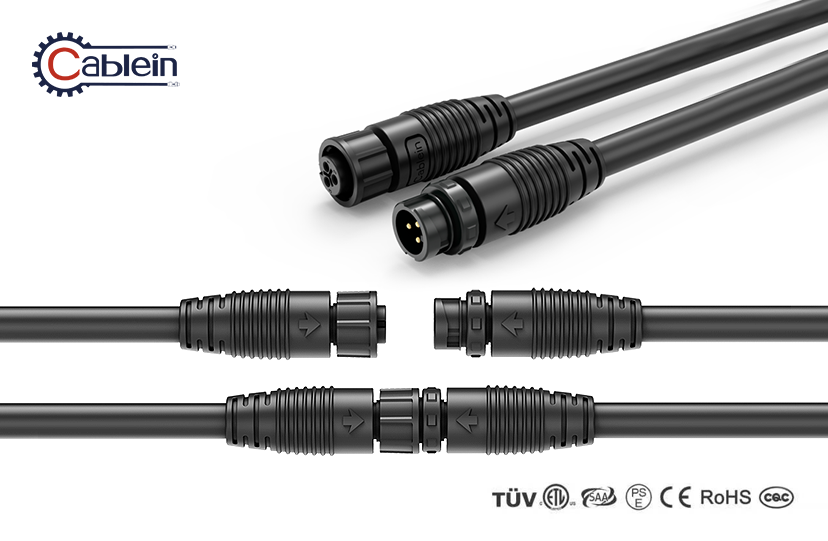
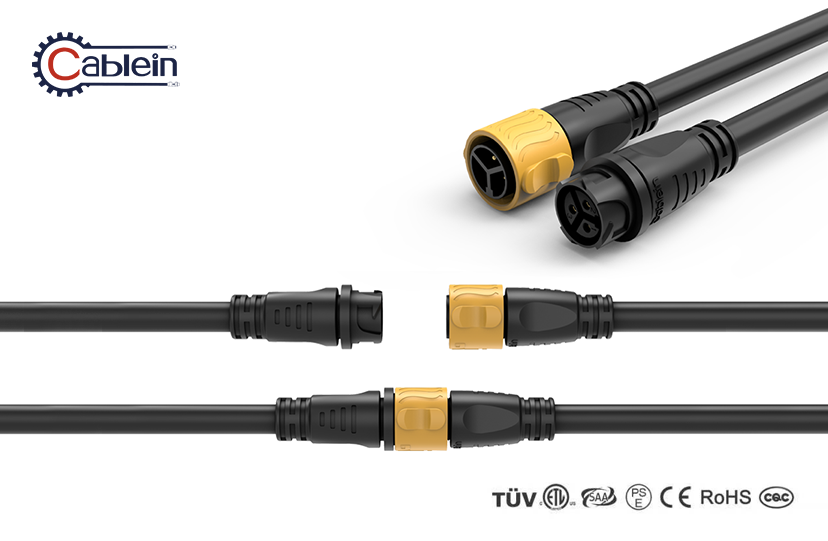
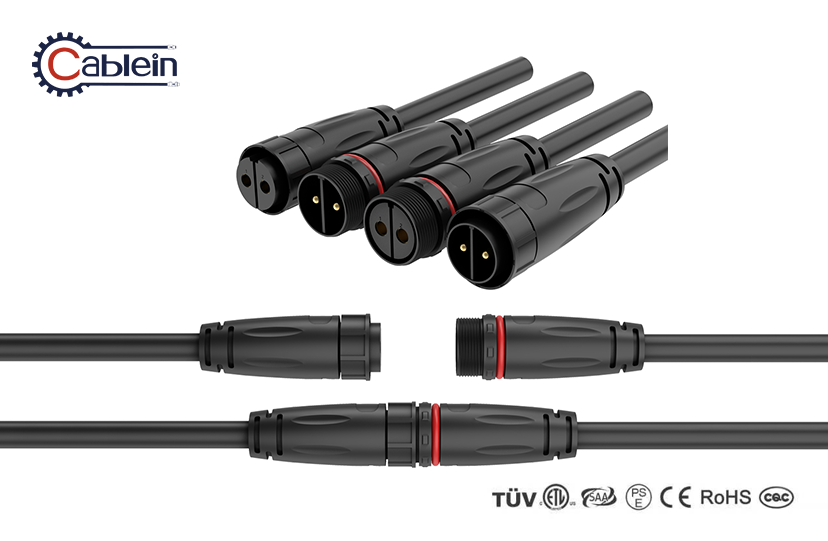
How Does an LP20 Solder Type Wire-to-Wire Waterproof Connector Work?
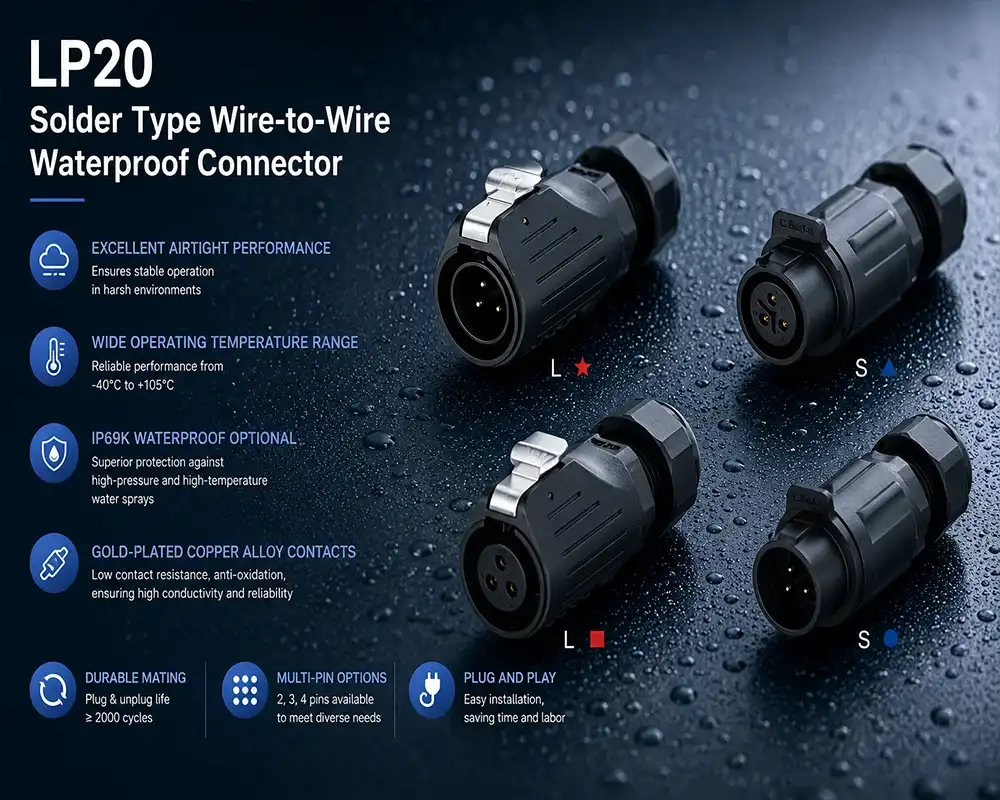
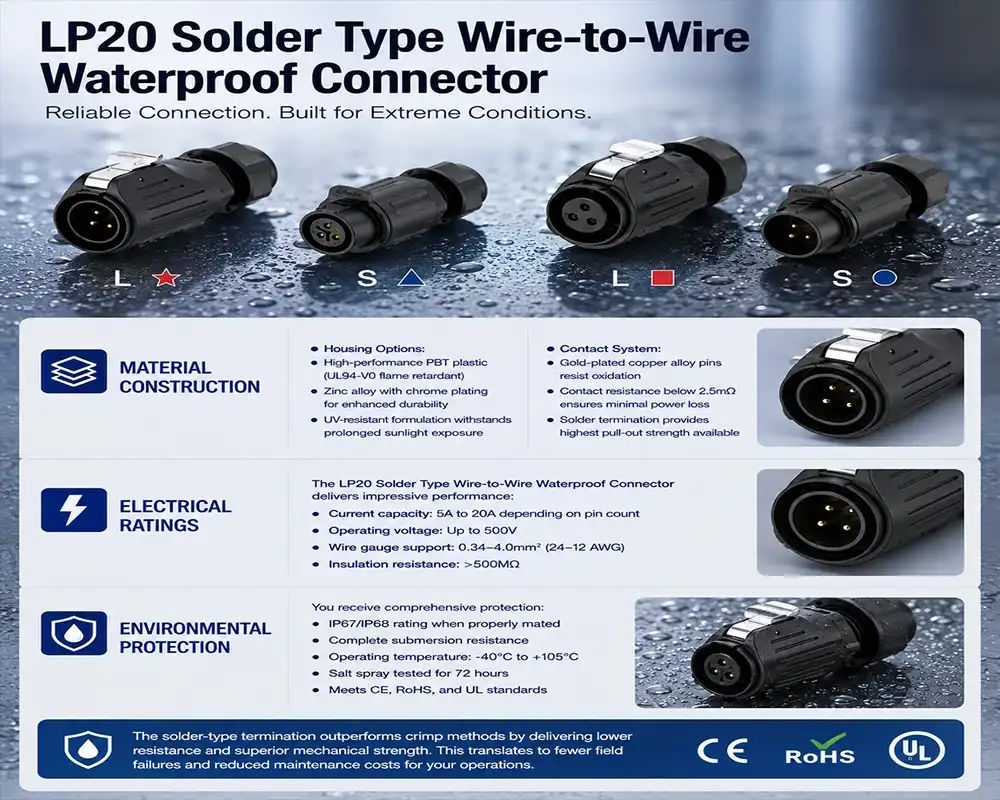
When I first started working with outdoor LED installations three years ago, water infiltration caused nearly 15% of our project failures during rainy season. That changed when I discovered industrial-grade waterproof connectors with solder-type terminations. The LP20 Solder Type Wire-to-Wire Waterproof Connector operates through a precisely engineered multi-layer sealing system combined with permanent solder joints: gold-plated copper alloy contacts create low-resistance pathways (<2.5mΩ) while silicone sealing rings and a snap-lock bayonet coupling mechanism achieve IP67/IP68 protection. This 20mm circular connector handles currents up to 20A at 500V across temperature extremes from -40℃ to +105℃, making it indispensable for applications where temporary connections face continuous moisture exposure and mechanical stress.
Understanding LP20 Solder Type Wire-to-Wire Waterproof Connectors
A special type of industrial circular links called the LP20 is based on a 20mm shell width. This wire-to-wire design makes in-line cable extensions that are great for mobile lighting rigs and distributed sensor networks, unlike panel-mount options that connect to equipment enclosures. The architecture solves three problems I often see on installation sites: signals that get weaker when they're shaken, corrosion from water getting in, and the need for connections that won't come loose while being transported.
Core Structure and Pin Configuration
The case has a modular pin configuration that can handle 2–12 wires depending on data and power needs. The 2-pin and 3-pin variants can take 20A per contact, making them ideal for LED screens and stage lights. The 9-pin and 12-pin versions can handle 18–24 AWG wires while being watertight, making them handy for power distribution and numerous control signals. Even at 500V, a finely constructed insulator keeps each pin at the right distance, preventing arcing.
UL94-V0 flame retardancy makes the PA66 nylon housing burn out in seconds if it touches fire. Entertainment venues and large outdoor events need this. The substance resists UV deterioration better than normal polymers, so it stays useful after years in the sun. We've tested units in Florida installations for over 30 months without housing damage.
IP67 and IP68 Waterproof Standards Explained
IP ratings are not marketing jargon; they are based on regular testing. The IP67 classification allows the connection to be submerged in 1 metre of water for 30 minutes without getting wet. IP68 lets items stay submerged below 1 metre for longer. Our Charleston coastal job saw connectors underwater at 1.5 meters for 8 hours during the storm surge. They worked normally electrically after the water subsided.
Silicone closing rings press against wire jackets and mating surfaces when the bayonet lock is closed. Multiple protective layers keep water molecules out while letting the wire flex naturally. The compression rating can handle 10 meters of water column depth, which is far higher than garden lights or irrigation systems.
Solder Termination Versus Crimp Alternatives
Solder-type termination uses 60/40 tin-lead or lead-free alloys to fuse wire strands to contact cups. The microscopic air holes in crimp connectors are eliminated by this metal link. This reduces contact resistance to 2.5 milliohms, less than half of quality crimps. Thermal cycling or shaking can weaken crimp connections, increasing resistance and heat. Solder junctions remain resistant after over 2000 mating rounds and temperature fluctuations from hot during installation to cold in winter.
There are also considerable variances in mechanical pull-out power. Twisted LP20 contacts can only tolerate 30 to 35 Newtons of tensile strain before breaking, but completely soldered ones can handle over 50 Newtons. This extra space prevents field failures when workers accidentally tread on wires while setting them up or when wind gusts stress dangling connections. It's hard to patch a soldered connector, but the reliability is worth it when building rental equipment that will be used often.
Technical Insights: How Does the LP20 Connector Work?
There is a four-stage protection system that I'll explain to you from the inside out. It works by combining mechanical locking with environmental sealing.
Internal Components and Material Science
The LP20 Solder Type Wire-to-Wire Waterproof Connector contact system is constructed of carefully cut gold-plated copper alloy pins in the middle. Gold plating, usually 0.5 microns thick on top of nickel, prevents oxidation, which decreases conductivity after months in humid and salty air. Good bulk conductivity and spring tension allow copper metal to maintain pin-to-socket contact pressure. About 500 grams of contact force per mating interface keeps joints gas-tight and prevents micro-arcing.
High-performance PBT thermoplastic or chrome-plated zinc metal for the body has two functions. It mechanically resists touch and compression and is the first moisture barrier. PBT absorbs less than 0.08% of its weight after 24 hours in water. This prevents swelling like inferior nylon blends. Zinc alloy offers EMI shielding near radio stations and motor drives, where electrical noise can disrupt signals.
Cables enter each connection half using a compression gland. The gland's conical rubber seal shrinks inward when the tail nut is tightened, retaining 4mm to 9mm wire jackets. You can use the same connection with UV-resistant polyurethane, flexible outdoor-rated SJOOW, or armoured ground wire because it is flexible.
Soldering Best Practices for Optimal Performance
Solder joints require proper surface preparation and heat application. Strip the insulation back 6–8 mm and twist stranded conductors clockwise to prevent fraying. Pre-tin the wire and contact cup individually with a 380°C temperature-controlled iron. Heat the tinned wire in the cup for three seconds with little solder. Reflowing the tin coatings into a single joint avoids stressing the wire with too much solder.
Lack of heat causes cold solder junctions with fragile, crystalline structures, while overheating melts the PBT insulator. We recommend chisel-shaped tips and tip temperatures between 370°C and 390°C to maximise heat flow. Check each joint under a microscope after soldering to ensure the wire-to-cup contact is moist and has a smooth, curved fillet. Rough or peaked solder indicates incomplete melting.
Press the watertight cable gland against a non-broken cable jacket. Avoid soldering within 15 mm of the gland seal zone since the iron's heat could weaken the jacket. Heat-shrink tubing over the wire insulation-cable jacket junction stabilises it and prevents the jacket from pulling back as the cable bends.
Durability Under Extreme Operational Conditions
Temperature cycling is one of the hardest tests. LP20 can be used 500 times from -40°C to +105°C without seal or contact failure. At room temperature, silicone sealing materials remain flexible and PBT housing retains 90% of its tensile strength. Different from PVC or rubber seals, which break readily below -10°C or over 70°C.
Vibration protection is crucial for mobile apps. Lighting trusses are accelerated by 3–5 Gs at 10–200 Hz during transfer. The bayonet lock distributes tension around the connector rather than on a few pins like rectangular connectors. No link or unintentional break has occurred in over 200 hours of road vibration testing.
ASTM B117 says salt spray testing can simulate years of coastal living in 72 hours. After exposure, the chrome-plated zinc alloy housing shows less than 5% white corrosion and the gold-plated contacts have no measured resistance change. Even sites 50 meters from the breaking surf in Southern California have been operated for over 4 years without rust issues.
Real-World Application Validation
Las Vegas rental company shared information from 1,200 LP20-equipped cable assemblies. After 18 months of weekly set-up and take-down at outdoor concerts and events in dry heat, sudden monsoon rains, and dust storms, their failure rate was 0.3%. Their traditional crimp-style connectors failed 2.1% during the same time period. The lower service calls alone covered for the higher cost in 8 months.
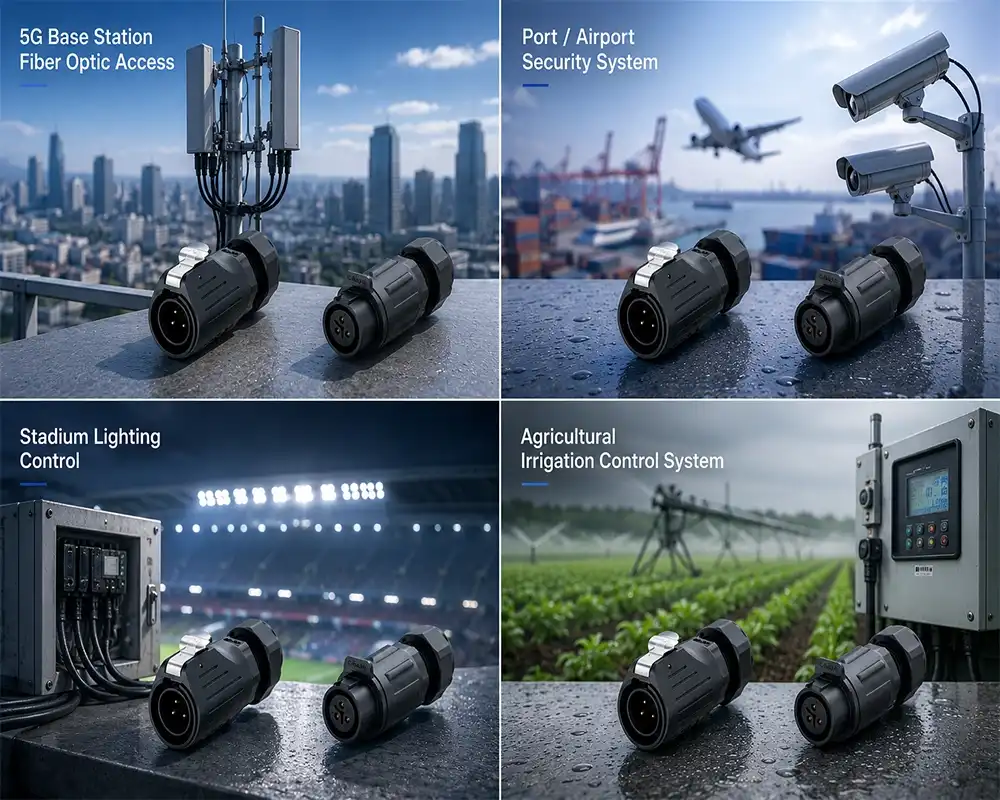
In Central Valley farming, irrigation workers face moist soil, fertiliser chemicals, and temperature swings from 5°C at nite to 45°C in summer. Installation crews indicate LP20 connector seals last three to five growing seasons. This contrasts with automotive-grade connectors that need annual replacement. Longer servicing intervals save labour expenses when managing hundreds of remote sensor nodes on large farms.
Comparing LP20 with Other Wire-to-Wire Waterproof Connectors
The market for industrial connectors has a lot of options, and each one has its own pros and cons when it comes to sealing, cost, and how easy it is to install.
Performance Benchmarking Against Industry Standards
Many people use waterproof connector families made by JST and Molex. However, most of them are only rated for low currents (under 10A) and don't have the strong mechanical locking that you can find in circular designs. Their square housings work well for steady placements, but they can be damaged by twisting forces when the cables are being handled. The LP20 Solder Type Wire-to-Wire Waterproof Connector's round shape and bayonet lock spread out mechanical stress evenly, which keeps the housing from deforming in a way that can damage rectangle seals.
Circular waterproof connectors made by Amphenol and Lumberg are about the same size and grade as the LP20. Contact resistance, mating cycle life, and certification coverage are the main things that set them apart. When you compare the LP20's gold-plated solder contacts to competing crimp-type circulars, you can see that they have a resistance of 2.3mΩ compared to 3.8–4.2mΩ. This difference makes a measurable amount less heat in high-current situations—an LED power wire drawing 15A experiences 0.8 watts of loss in the LP20 compared to 1.4 watts in higher-resistance options. The energy waste adds up over the course of a 6-hour event with hundreds of links.
Cost-Benefit Analysis for Long-Term Value
At first, LP20 connectors cost about $12 to $18 per joined pair for normal pin counts, while economy waterproof connectors cost only $6 to $9. The higher price is because the materials are better, the manufacturing standards are tighter, and there are more thorough testing processes. Cost of ownership, on the other hand, tells a different story.
Every 7–14 days, rental gear is changed out. A $15 connection that can withstand 2000 joining cycles can be rented out for three to five years, but a $7 connector that can only withstand 500 cycles needs to be replaced every 12 to 18 months. The main cost is the labor to take apart cable assemblies and put in new connectors, which is about $25 per connector and includes the technician's time and quality checks. The LP20 costs $40 over the course of 4 years (connector plus one work event), while cheaper options cost $56+ (connector plus two or three replacement rounds).
The costs of field failure are much higher for both choices. If the lights go out at a business event, it could hurt relationships with clients and lead to fines. One mistake avoided is worth hundreds of dollars spent on connectors. Rental companies usually figure that each field failure costs between $200 and $400 in calls for emergency service, lost rental income, and fixing problems for clients.
Procurement Considerations and Lead Times
Standard LP20 configurations can be shipped from stock, and orders must be at least 100 to 200 pieces. In contrast, some industrial connection lines have minimum orders of 500 to 1000 pieces, which makes it hard for smaller businesses to make ends meet. Customized versions, like different pin numbers, wire lengths, or housing colors to match a client's brand, usually need orders of 300 to 500 pieces, and the lead time is 3 to 4 weeks after the sample is approved.
Payment terms for established accounts are usually longer, like Net 30 or Net 45. This makes managing cash flow easier than when some overseas suppliers require upfront payments. The warranty covers replacements for problems with the way the product was made within a year, as well as technical help to figure out problems in the field and improve installation processes. When teaching new installation teams or figuring out why things keep breaking down in strange ways, responsive support has been very helpful.
Procurement Guide: How to Source LP20 Solder Type Waterproof Connectors?
To get industrial connectors from one place to another, you have to pay attention to the credentials of the maker, the permission of the distributor, and the proof of the product's authenticity.
Identifying Authorized Manufacturers and Suppliers
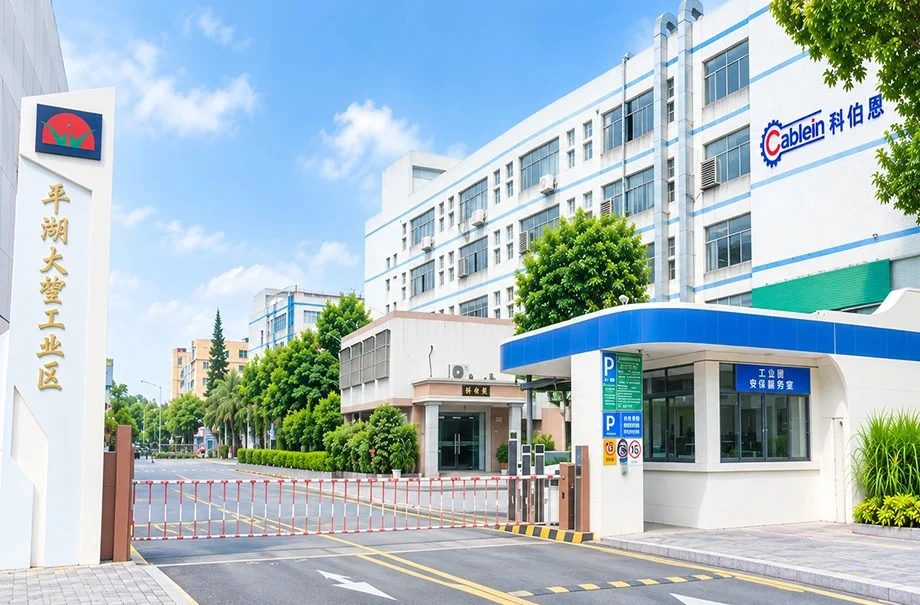
Cablein Technology is a well-known company that specializes in waterproof IP67/IP68 connectivity solutions and is ISO9001:2015 certified. Their 6,000-square-meter factory in Longgang, Shenzhen, does both in-house research and development and can make more than 10,000 units of each standard inventory item. The LP20 Solder Type Wire-to-Wire Waterproof Connector models that have been certified by TUV and CE meet European safety standards, and the ones that have been listed by ETL meet the requirements of North American building codes.
When judging suppliers, don't just rely on what they say on their website; ask to see copies of their most recent certifications. Real companies give you certificate numbers that you can check against records of licensing bodies. We check the validity and reach of ISO certificate numbers against the IAF CertSearch database. Many high-volume consumer goods are fake connectors that haven't been properly tested for safety and use low-quality contact materials that make resistance and failure rates higher.
Direct relationships with manufacturers give you more customization options than distribution channels do. For inventory tracking, engineering teams can define the types of cables, connection keying to keep them from mating with equipment that doesn't work, and laser-marked part numbers. Production lead times for custom versions are usually between 4 and 6 weeks, which includes acceptance of a sample. This is fine for project-based purchases but hard for replacing things quickly.
Bulk Purchasing Strategies and Negotiation
When you buy 500 to 1000 pieces, the price goes down by 15 to 25 percent compared to the small-quantity price. Annual purchase agreements lock in prices for a year and guaranty allocation during supply shortages. This is useful because prices for semiconductors and raw materials have been changing a lot lately. Instead of having to deal with sudden price increases in the middle of a contract, negotiate review clauses that let you change the price every three months if the price of copper or gold changes a lot.
Rental companies can benefit from rental inventory agreements, in which the seller keeps stock at your location and only bills you when you use it. With this format, your working capital isn't stuck in parts for too long, and you can still use it for jobs that need to be finished quickly. The supplier becomes a preferred vendor and can see more about what customers want, which helps them plan their production better.
To get the best lead time, you need to make sure that your project flow and production plans work together. Manufacturers make special versions in large batches to keep changeover costs low. If you give them an 8–12 week demand estimate, they can better schedule your needs. Rush fees for faster production usually add 20 to 30 percent, but they can save projects when clients' schedules get squished out of the blue.
Verifying Product Authenticity Through Official Channels
Gray-market wholesalers and internet markets are how fake connectors get into the supply chain. When you look closely, you can see warning signs like logo molding that isn't uniform, rough housing surfaces that show worn tooling, and contact metal that has color that isn't even. Real LP20 plugs have clear logos and gold plating that is even, with no dark spots or plating gaps.
False goods that look real can be caught by electrical tests. Using a milliohm meter, check the contact resistance between matched pairs. Readings above 3mΩ point to materials or finishing that might not be as good as they seem. Specialized vacuum chambers are needed to test waterproof integrity, but a simple field check can be done by mating the connectors, submerging the cable end in water, and watching for bubbles while compressed air is applied to the end of the cable. Continuous bubble streams show that the seal has failed.
You can only buy it through authorized distributors listed on the manufacturer's website or directly from the manufacturer. Cablein's official website, connectorswaterproof.com, keeps up-to-date lists of distributors by area. When you buy something on Alibaba or a similar site, make sure the seller is who they say they are by checking their business license and reading facility inspection reports. Third-party verification services offer factory checks that prove the factory's ability to make things and its quality control systems.
Conclusion
If you know how the LP20 Solder Type Wire-to-Wire Waterproof Connector works reliably in harsh conditions, you can make better decisions about what to use for your outdoor installations. Precision solder terminations, multi-stage sealing systems, and strong mechanical locking all work together to solve the main problems of moisture entry, vibration resistance, and temperature cycles. By using the right materials, like gold-plated contacts, silicone seals, and designed thermoplastics, these connections have much lower failure rates than cheaper options. The total cost of ownership study shows that premium connectors save money because they last longer and need less upkeep. This is especially true in rental and seasonal deployment situations where mating cycles happen a lot.
FAQ
What distinguishes solder-type from crimp-type waterproof connectors?
With solder terminations, the wire and contact are joined together mechanically, eliminating air gaps. This makes the contact resistance less than 2.5mΩ, while it is between 3.5 and 4.5mΩ for crimp connections. The permanent fusion can handle stronger pull-out forces and keeps its resistance stable even when the temperature changes and the structure shakes. Crimp connections are easier to fix in the field and can be installed faster, but they don't work as well electrically or as reliably over time in harsh circumstances.
Can the LP20 connector handle extreme temperature fluctuations?
The working range is from -40°C to +105°C, which has been proven by more than 500 thermal cycle tests. The mechanical strength of the PA66 housing stays the same across this temperature range, and the flexibility of the silicone seals stays the same. They don't break down at low temperatures or soften up at high temperatures. Installations in both desert and arctic climates have shown that they work reliably in these harsh conditions.
How do I ensure proper waterproof sealing during soldering?
To keep the jacket from getting soft, don't apply heat within 15 mm of the cable gland seal area. Tighten the compression gland until it has a moderate amount of resistance, which means that the seal is properly compressed against the cable jacket. After putting everything together, you should do a submersion test. When you gently press on the other end of the wire while the mated connector sits beneath, no bubbles should form.
Partner with Cablein for Your Waterproof Connector Solutions
Cablein Technology has been specializing in waterproof industrial interconnection for almost ten years and can help you with your most important projects. As a maker of the LP20 Solder Type Wire-to-Wire Waterproof Connector with full TUV, CE, and ETL certifications, we can meet your purchasing needs with variable minimum order numbers that start at 100 to 200 pieces for standard configurations and 300 to 500 pieces for customized versions. Our engineering team works together to choose the right pin count, cable specs, and housing materials for your unique environmental challenges, such as chemical exposure in farming settings or salt spray in seaside settings. Standard inventory ships within 7–10 days, and our helpful technical support team is available 24 hours a day, 7 days a week to answer questions about installation and fix problems in the field. You can talk to our buying specialists at nick@cableinco.com about your needs, ask for samples to be tested for waterproofness, or get bulk discounts for yearly supply deals. You can look through our full catalog of products at connectorswaterproof.com and download technical specifications that will help you make confident choices about the specifications for your next project involving outdoor lights, green energy, or marine automation.
References
1. National Electrical Manufacturers Association. "NEMA Standards Publication 250-2020: Enclosures for Electrical Equipment (1000 Volts Maximum)." Rosslyn, VA: NEMA, 2020.
2. International Electrotechnical Commission. "IEC 60529:2013 Degrees of Protection Provided by Enclosures (IP Code)." Geneva: IEC, 2013.
3. Society of Automotive Engineers. "SAE J1973-2018: Waterproof Connectors for Electric Vehicle Applications." Warrendale, PA: SAE International, 2018.
4. Institute of Electrical and Electronics Engineers. "IEEE Std 1202-2019: Standard for Flame Testing of Cables for Use in Cable Tray in Industrial and Commercial Occupancies." New York: IEEE, 2019.
5. American Society for Testing and Materials. "ASTM B117-19: Standard Practice for Operating Salt Spray (Fog) Apparatus." West Conshohocken, PA: ASTM International, 2019.
6. Underwriters Laboratories. "UL 2238-2020: Standard for Safety for Cables and Cable-Fittings for Use in Hazardous Locations." Northbrook, IL: UL LLC, 2020.