Why Do Outdoor Electrical Systems Need a Square 3-Way Waterproof Junction Box?
Outdoor electrical systems are under continual attack from moisture, temperature extremes, mechanical impact, and chemical exposure. All of these risks are handled in one enclosure: a square 3-way through-type waterproof junction box. This kind of enclosure is made from flame-retardant PA66 or UV-stabilized polycarbonate, graded IP67/IP68 and certified to IEC 60529 hydrostatic requirements. It is intended to protect cable splices and T-junction connections where ordinary boxes break in a matter of months. With three individually sealed entrance ports, the integrity of the system is not compromised if one gasket is strained, making it the product of choice for infrastructure managers who cannot afford unscheduled downtime.
Understanding the Square 3-Way Waterproof Junction Box
What the "Through-Type" Design Actually Means
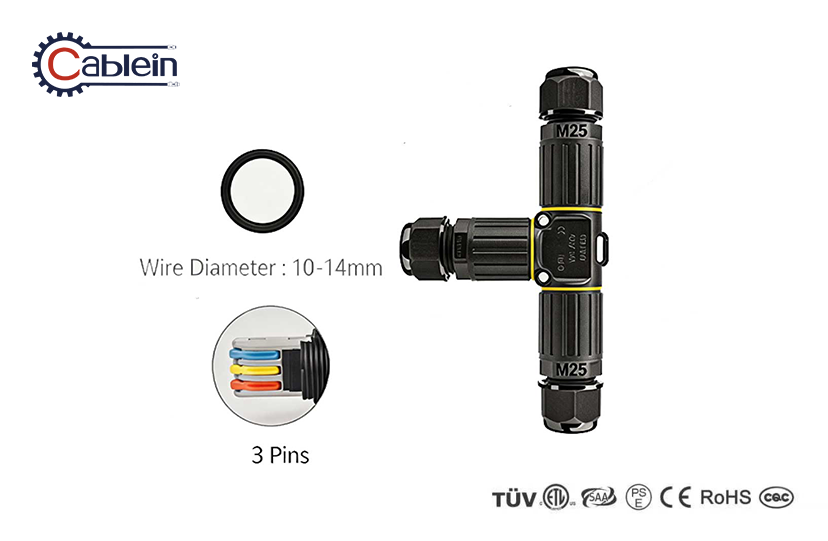
The through-type design features three ports: one for a branch circuit and one for a main line that passes through the casing. This is not like a basic terminal box with just one entry. This T-shape decreases the number of join points on a cable route and, hence, the danger of intrusion at connection nodes. A square box offers technicians more room inside than a round box with the same dimensions. This allows simpler bending of wires and quicker access to terminal blocks.
How the Three Independent Entry Ports Work
The enclosure includes three apertures, each with an EPDM sealing gasket. If a chemical wash cycle or high cable gland twist stresses one gasket, the other two ports will not be impacted. This isolation concept is vital in locations like food processing factories or naval stations where one damaged seal may bring a whole production line to a standstill.
Materials and Ratings That Define Performance
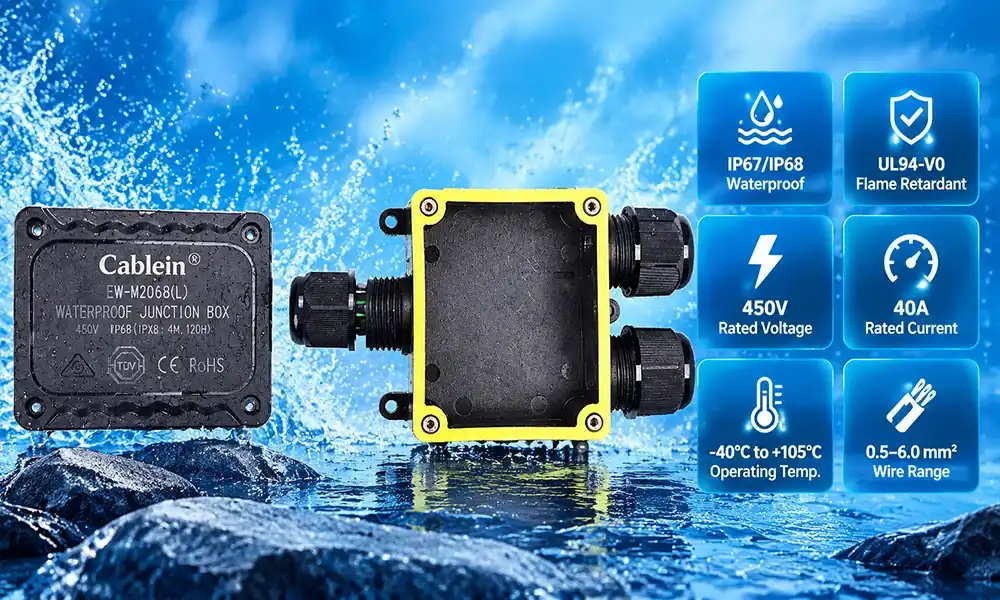
The body may be chosen from impact-resistant PA66 thermoplastic or UV-stabilized polycarbonate. Both materials are RoHS-compliant for halogen-free and have a UL94-V0 flammability certification. The operating temperature range is from -40℃ to +105℃ without deformation; therefore, it may be utilized in frigid regions such as the Arctic as well as hot workplaces.
Core Benefits of Using Square 3-Way Waterproof Junction Boxes in Outdoor Electrical Systems
Protection Against Water, Dust, and Corrosion
This enclosure is rated IP68 to a depth of 4 meters, meeting or exceeding the requirements of most buried and partly submerged outdoor applications. Copper terminals left unprotected may break in one rainy season. Brass nickel-plated terminal blocks within the device don’t rust in locations of high humidity. The rubber or EPDM seal that comes with the lid pulls down uniformly over the face of the lid, eliminating the capillary water movement that occurs with bad designs.
Wiring Efficiency That Reduces Field Labor
You can conduct a T-junction splice with a square 3-way through-type waterproof junction box enclosure with one worker since you don't need to cut the main wire or add further connections. This drastically reduces the time to set up large lighting or sensor networks. There are M20 cable glands for 5–9 mm and 9–12 mm cable ranges, and M16 cable glands for 3.5–7 mm and 7–10 mm ranges. They can handle wire cross-section from 0.5 mm³ to 6.0 mm³ and current ratings up to 40A at 450V.
Lower Maintenance Costs Over the System Lifecycle
While accessing the field, the lid is held on by stainless steel captive screws. This avoids hardware from being lost in grass, gravel, or equipment, which occurs a lot. Some variants incorporate quarter-turn locks that allow technicians to access and seal the enclosure without tools. These design decisions reduce the time to undertake maintenance and reduce the potential to put things back together improperly, which is the major reason why things fail after maintenance.
These advantages directly influence the long-term costs purchasing managers use to evaluate enclosure characteristics. An enclosure that saves one service call per year pays for itself many times over on a huge system.
Comparison and Selection Criteria for Outdoor Waterproof Junction Boxes
Square vs. Round: Why Shape Influences More Than Appearance
Round enclosures waste space inside along the curved walls, which makes it harder for technicians to use wide terminal blocks and large cable bends. When you mount a square enclosure against a flat surface, pole, or panel wall, there is no gap between the back and the surface. This flush contact makes the mechanical stability better and over time lowers the vibration stress on the cable glands.
Material Selection: PA66 vs. UV-Stabilized Polycarbonate
PA66 is the usual choice for food preparation and industrial wash-down areas because it is better at resisting flames (UL94-V0) and chemicals like cleaning agents, acids, and bases that aren't too strong. UV-stabilized polycarbonate makes indicators clearer and gives them a little more resistance to impact when they're outside. In the ISO 4892-2 xenon-arc aging test, which mimics more than ten years of UV exposure, both pass.
Certifications That Matter for B2B Procurement
Before picking a supplier, procurement teams should check these certifications:
- TUV and CE certification confirm compliance with European electrical safety directives and EN 60204-1 machinery electrical safety requirements.
- IEC 60529 hydrostatic pressure testing verifies the IP68 claim under controlled depth and duration conditions, not just a splash test.
- IEC 60695-2-11 glow wire testing at 850°C demonstrates that the housing will not sustain ignition from an overloaded wire.
- ASTM B117 salt spray testing validates that metal components and cable glands withstand coastal and marine environments.
- RoHS and halogen-free material declaration satisfy food facility fire safety and environmental compliance audits.
If you check these licenses before you sign off on a buy order, there is less chance that the dealer will fail a third-party audit for qualification.
Applications and Industry Use Cases for Square 3-Way Waterproof Junction Boxes
Urban Infrastructure and Street Lighting Networks
There are seasonal floods, freeze-thaw cycles, and soil pressure affecting subsurface sensor nodes and street lighting daisy chains. A square 3-way through-type waterproof junction box with IP68 and IK08 ratings for impact protection can withstand the mechanical pressure of packed earth and road shake. Cities claim maintenance crews who use correctly designed enclosures in subterranean applications may last eight to twelve years without changing the seal, but conventional PVC boxes only last two to four years.
Food and Beverage Processing Equipment
High-pressure hot water and alkaline detergents keep all parts of the processing line equipment working hard at 80°C. In alkaline situations, silicone gaskets usually harden and fail. This enclosure uses EPDM gaskets that do not harden. Each entrance port has its own seal so a damaged gland does not flood the terminal block even after several wash cycles. This kind of design is in accordance with EHEDG sanitary design criteria that food equipment manufacturers must comply with when their customers undertake inspections.
Marine Platforms, Docks, and Renewable Energy Sites
Salt spray may cause corrosion on unprotected metal fasteners and terminals in a matter of months. Stainless steel captive screws and nickel-plated brass terminals take care of this immediately. UV-stabilized housings don’t compromise in open offshore locations. The operating range from -40°C to +105°C is excellent for greenhouse irrigation controllers and solar field junction boxes. It handles the temperature extremes of northern winters and desert solar systems.
Maintenance, Troubleshooting, and Best Practices
Routine Inspection Protocols That Prevent Failures
Every twelve months for outdoor systems and every six months for wash-down areas, check the state of the gasket and the compression set. If a gasket doesn't spring back to its original thickness after being compressed, it seals less well and needs to be replaced before the next wet season.
Identifying and Resolving Common Water Ingress Issues
Most of the time, water comes into an enclosure via a cable gland that is not tight enough, a gasket that is not operating correctly, or a lid that was not closed completely after the previous service visit. 1. Check the gland for torque. Then check the gasket face for cuts or chemical damage. You may save money on parts by replacing only a few gaskets instead of the full enclosure.
Installation Best Practices That Extend Service Life
The container should be placed such that the holes for cable entry are downhill or to the side, not above. This will reduce the hydrostatic pressure on the gasket during episodes of submersion. Select the appropriate size of cable gland for the outside diameter of the cable. If the gland is too large for a tiny wire, water will get through even if the gland seems tight. Cablein may provide unique entrance knock-outs for non-standard cable diameters and installation geometries.
Conclusion
Outdoor and industrial electrical systems may safeguard cable splices and branch connections with a square 3-way through-type waterproof junction box. The square enclosure offers greater cable routing and terminal installation space, and its three sealed cable entrance ports facilitate T-junction wiring. B2B purchasers should compare IP rating, housing material, cable diameter compatibility, terminal specifications, and test paperwork to their operational circumstances when choosing an enclosure. A appropriate enclosure may decrease water intrusion concerns, simplify installation, and cut long-term maintenance costs for street lighting, irrigation, food processing, and renewable energy projects.
FAQ
1. Can this enclosure handle both AC and DC circuits?
Yes. The terminal blocks are rated for up to 450V AC and are compatible with standard DC voltage levels. The specific terminal block configuration determines DC current capacity, so confirm the terminal rating with your supplier when designing DC power distribution systems.
2. What cable sizes fit through the standard entry ports?
The M20 glands accept cable outer diameters of 5–9 mm and 9–12 mm. The M16 glands cover 3.5–7 mm and 7–10 mm ranges. Internal wire cross-sections from 0.5 mm² to 6.0 mm² are supported by the pre-installed terminal blocks.
3. Do the internal terminals come pre-installed?
Yes. Brass nickel-plated terminal blocks are pre-installed at the factory. Technicians connect wires directly without sourcing separate terminal components.
4. Is resin potting required for IP68 compliance?
No. The mechanical EPDM gaskets and tested lid seal provide IP68 protection without potting. Resin filling remains an optional secondary measure for permanent deep-submersion installations where mechanical seal access is impossible.
5. Can the enclosure be customized for specific projects?
Cablein offers custom entry knockouts in M16 and M20 configurations, integrated DIN rail mounting options, and branded enclosures under OEM/ODM agreements. Contact the sales team to discuss project-specific requirements and minimum order quantities.
Get a Quote from Cablein — Trusted Square 3-Way Through-Type Waterproof Junction Box Supplier
Cablein Technology makes watertight junction boxes for industrial, OEM, and outdoor electrical systems. Our staff can assist you choose a square 3-way through-type waterproof junction box for cable branching or a bespoke enclosure for cable entrance and wiring.
contact us for product specs, certification documentation, samples, or bulk pricing. Provide your IP rating, cable diameters, terminal requirements, and approximate order quantity, and our sales staff will answer within 24 hours.
Email: nick@cableinco.com
References
1. International Electrotechnical Commission. IEC 60529: Degrees of Protection Provided by Enclosures (IP Code). IEC, 2013.
2. International Electrotechnical Commission. IEC 60695-2-11: Fire Hazard Testing – Glow-Wire Flammability Test Method for End-products. IEC, 2014.
3. International Organization for Standardization. ISO 4892-2: Plastics – Methods of Exposure to Laboratory Light Sources – Xenon-Arc Lamps. ISO, 2013.
4. ASTM International. ASTM B117: Standard Practice for Operating Salt Spray (Fog) Apparatus. ASTM, 2019.
5. European Committee for Electrotechnical Standardization. EN 60204-1: Safety of Machinery – Electrical Equipment of Machines. CENELEC, 2018.
6. International Electrotechnical Commission. IEC 62262: Degrees of Protection Provided by Enclosures for Electrical Equipment Against External Mechanical Impacts (IK Code). IEC, 2002.